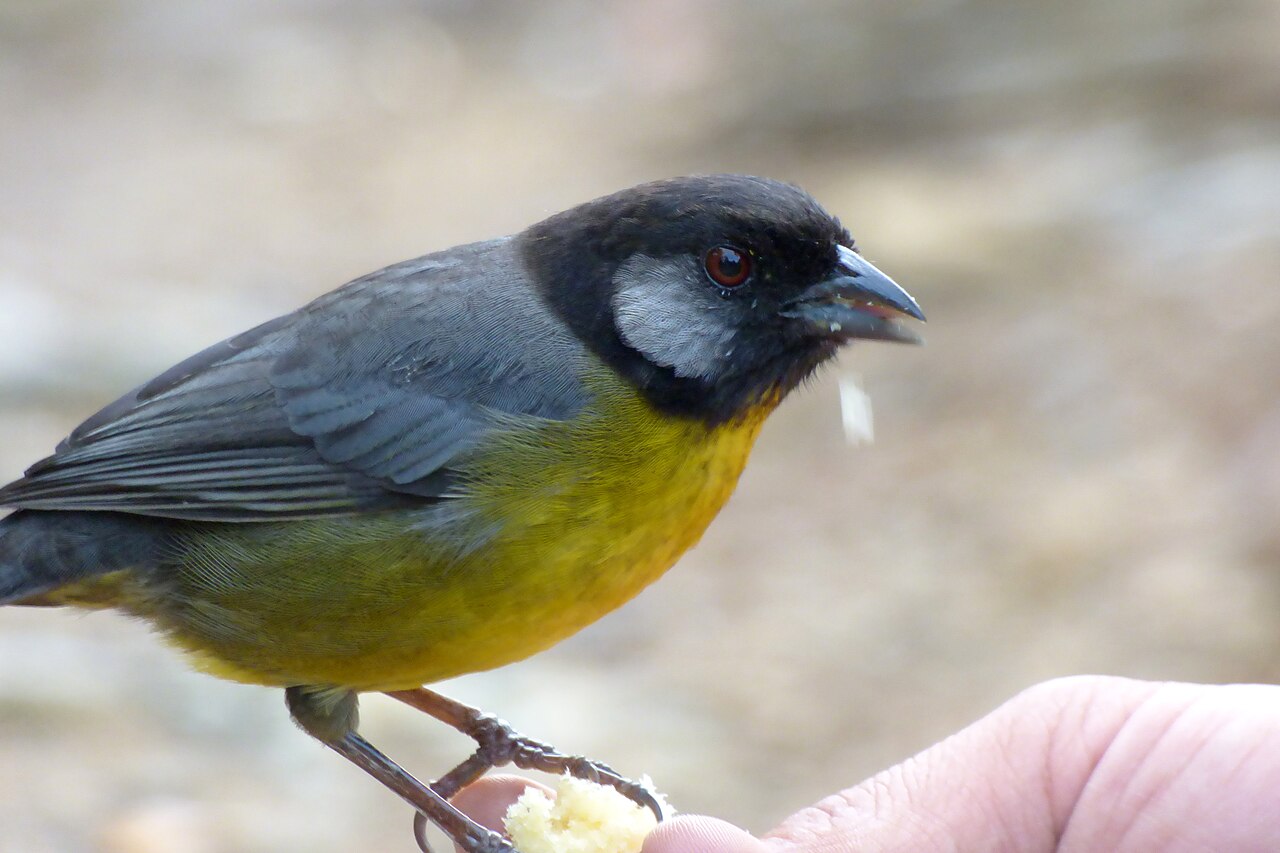
The Santa Marta antpitta is a Vulnerable species of bird in the family Grallariidae. It is endemic to Colombia.
Region
Sierra Nevada de Santa Marta, northern Colombia
Typical Environment
Occupies subtropical and montane cloud forests within the Santa Marta range. Favors dense understory with abundant leaf litter, thickets, and bamboo tangles along slopes, ravines, and stream gullies. Occurs in both mature forest and well-structured secondary growth, but is most frequent where canopy cover is high. Typically keeps to shaded forest floor microhabitats, moving by short hops and brief low flights.
Altitude Range
900–3000 m
Climate Zone
Highland
Ease of Keeping
Beginner friendly: 1/5
The Santa Marta antpitta is restricted to the isolated Sierra Nevada de Santa Marta massif in northern Colombia. It is notoriously shy, spending most of its time on or near the forest floor and is more often heard than seen. Habitat loss and degradation within its limited range have contributed to its Vulnerable status. Its clear, whistled song is an important cue for detection during bird surveys.


Illustration by George Miksch Sutton (1898-1982)

Temperament
solitary and territorial
Flight Pattern
short rapid wingbeats with low, brief flights
Social Behavior
Usually encountered singly or in pairs, maintaining territories on the forest floor. Nests are typically mossy cup structures placed low, with both parents participating in incubation and chick care. Courtship and territory defense are driven by persistent vocalizations.
Migratory Pattern
Resident
Song Description
Delivers a clear, whistled series of notes that can be repetitive and carries well through dense forest. Phrases are simple, often evenly spaced, and used at dawn and dusk for territory advertisement.
Plumage
Warm brown to olivaceous-brown upperparts with paler, buffy to cinnamon underparts and faint dusky scaling on the breast. Face slightly greyer with a subtle pale eye-ring; throat often cleaner and paler. Feathers are soft and dense, aiding a rounded, compact appearance typical of antpittas.
Diet
Feeds primarily on arthropods such as beetles, ants, spiders, and other insects taken from leaf litter. Also consumes earthworms and other soft-bodied invertebrates, and may occasionally take small vertebrates. Forages methodically by hopping and pausing to listen before striking.
Preferred Environment
Forages on the shaded forest floor, along trails, stream edges, and within dense understory and bamboo patches. Sometimes follows small ant swarms to capture flushed prey, keeping to cover nearby.