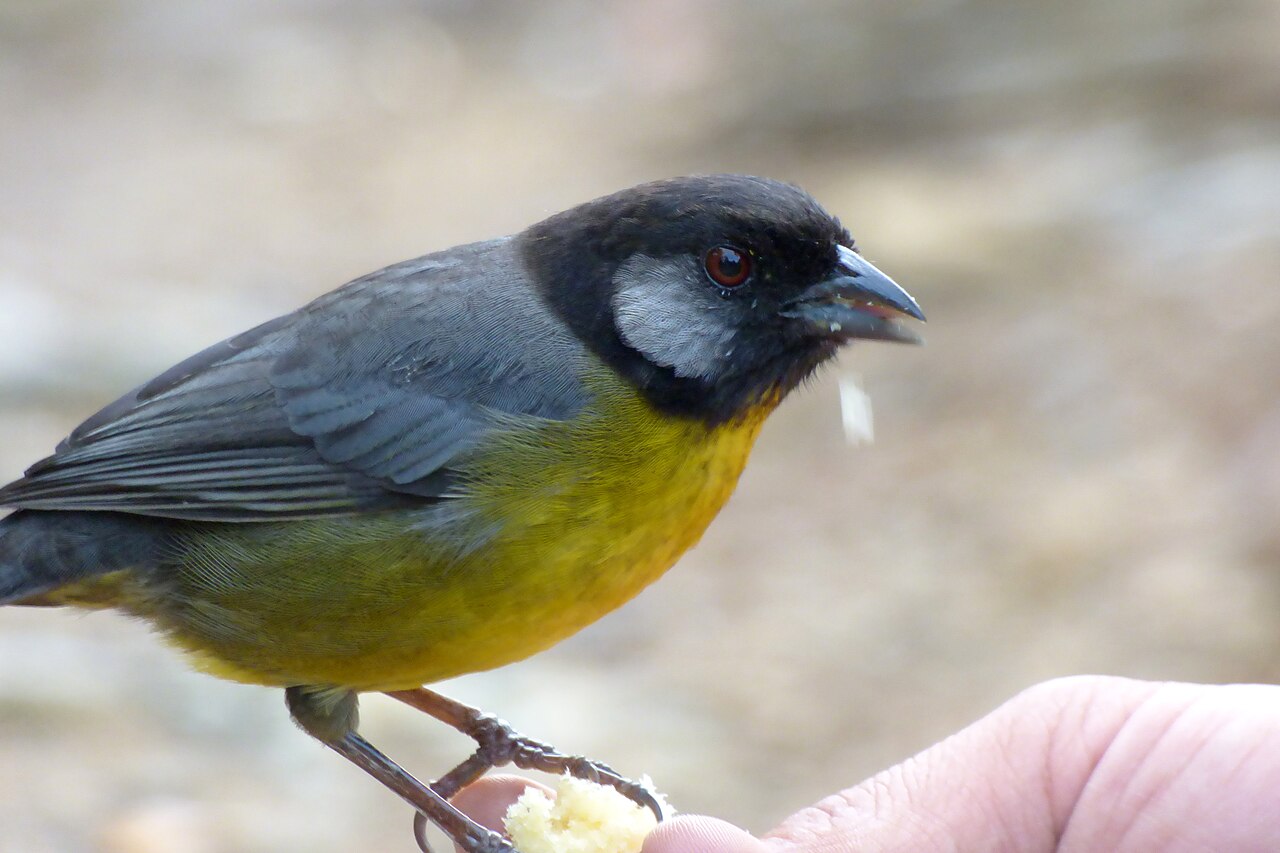
The Santa Marta antbird is a Near Threatened species of bird in subfamily Thamnophilinae of family Thamnophilidae, the "typical antbirds". It is endemic to the Sierra Nevada de Santa Marta in Colombia.
Region
Sierra Nevada de Santa Marta
Typical Environment
Occurs only in humid foothill and montane forests on the isolated Sierra Nevada de Santa Marta massif of northern Colombia. It favors dense understory, including bamboo (Chusquea) patches, vine tangles, and thickets along ravines and streams. The species uses both primary and well-developed secondary forest and can persist along forest edges if cover is thick. It is a low, skulking forager that rarely ventures into open areas.
Altitude Range
500–1900 m
Climate Zone
Highland
Ease of Keeping
Beginner friendly: 1/5
The Santa Marta antbird is Near Threatened and restricted to the Sierra Nevada de Santa Marta of northern Colombia. It keeps to dense understory, often in bamboo or thickets, where it can be difficult to see. Pairs are territorial and sometimes attend army-ant swarms to snatch flushed insects. Habitat loss and fragmentation within its small range are its main threats.


Temperament
skulking and territorial
Flight Pattern
short rapid wingbeats
Social Behavior
Usually found singly or in pairs that maintain and defend territories year-round. Nests are placed low in dense vegetation, with both members attending the nest. It occasionally joins mixed-species understory flocks but more often forages independently or as a pair.
Migratory Pattern
Resident
Song Description
Song is a series of sharp, whistled notes that accelerate slightly and then trail off. Calls include dry chips and scolding rattles given from low cover.
Plumage
A long-tailed, understory antbird with fine streaking and a contrasting warm rufous wing panel; overall dark and crisply patterned in males, browner and more subdued in females.
Diet
Primarily small arthropods such as insects and spiders gleaned from leaves, twigs, and vine tangles. It often probes leaf litter and dead foliage clusters and makes short sallies to seize prey. The species sometimes attends army-ant swarms to capture prey flushed from the leaf litter, especially in taller, denser forest.
Preferred Environment
Feeds in dense understory, bamboo patches, and along shaded stream gullies where cover is continuous. Most foraging occurs within 0–3 m of the ground, in areas with abundant vine tangles and saplings.