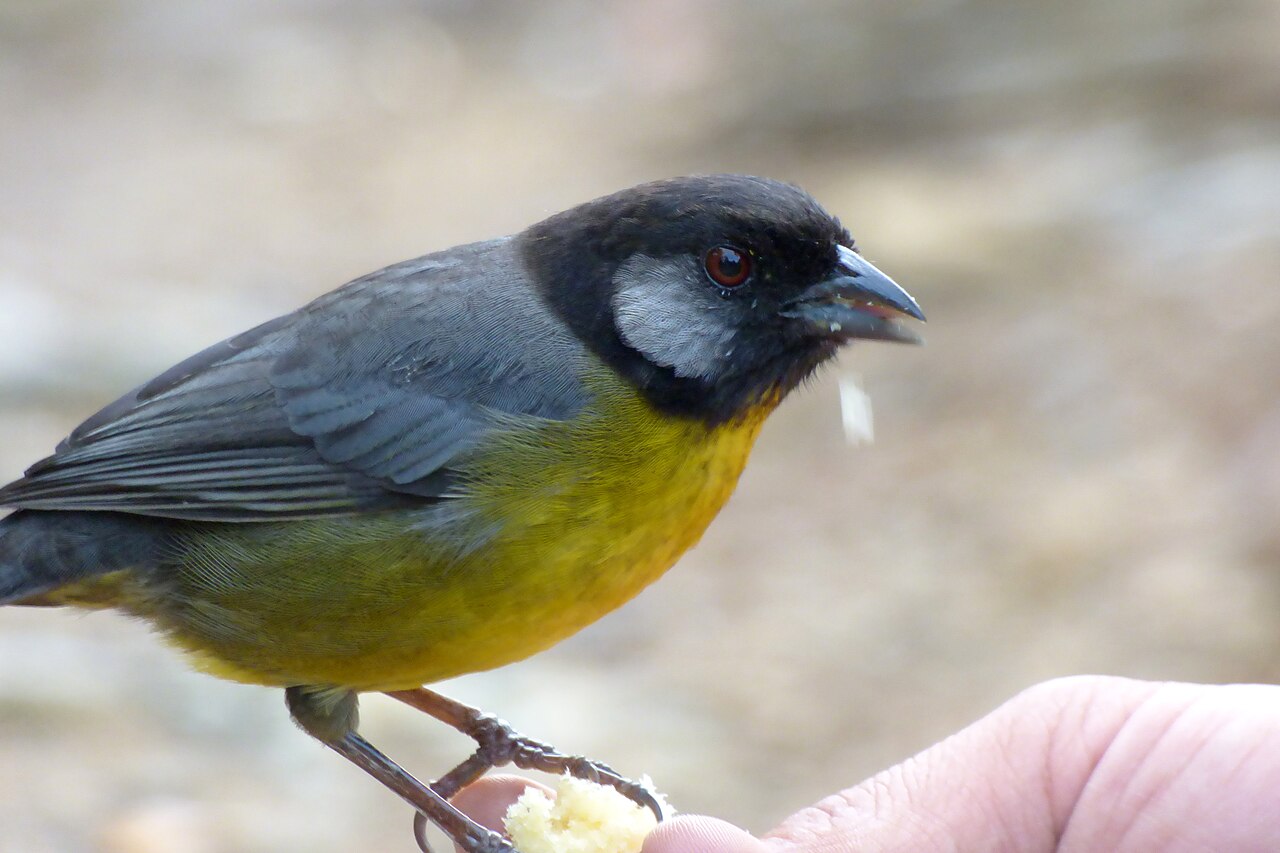
The Santa Marta blossomcrown is a Vulnerable species of hummingbird in the "emeralds", tribe Trochilini of subfamily Trochilinae. It endemic to the Sierra Nevada de Santa Marta of Colombia.
Region
Sierra Nevada de Santa Marta
Typical Environment
Occurs only on the slopes of the Sierra Nevada de Santa Marta in northern Colombia, using humid montane and premontane forests. It frequents forest edges, clearings, second growth, and riparian thickets, where flowering shrubs and small trees are abundant. The species also visits traditional shade coffee plantations when native canopy trees provide bloom. It is patchily distributed where suitable flowers are available.
Altitude Range
600–2000 m
Climate Zone
Highland
Ease of Keeping
Beginner friendly: 1/5
This tiny hummingbird is confined to the isolated Sierra Nevada de Santa Marta massif of northern Colombia. It favors flowering shrubs and trees along forest edges and in shade-grown coffee, where it defends rich nectar sources. Habitat loss and degradation within its narrow range have led to population declines, earning it a Vulnerable status. Its rapid wingbeats produce a noticeable hum while it hovers to feed.


Temperament
solitary and territorial
Flight Pattern
short rapid wingbeats and hovering
Social Behavior
Typically solitary away from breeding, vigorously defending rich flower patches from other hummingbirds. The female builds a tiny cup nest from plant down and spider silk on a horizontal branch or fork. Clutches are usually two eggs, with the female responsible for incubation and most parental care.
Migratory Pattern
Resident
Song Description
Vocalizations are a series of thin, high-pitched chips and brief tinkling trills delivered from a perch. It also gives sharper sputters during territorial chases. The constant wing hum is audible at close range while feeding.
Plumage
Compact hummingbird with bronzy-green upperparts and warmer rufous to cinnamon tones on the crown and underparts. A neat pale (whitish) half-collar contrasts with the darker head and throat, and the underparts can show buffy to cinnamon wash. Feathers are sleek and iridescent on the upperparts, typical of hummingbirds.
Diet
Feeds primarily on nectar from tubular flowers of shrubs, vines, and small trees, probing repeatedly while hovering. It supplements nectar with small arthropods, hawking tiny insects in the air or gleaning them from foliage for protein. It adjusts movements to track seasonal flowering and may concentrate where certain trees are in bloom.
Preferred Environment
Forages along forest edges, gaps, streamside thickets, and secondary growth where flowering plants are abundant. It readily visits shade coffee when native canopy trees provide nectar sources. Perches within low to mid-story between feeding bouts.