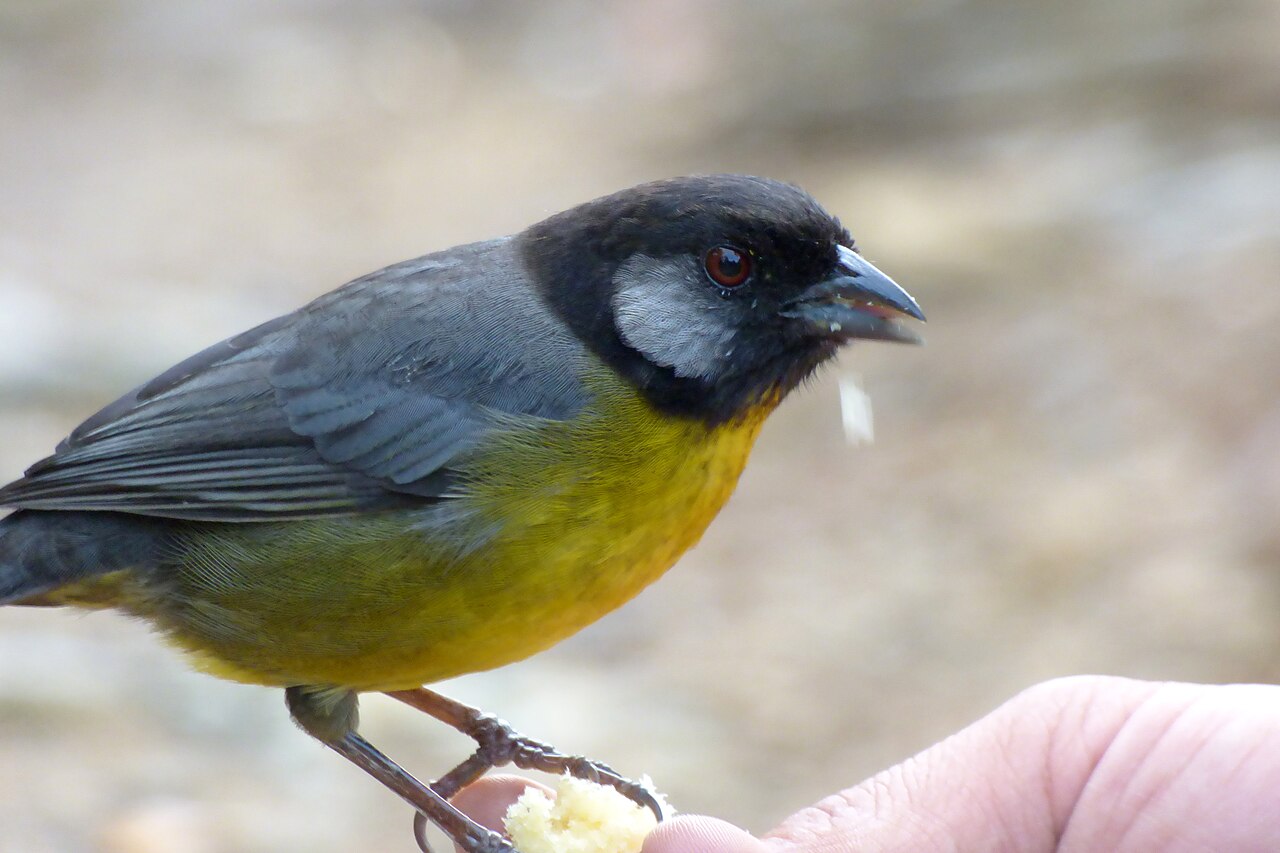
The Santa Cruz ground dove is a species of bird in the family Columbidae. It is found in the southern Solomon Islands and Vanuatu. Its natural habitat is subtropical or tropical moist lowland forests. It is threatened by habitat loss.
Region
Southwest Pacific
Typical Environment
Occurs in the southern Solomon Islands (including the Santa Cruz Islands) and parts of Vanuatu. It inhabits subtropical and tropical moist lowland forests, including mature primary forest and well-developed secondary growth. Birds favor dense understory with ample leaf litter for foraging. They may use forest edges and lightly disturbed areas if adjacent to intact forest. Plantations and gardens are used only when near suitable native cover.
Altitude Range
Sea level to 800 m
Climate Zone
Tropical
Ease of Keeping
Beginner friendly: 1/5
A shy, ground-foraging dove of the southern Solomon Islands and Vanuatu, it keeps to dense lowland forest and is often detected only when it flushes with a whir of wings. Habitat loss from logging and agriculture, along with invasive predators, are primary threats. It typically forages quietly on the forest floor in pairs or small family groups. Protecting intact lowland rainforest is key to its persistence.
Temperament
shy and secretive
Flight Pattern
short rapid wingbeats, low fast dashes through understory
Social Behavior
Usually seen singly or in pairs, occasionally with dependent juveniles. Nests are simple platforms placed low in shrubs or small trees, sometimes close to the ground. Clutch size is typically one egg, with both parents attending. Territorial around nest sites but generally unobtrusive.
Migratory Pattern
Resident
Song Description
Gives soft, mournful cooing phrases from concealed perches, often at dawn and dusk. Calls are low-pitched and repetitive, carrying modestly through dense foliage. Alarm takes the form of sudden wing-claps and quiet grunts as the bird flushes.
Plumage
Mostly dark brown to dusky with subtle scaling and a slight bluish-grey wash on the head and neck; underparts slightly paler and warmer brown. Wings and mantle are plain, with a rufous-chestnut flush to the wing-lining visible in flight. Feathers are soft and matte, aiding camouflage on the forest floor.
Diet
Feeds mainly on fallen seeds and small fruits gleaned from the forest floor. Will take tender shoots and occasionally small invertebrates such as insects and snails. Foraging is deliberate, with birds walking and picking among leaf litter. Diet composition varies seasonally with fruiting of native trees.
Preferred Environment
Dense lowland forest with deep leaf litter and scattered openings. Often along forest trails, edges, and light gaps where seeds and fruits accumulate, provided cover is nearby.