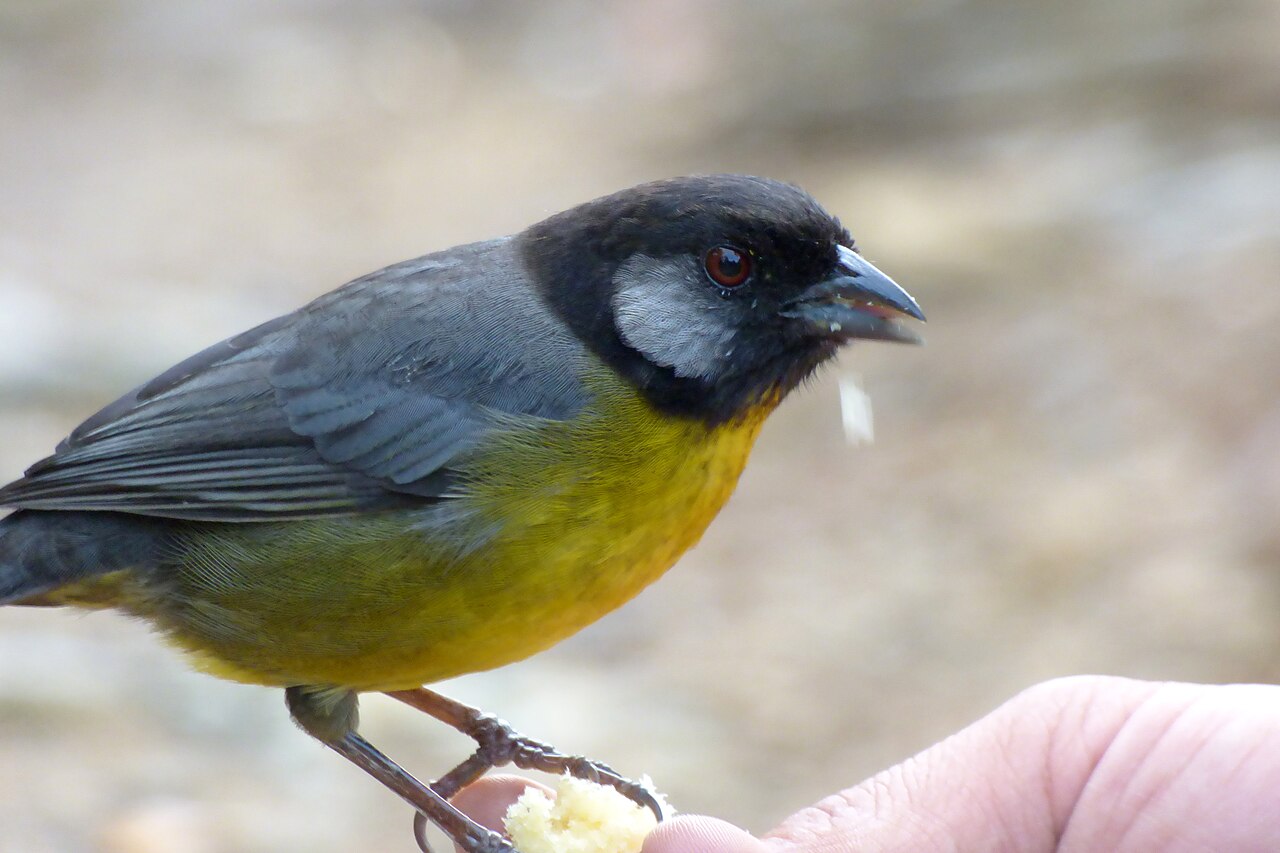
The Sangihe whistler or Sangihe shrikethrush is a species of bird in the family Pachycephalidae. It is endemic to Sangihe Island in Indonesia. Its natural habitat is subtropical or tropical moist montane forests. Specifically, it lives in ridgetop forests with large trees and full canopy cover.
Region
Sangihe Islands, North Sulawesi
Typical Environment
Occurs only in remnant subtropical to tropical moist montane forest on Sangihe Island, especially along ridge lines. It requires dense, mature canopy with mossy understory and plentiful epiphytes. The bird forages in the understory to midstory, occasionally along forest edges but rarely in secondary growth. Habitat loss and fragmentation severely constrain its range, concentrating it in the last intact high-elevation forest blocks.
Altitude Range
500–1100 m
Climate Zone
Tropical
Ease of Keeping
Beginner friendly: 1/5
Also known as the Sangihe shrikethrush, this species is confined to a tiny patch of montane forest on Sangihe Island, Indonesia. It favors ridgetop forest with mature trees and closed canopy, making it highly sensitive to forest degradation. Taxonomically, it has shifted between shrikethrushes and whistlers within the family Pachycephalidae.

Temperament
shy and skulking
Flight Pattern
short rapid wingbeats through understory
Social Behavior
Usually encountered singly or in pairs, maintaining small territories in dense montane forest. Pairs keep in contact with soft calls and may join mixed-species flocks briefly while foraging. Nesting is presumed to be in well-concealed cup nests placed low to mid in dense vegetation, with both parents likely involved in care.
Migratory Pattern
Resident
Song Description
A rich, ringing series of clear whistles delivered deliberately, often from concealed perches. Phrases are repeated several times and carry well through the forest, especially at dawn.
Plumage
Plain, soft-textured plumage with dusky-olive to brown upperparts and warmer rufous-brown underparts; throat paler with slight buff wash. Subtle contrast between slightly grayer face and the browner crown and mantle. Feathers appear smooth with minimal patterning, enhancing a uniformly dusky look.
Diet
Primarily takes insects and other arthropods such as beetles, caterpillars, spiders, and orthopterans. It gleans prey from leaves, twigs, and bark, and occasionally takes items from the ground litter. Small fruits may be taken opportunistically but are not a major component.
Preferred Environment
Forages in dense understory and midstory of mature montane forest, often along ridges and steep slopes. Frequently searches among mossy branches, epiphytes, and shaded tangles where insect prey is abundant.