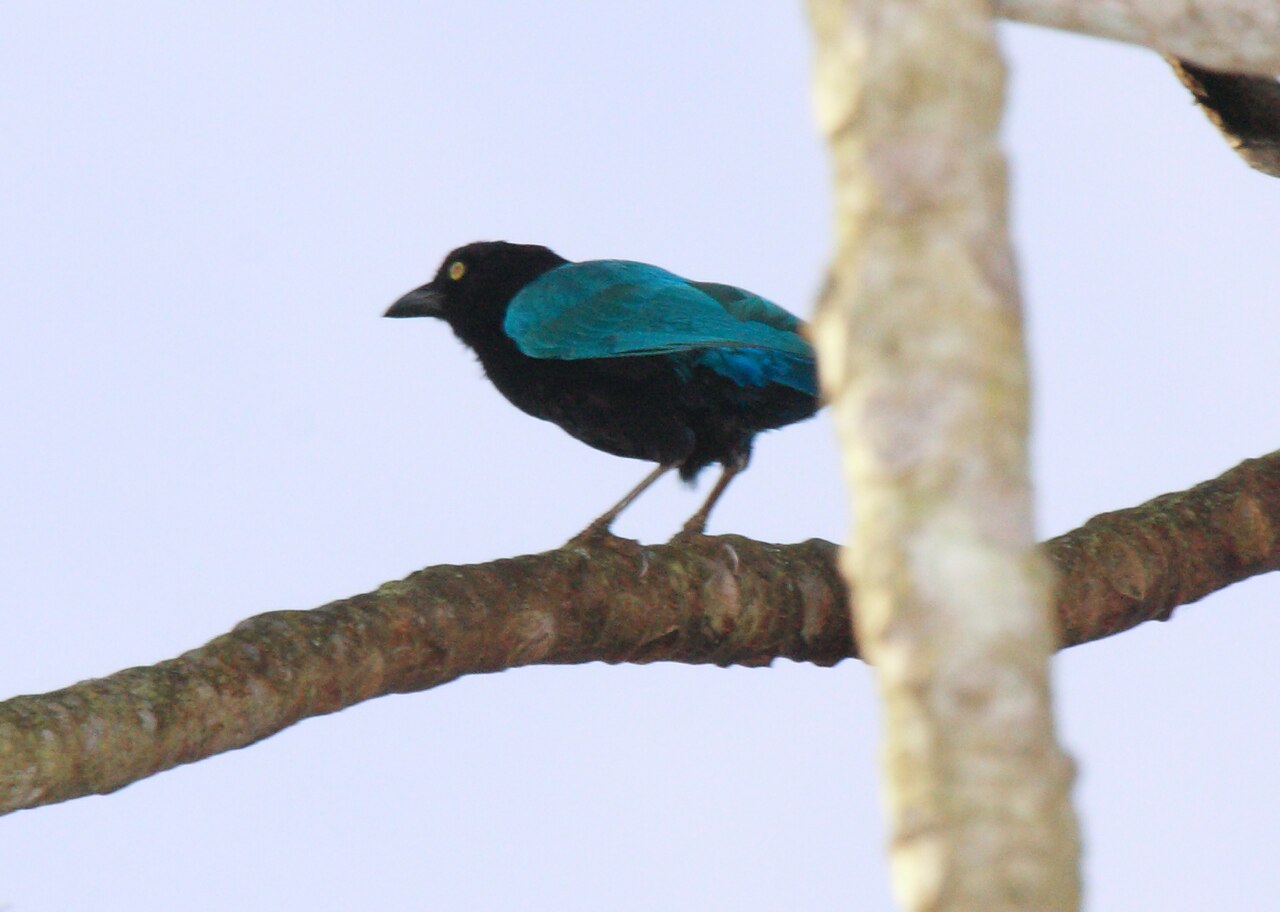
The Samoan myzomela is a species of passerine bird in the honeyeater family Meliphagidae that is found on the Samoan islands of Upolu, Savaiʻi and Tutuila.
Region
Samoan Archipelago
Typical Environment
Occurs in primary and secondary tropical forests, coastal scrub, and forest edges, and is a frequent visitor to village gardens and plantations. It follows seasonal flowering, moving through canopy and mid-story to exploit nectar sources. The species tolerates disturbed habitats but remains most abundant in intact or semi-natural forest. It forages from understory blossoms up to the forest canopy.
Altitude Range
Sea level to 1500 m
Climate Zone
Tropical
Ease of Keeping
Beginner friendly: 1/5
A small honeyeater, the Samoan myzomela is an important pollinator of flowering trees across the Samoan archipelago. Males show striking crimson plumage and often defend blooming trees aggressively from other nectar feeders. It readily visits gardens and plantations when native flowers are scarce, supplementing nectar with small insects.
Temperament
active and territorial around flowers
Flight Pattern
short rapid wingbeats with quick, darting movements
Social Behavior
Typically seen singly, in pairs, or small loose groups at flowering trees. Males may chase rivals and other species from nectar sources. Nests are small, neat cups placed on horizontal branches; both parents tend the young.
Migratory Pattern
Resident
Song Description
A high, thin series of seeps and tinkling warbles, interspersed with sharp scolds. Vocalizations are quick and lively, often given while foraging among blossoms.
Plumage
Male with bright crimson to scarlet on the head and upper breast contrasting with black wings, back, and tail; female is duller olive-brown with paler underparts and only a faint reddish wash. Both sexes have sleek, close-fitting plumage suited to active foraging.
Diet
Primarily takes nectar from a variety of native and introduced flowering trees and shrubs. It also hawks and gleans small insects and spiders to obtain protein, especially during breeding. Pollen is frequently ingested and may be transported on the face and bill, aiding pollination.
Preferred Environment
Feeds at canopy and edge blossoms, along forest margins, in secondary growth, and in village gardens with flowering ornamentals. Often concentrates at mass-flowering trees and plantation blooms.