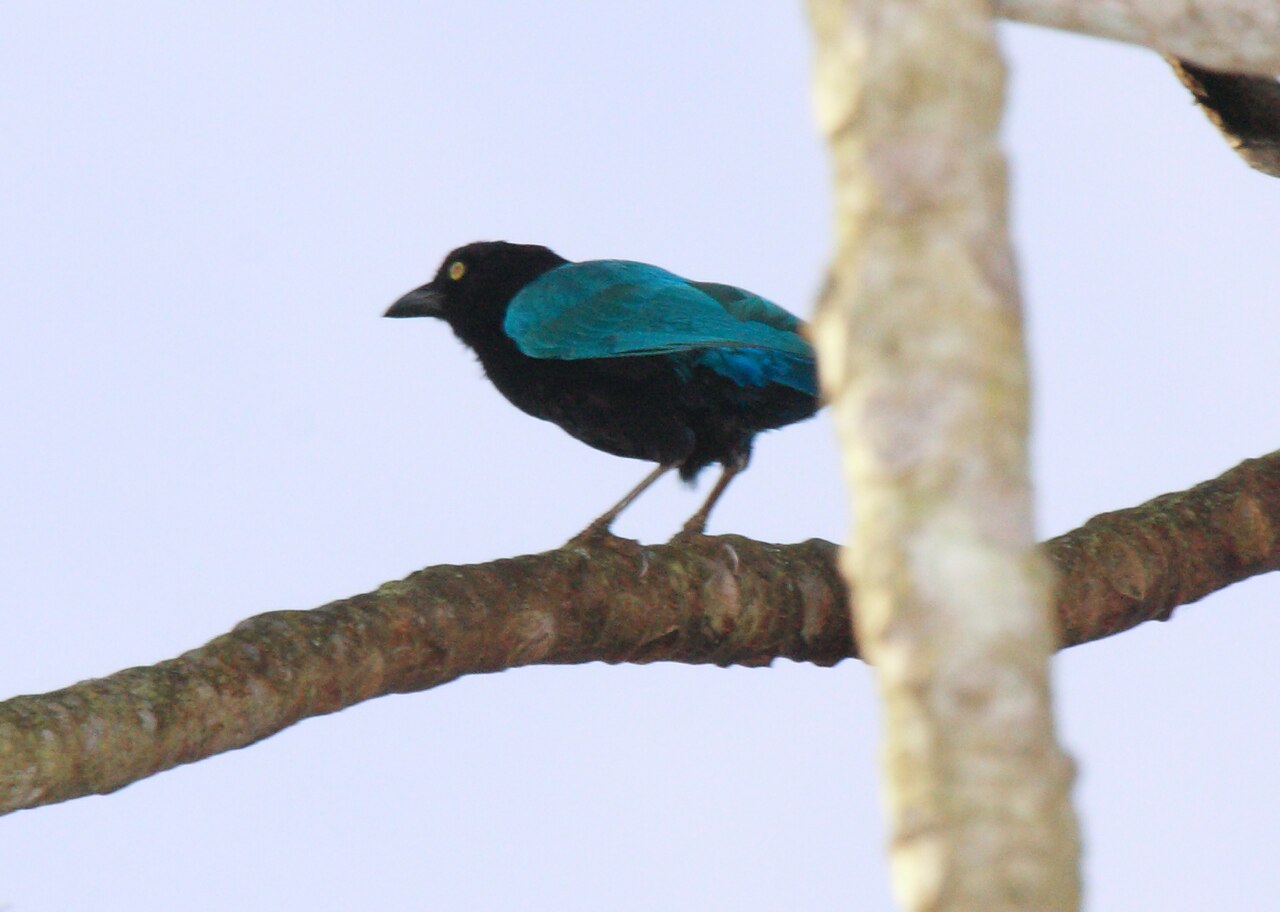
The Samoan starling is a large starling of the family Sturnidae. It is found in the Samoan Islands. The species has a dark brown, glossy appearance, with a long bill. Its natural habitat is tropical moist forest on volcanic islands, where it is common and more conspicuous than the Polynesian starling, which is found in the same habitat. Vocalizations include various whistles and other sounds. This starling feeds on a variety of fruits, especially guava, and insects. Little is known of its mating or social habits, but it appears to nest year-round, in tree cavities. Its eggs are pale blue.
Region
Samoan Islands, South Pacific
Typical Environment
Occurs throughout native and secondary tropical moist forests on the volcanic islands of Samoa and American Samoa. Frequently uses forest edges, clearings, and fruiting trees in plantations and village gardens. It forages from the midstory to the canopy and readily visits introduced fruit trees such as guava. The species adapts well to habitat disturbance provided fruiting resources and nest cavities remain available.
Altitude Range
Sea level to 1600 m
Climate Zone
Tropical
Ease of Keeping
Beginner friendly: 2/5
Endemic to the Samoan Islands, this large, glossy starling is a conspicuous fruit-eater that helps disperse seeds of native trees. It tolerates disturbed habitats and is commonly seen around villages and plantations as well as in native forest. Nesting often occurs in tree cavities and can take place year-round in the tropics. Clutches typically include pale blue eggs.

Temperament
social and active
Flight Pattern
direct flight with rapid wingbeats
Social Behavior
Commonly seen in pairs or small family groups and may form loose flocks at abundant fruit sources. Nests in natural tree cavities or holes, often reusing sites; breeding can occur throughout much of the year. Displays are vocal and conspicuous around territories and nest sites.
Migratory Pattern
Resident
Song Description
A varied mix of whistles, squeaks, and chattering notes, delivered from exposed perches. Calls are loud and carry through the forest, with some mimicry-like phrases amid the whistles.
Plumage
Uniform sooty to dark chocolate-brown with a glossy, slightly bronzy sheen; plumage appears smooth and unspotted.
Diet
Primarily frugivorous, taking native fruits and also introduced species such as guava; supplements diet with insects and other small invertebrates gleaned from foliage and bark. Will probe into clusters of fruit and occasionally hawk short distances for flying insects. Plays an important role in seed dispersal for forest plants.
Preferred Environment
Feeds in midstory and canopy of moist forest, along forest edges, and around fruiting trees in plantations and villages. Often visits gardens and secondary growth where fruit is abundant.