
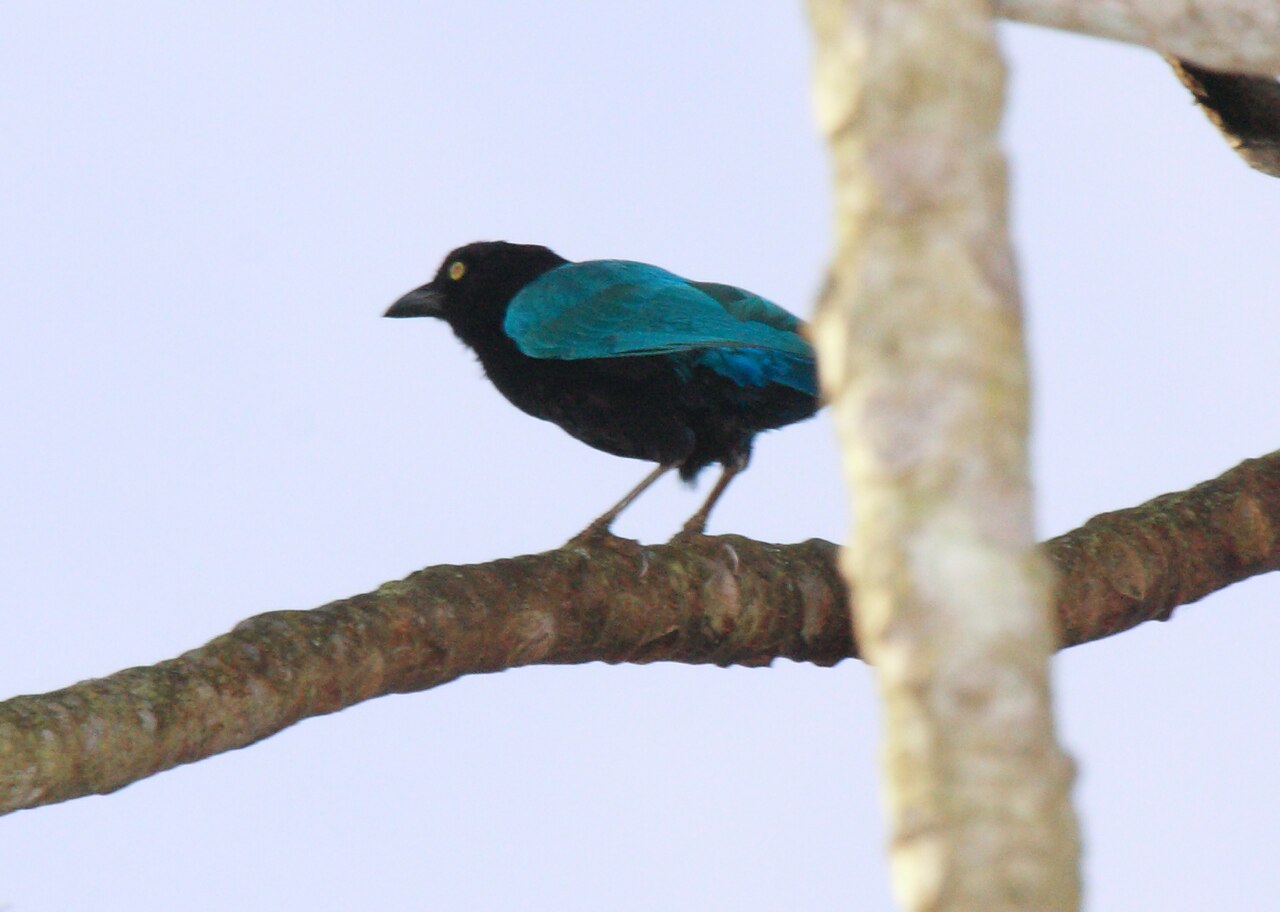
The San Blas jay is a species of bird in the family Corvidae. It is endemic to Mexico where its natural habitat is subtropical or tropical dry forests; it is a common species and has been rated as "least concern" by the IUCN.
Region
Pacific slope of western Mexico
Typical Environment
Occurs from lowland and foothill tropical dry forests, thorn-scrub, and semi-open woodlands along the Pacific drainage of western Mexico. Frequently uses edges, second-growth thickets, riparian corridors, plantations, and rural mosaics. Common around disturbed habitats near forest patches, where it exploits a variety of food resources. Often stays in the midstory and canopy but will descend to forage at lower levels when food is available.
Altitude Range
0–1000 m
Climate Zone
Tropical
Ease of Keeping
Beginner friendly: 2/5
The San Blas jay is a social corvid endemic to Mexico’s Pacific slope, often moving in noisy family parties through tropical dry forest. Like many Cyanocorax jays, it practices cooperative breeding, with helpers assisting a dominant pair. It adapts well to edge habitats and secondary growth, which helps explain its stable conservation status. Its bold black hood and vivid blue body make it one of the more striking jays in the region.


Temperament
social and active
Flight Pattern
short rapid wingbeats with brief glides
Social Behavior
Usually travels in cohesive family groups that maintain contact with frequent calls. Cooperative breeding is common, with helpers assisting in territory defense and feeding nestlings. Nests are typically placed in trees or dense shrubs, and pairs are strongly territorial during the breeding season.
Migratory Pattern
Resident
Song Description
Vocal repertoire includes harsh jay-like scolds, rattles, and buzzy notes interspersed with clear whistles. Groups call frequently while moving, and loud alarm calls are given when predators are spotted.
Plumage
Velvety black head, face, and upper breast forming a hood, contrasting with rich cobalt to purplish-blue back, wings, and tail. Underparts are slightly paler bluish with darker flight feathers. Feathers have a subtle sheen typical of corvids.
Diet
Omnivorous, taking insects and other arthropods, fruits and berries, seeds, and occasionally small vertebrates, eggs, or nestlings. Forages by gleaning from foliage and branches, probing bark crevices, and sometimes dropping to the ground to pick food. Will exploit seasonal fruiting trees and human-modified areas for opportunistic feeding.
Preferred Environment
Feeds in midstory and canopy of dry forest, thorn-scrub, and along edges and riparian zones. Readily uses second growth, orchards, and gardens adjacent to forest patches. Often forages in coordinated family groups.


