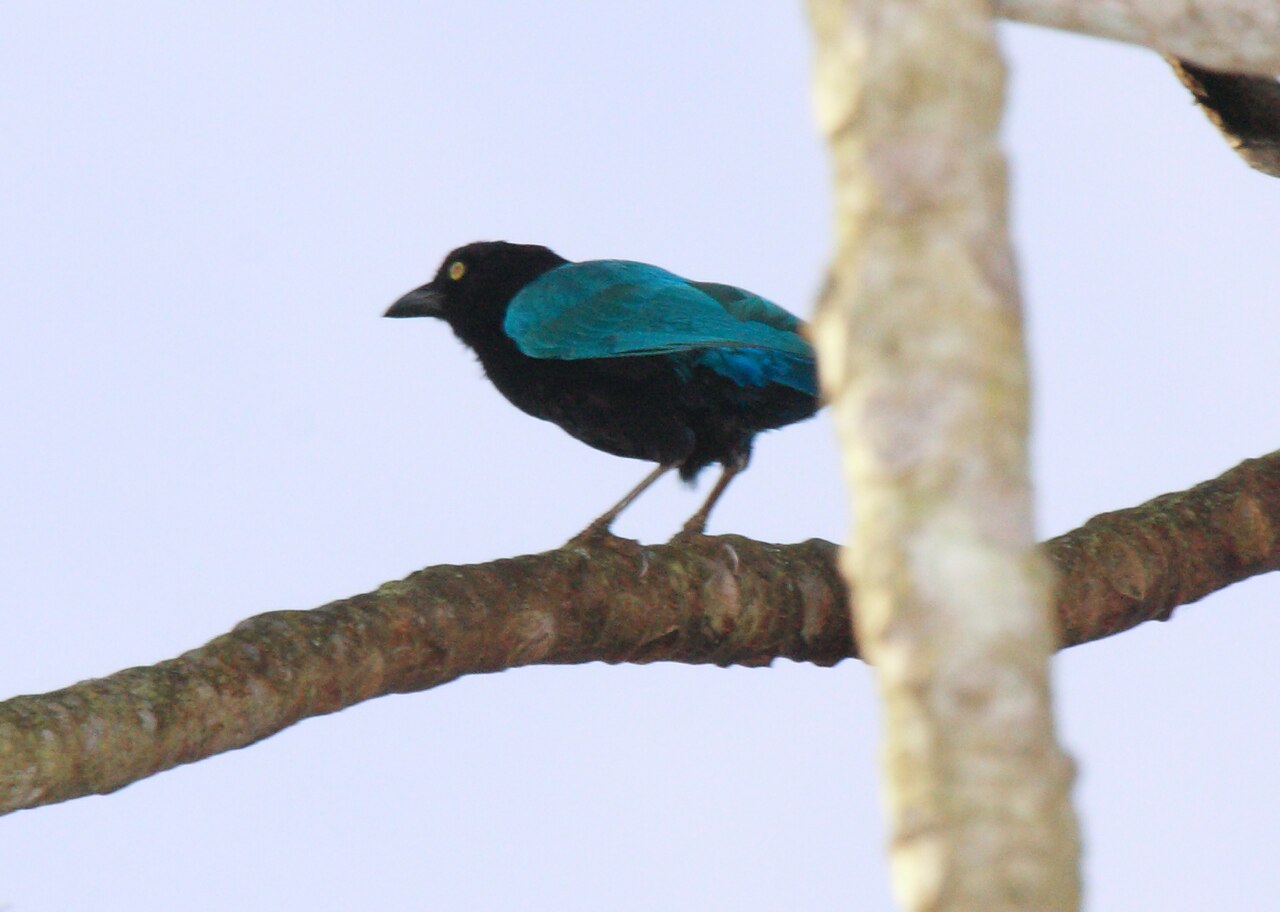
The Samoan whistler, also known as the yellow-fronted whistler, is a species of bird in the family Pachycephalidae. It is endemic to Samoa, where found in forest, plantations and gardens.
Region
Samoa (Polynesia)
Typical Environment
Found across the main forested islands in native rainforest, coastal woodland, and montane forest. It adapts well to disturbed habitats, including secondary growth, agroforestry plots, and mixed-crop plantations. Birds also visit village gardens and edges where shrubs and fruiting trees are present. Territories are often centered on mid-story trees with good foraging substrates.
Altitude Range
Sea level to 1400 m
Climate Zone
Tropical
Ease of Keeping
Beginner friendly: 1/5
The Samoan whistler is a lively forest songbird whose clear, fluted whistles carry far through the canopy. It readily uses secondary growth, plantations, and gardens, which helps it persist near human settlements. As an active insect hunter, it plays a role in natural pest control. Its local name and common name reflect the yellow wash on the face and underparts.

Temperament
territorial and vocal
Flight Pattern
short rapid wingbeats between perches
Social Behavior
Usually encountered singly or in pairs within well-defined territories. Pairs are likely monogamous and defend nesting areas during the breeding season. The nest is a small cup placed in a fork or suspended from twigs, and both adults typically feed the young.
Migratory Pattern
Resident
Song Description
A series of clear, mellow whistles delivered in short phrases, often repeated from a prominent perch. Calls include sharp chips and scolding notes when disturbed.
Plumage
Compact whistler with olive-green upperparts and yellow-washed underparts; face and forehead show a brighter yellow tone. Throat is pale to whitish, blending into yellow breast and belly; wings and tail are darker olive-brown. Females and immatures are duller with more subdued yellow and faint streaking or wash on the breast.
Diet
Primarily hunts insects such as beetles, caterpillars, grasshoppers, and ants, as well as spiders and other small arthropods. It gleans prey from foliage, bark, and twigs and occasionally makes short sallies to catch flying insects. It may supplement with small fruits or berries when available.
Preferred Environment
Forages from understory to mid-canopy in forest, edges, and plantations. Often works through vine tangles, leafy branches, and mixed-crop trees in village gardens.