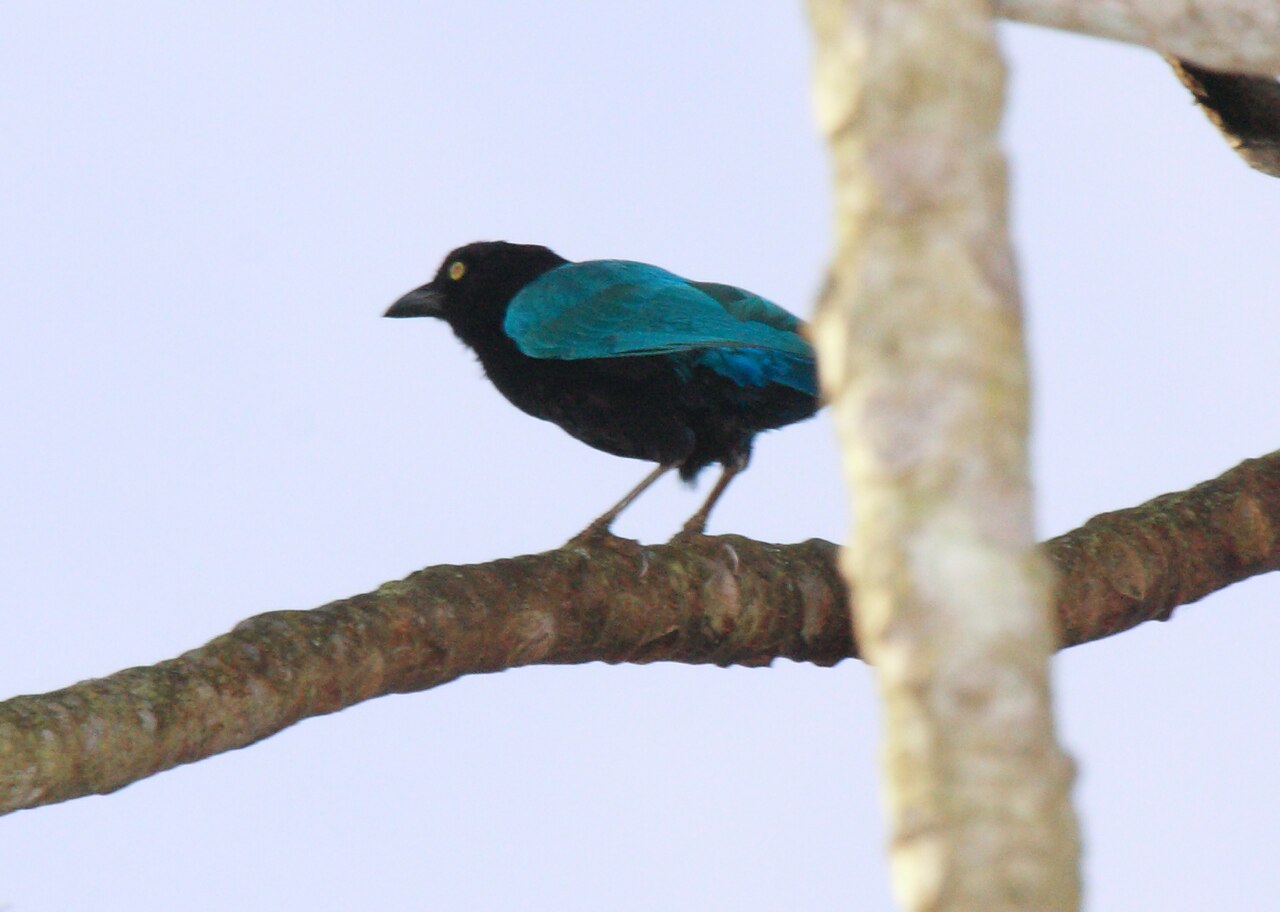
The Samoan island thrush is a species of passerine bird in the thrush family Turdidae. It is endemic to the Samoan Islands, which includes Samoa and American Samoa. It was formerly considered a subspecies of the island thrush, but in 2024 the island thrush complex was split into 17 different species by the IOC and Clements checklist based on morphological and phylogenic differences.
Region
Samoan Islands, Polynesia
Typical Environment
Occurs on the main islands of Samoa (Upolu and Savai'i) and American Samoa (Tutuila and Ta‘ū), primarily in native rainforest. It uses montane cloud forest, mature secondary forest, and dense ridge and valley forests, occasionally descending to lower elevations where cover is intact. Most encounters are in quiet interior forest away from human disturbance. It forages on the ground and in low understory, but also visits fruiting trees in the midstory.
Altitude Range
0–1850 m
Climate Zone
Tropical
Ease of Keeping
Beginner friendly: 1/5
This forest thrush is endemic to the Samoan Islands (Samoa and American Samoa) and is typically shy, more often heard than seen. It was split from the Island Thrush complex by IOC and Clements in 2024 based on morphological and genetic evidence. It favors higher-elevation native forests, where it forages quietly in leaf litter. Predation by introduced mammals and habitat loss likely constrain its lowland distribution.
Temperament
shy and retiring
Flight Pattern
short rapid wingbeats; swift, direct dashes between perches
Social Behavior
Usually solitary or in pairs, maintaining territories in dense forest. Nests are cup-shaped and placed on branches or in tree forks, built from twigs, grasses, and moss. Breeding behavior includes discreet courtship and strong nest defense within a small territory.
Migratory Pattern
Resident
Song Description
Song is a series of clear, fluted whistles and mellow phrases delivered from concealed perches, often at dawn and dusk. Calls include thin tseep notes and soft chuck alarms when disturbed.
Plumage
Mostly sooty- to dark brown with slightly paler underparts and faint scaling on breast; feathers can show a soft matte finish.
Diet
Takes insects, beetles, caterpillars, and other arthropods gleaned from leaf litter and low vegetation. Also consumes fruits and berries from native forest trees and shrubs, seasonally shifting toward fruit when abundant. Will occasionally take small snails or worms after rains.
Preferred Environment
Feeds along shaded forest floors, trails, and stream edges with deep leaf litter. Also forages at midstory fruiting trees within intact native rainforest.