
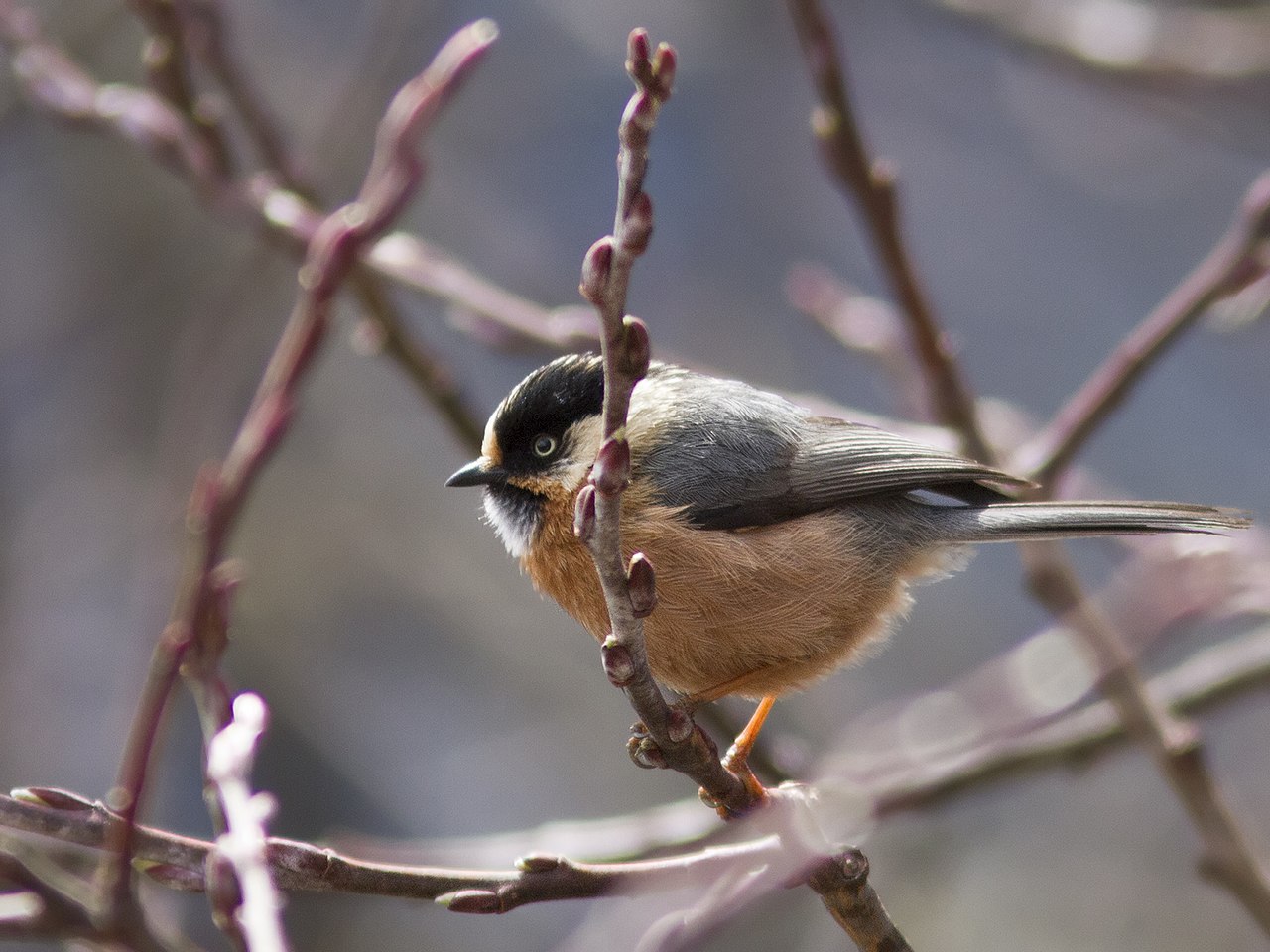
The rufous-fronted bushtit or rufous-fronted tit is a small passerine bird of the eastern and central Himalayas belonging to the long-tailed tit family, Aegithalidae.
Region
Eastern and Central Himalayas
Typical Environment
Occurs from Nepal and Bhutan through northern India into southern Tibet and adjacent parts of Myanmar and southwest China. Prefers temperate broadleaf and mixed montane forests, including oak–rhododendron, pine edges, and secondary growth. Common along forest edges, clearings, and in shrubby valleys where it can glean from fine twigs and leaves. Often descends slightly in winter and joins mixed flocks, increasing its detectability.
Altitude Range
1500–3600 m
Climate Zone
Highland
Ease of Keeping
Beginner friendly: 1/5
This small passerine of the long-tailed tit family frequents the cool broadleaf and mixed forests of the eastern and central Himalayas. It often joins mixed-species foraging flocks and moves acrobatically through foliage in search of tiny invertebrates. Its domed, well-camouflaged nest is intricately woven with plant fibers, moss, and spider silk. Altitudinal movements may occur outside the breeding season, but populations are largely resident.


Temperament
social and active
Flight Pattern
short rapid wingbeats
Social Behavior
Typically travels in small family parties and often joins mixed-species flocks with other small insectivores. Builds a domed, woven nest concealed in dense shrubs or forked branches. Pairs maintain small territories during breeding and become more gregarious afterward.
Migratory Pattern
Partial migrant
Song Description
High, thin sibilant notes interspersed with soft trills and twitters. Contact calls are rapid, repeated ‘tsit’ or ‘tsee’ notes that keep flocks together.
Plumage
Compact, long-tailed bushtit with a warm rufous forecrown, contrasting dark mask through the eye, and pale cheeks. Upperparts are gray-brown with a long, graduated tail; underparts buffy to grayish with lighter throat. Fine feathering around the face gives a soft, plush look typical of Aegithalos.
Diet
Feeds mainly on small insects and other arthropods such as spiders, caterpillars, and aphids. Gleans prey from fine twigs, leaf undersides, and buds, often hanging acrobatically. Will take small berries and seeds opportunistically, especially in colder months when insects are scarce.
Preferred Environment
Forages in midstory and outer canopy of montane broadleaf and mixed forests, along forest edges, and in dense shrubs. Frequently participates in mixed-species flocks that move methodically through foliage.


