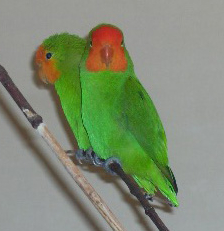
The red-headed barbet is a species of bird in the family Capitonidae, the New World barbets. It is found in Costa Rica, Guyana, Panama, Venezuela, Colombia, Ecuador and Peru.
Region
Central America and Northern Andes
Typical Environment
Occurs from the Caribbean and Pacific slopes of Costa Rica through western Panama, and south along the Andean foothills of Colombia, western Venezuela, Ecuador, and northern Peru. It favors humid premontane and montane forests, forest edges, and mature secondary growth. Frequently visits fruiting trees in clearings, along streams, and in shade-coffee landscapes. Typically found from the midstory to the canopy and can persist in moderately disturbed habitats.
Altitude Range
500–2200 m
Climate Zone
Subtropical
Ease of Keeping
Beginner friendly: 1/5
This vividly colored barbet shows strong sexual dimorphism: males have a bright red head while females are green-headed with buffy underparts. Using their stout bills, pairs excavate nest cavities in dead or decaying wood. They are important seed dispersers for many montane fruiting trees, swallowing fruits whole and later regurgitating the seeds.


Temperament
usually quiet, wary, and deliberate
Flight Pattern
short, direct flights with rapid wingbeats; often undulating between perches
Social Behavior
Typically seen singly, in pairs, or family groups, and sometimes joins mixed-species flocks when fruiting trees are abundant. Pairs excavate nest cavities in soft or dead wood and are presumed monogamous within a breeding season. Both sexes share incubation and chick rearing; clutch size is small, usually 2–4 eggs.
Migratory Pattern
Resident
Song Description
A rhythmic series of hollow, monotone notes—often rendered as repeated 'poop' or 'took'—delivered at steady tempo for extended periods. Calls include softer ticking notes and short trills, often given from concealed canopy perches.
Plumage
Male with scarlet head and throat, bright yellow to orange breast band, green upperparts, and yellowish to whitish belly; female lacks red, showing green head and back with buffy to yellow underparts and a paler throat. Both sexes have a thick, slightly hooked bill and fine, bristle-like feathers at the bill base.
Diet
Primarily frugivorous, taking a wide variety of berries, figs, and drupes, often swallowing fruits whole and later regurgitating seeds. Supplements its diet with insects and other small arthropods gleaned from foliage and bark, and occasionally by short sallies. Will visit fruiting trees repeatedly and may forage quietly within mixed flocks.
Preferred Environment
Feeds mainly in the midstory to canopy of humid premontane and montane forests, along edges, and in older secondary growth. Frequently concentrates at fruiting trees in clearings, riparian corridors, and shade-coffee plantations.