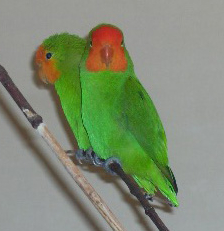
The red-headed bullfinch is a species of finch in the family Fringillidae, found all across the Himalayas and adjacent highlands. It is found in Bhutan, northern India, Nepal and adjacent southern Tibet. Its natural habitat is temperate forests.
Region
Himalayas
Typical Environment
Occurs from Bhutan and Nepal through northern India into adjacent southern Tibet, chiefly in temperate and subalpine forests. It favors mixed broadleaf–conifer woods with rhododendron, fir, and spruce, as well as forest edges and high-elevation scrub. In the non-breeding season it may descend to lower montane forests and wooded valleys. Birds typically forage quietly in the mid-story and canopy, often along sheltered slopes and ridgelines.
Altitude Range
2200–4200 m
Climate Zone
Highland
Ease of Keeping
Beginner friendly: 2/5
A quiet and often unobtrusive finch of the high Himalayas, the red-headed bullfinch is most easily found by its soft, piping calls. Males show a striking red head and breast, while females are more olive-brown and subdued. It undertakes seasonal altitudinal movements, descending in winter to lower forest belts. It can be confused with the brown bullfinch where ranges overlap, but the male’s red head is a clear distinction.


Pyrrhula erythrocephala - MHNT

Male and female from Pangolakha Wildlife Sanctuary, East Sikkim, India.
Temperament
quiet and unobtrusive
Flight Pattern
short undulating flights between trees
Social Behavior
Usually seen in pairs or small family groups during the breeding season, joining small flocks in autumn and winter. Nests are cup-shaped and placed in dense conifers or rhododendron thickets. Likely monogamous, with both parents provisioning the young. Outside breeding, it often forages with mixed-species flocks at suitable elevations.
Migratory Pattern
Partial migrant
Song Description
A soft series of mellow, piping whistles, often given as low, sweet ‘piu’ notes. Song is subdued and simple compared to many forest songbirds, carrying only a short distance in dense habitat.
Plumage
Male with vivid red head and breast contrasting with olive-brown to gray-olive upperparts and pale underparts; wings and tail dark. Female is overall olive-brown with warmer tones on the face and breast and lacks the male’s bright red. Both sexes have a stout, blackish conical bill and smooth, unspotted plumage.
Diet
Feeds primarily on seeds, buds, and soft plant material, including rhododendron and other montane shrubs. Takes berries and small fruits when available, and in the breeding season supplements the diet with small insects and larvae. It will nip developing buds and catkins, especially in early spring. Foraging is deliberate and quiet, often plucking items from twigs and cones.
Preferred Environment
Mid-story to canopy of temperate and subalpine forests, especially in mixed broadleaf–conifer stands with rhododendron undergrowth. Also uses forest edges, clearings with shrub cover, and subalpine scrub near treeline. In winter it may move to lower, denser woods and sheltered gullies.