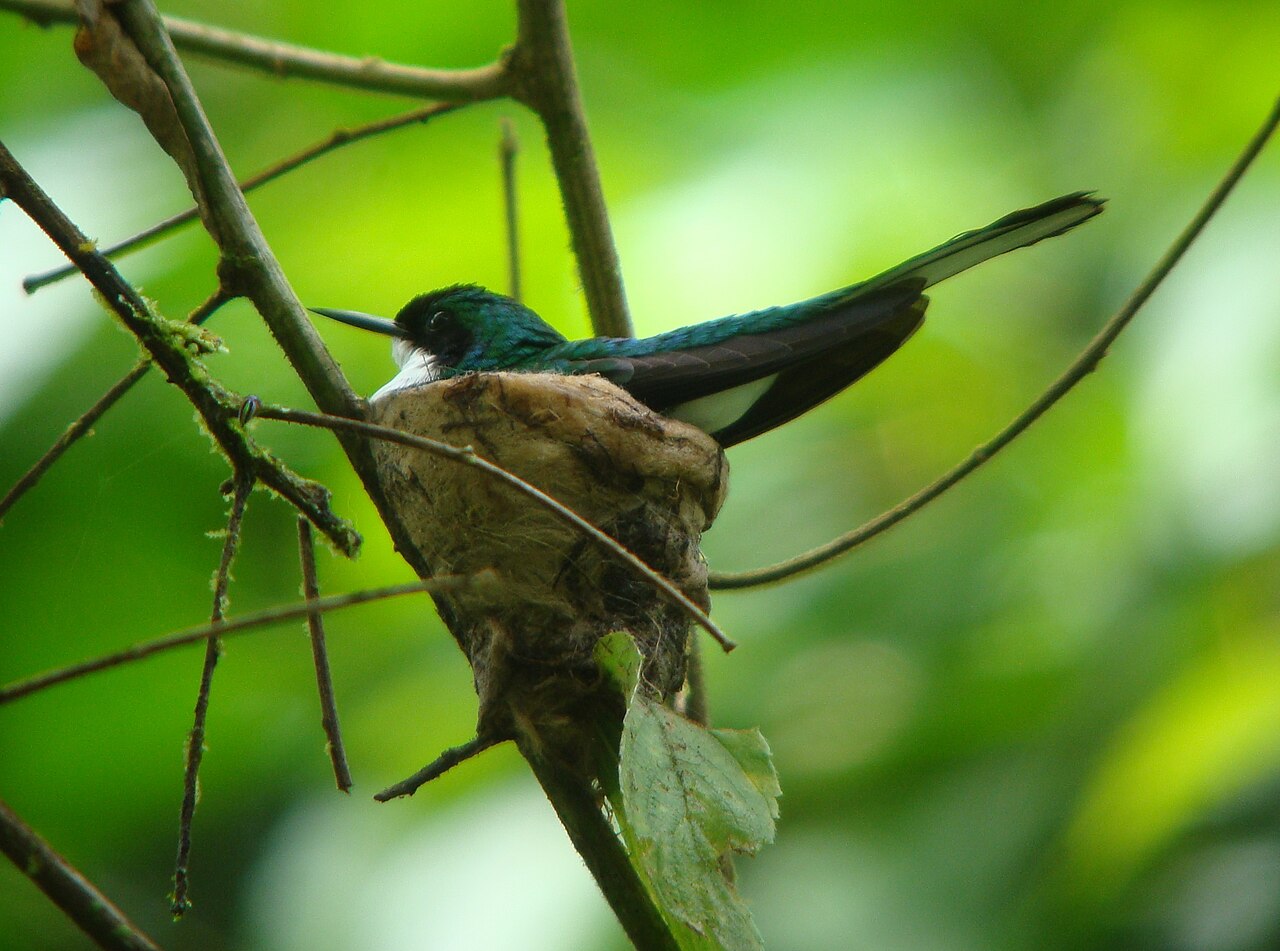
The purple-chested hummingbird is a species of hummingbird in the family Trochilidae. It is found in Colombia and Ecuador. Its natural habitats are subtropical or tropical moist lowland forest and heavily degraded former forest. It is commonly hunted for the supposed medicinal properties of its beak by indigenous peoples in the area.
Region
Chocó bioregion of western Colombia and northwestern Ecuador
Typical Environment
Occurs in humid lowland and foothill forests, edges, and tall second growth on the Pacific slope. It favors flower-rich clearings, riparian corridors, and forest edges where Heliconia, Inga, and epiphytic blooms are abundant. The species tolerates some habitat degradation and can be seen in plantations and gardens near forest. Core range lies along the coastal plain and adjacent foothills.
Altitude Range
Sea level to 900 m
Climate Zone
Tropical
Ease of Keeping
Beginner friendly: 1/5
Also known by its former name Amazilia rosenbergi, the purple-chested hummingbird is a Chocó lowland specialist with a striking iridescent violet-purple breast on the male. It readily uses forest edges and secondary growth and is a frequent visitor to Heliconia and other tubular flowers. Habitat loss in the Pacific lowlands of Colombia and Ecuador is the primary concern for this species.


Temperament
solitary and territorial
Flight Pattern
short rapid wingbeats with agile hovering and darting sallies
Social Behavior
Typically forages alone and defends rich flower patches against other hummingbirds. Courtship involves aerial chases; no long-term pair bond is formed. The female builds a small cup nest from plant down and spider silk on a slender branch and alone incubates and raises the young.
Migratory Pattern
Resident
Song Description
Vocalizations are high, thin chips and buzzy trills delivered from perches near feeding sites. Wing hum is prominent during close approaches and display chases.
Plumage
Iridescent green upperparts with a shimmering violet-purple throat and chest in males; underparts otherwise whitish to grayish with green sides. Females are greener with a paler throat that may show purplish spotting and a duller breast. Both sexes have a slightly decurved, slender bill and dusky wings.
Diet
Primarily nectar from tubular flowers including Heliconia, Inga, and a variety of shrubs and epiphytes. Supplements diet with small arthropods caught by hawking or gleaning from foliage, providing essential proteins. Will visit flowering trees and edge habitats where blooms are concentrated, and occasionally uses feeders.
Preferred Environment
Feeds along forest edges, clearings, riparian thickets, and secondary growth with abundant nectar sources. Often forages at mid-levels but will ascend into subcanopy or drop to understory depending on floral availability.