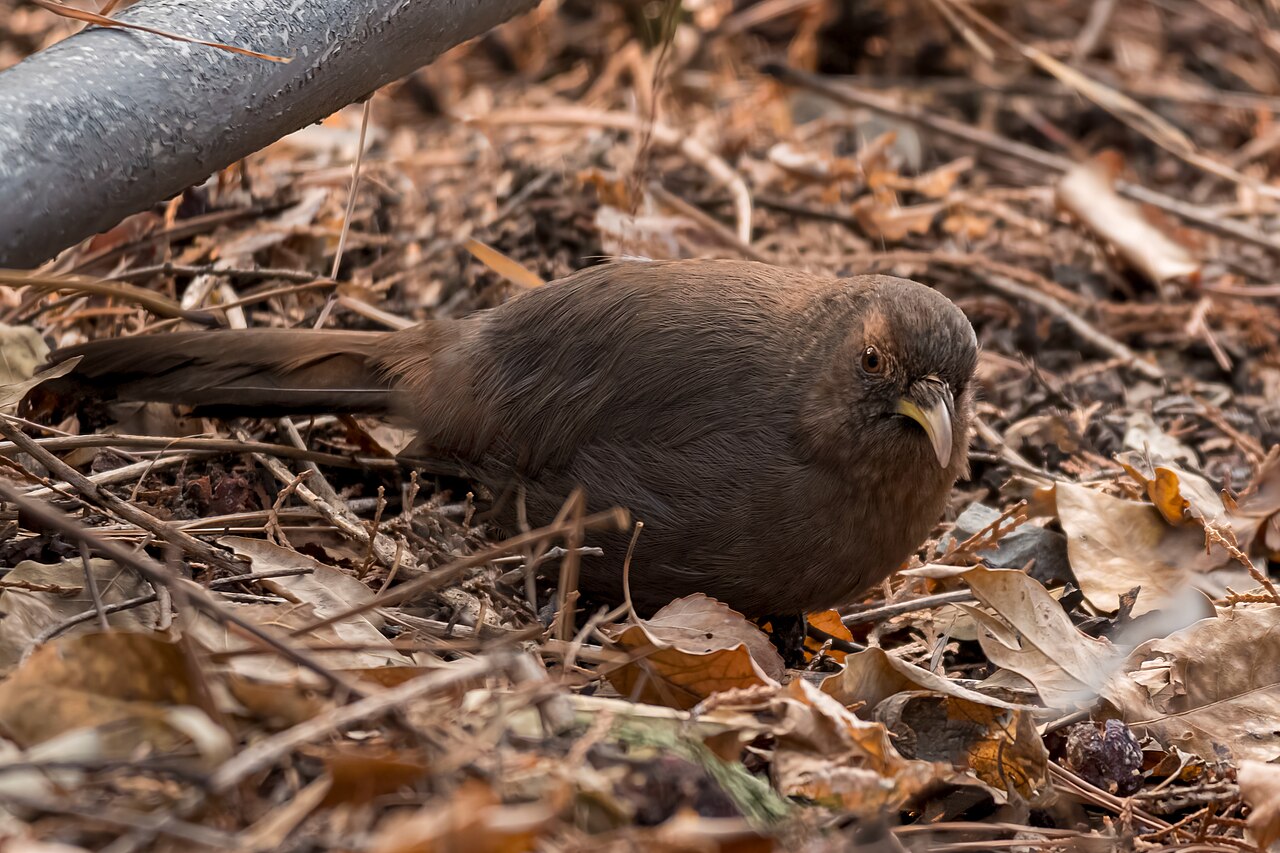
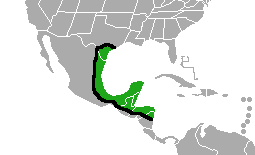
The plain chachalaca is a large bird in the chachalaca, guan and curassow family Cracidae. It breeds in tropical and subtropical environments from mezquital thickets in the Rio Grande Valley in southernmost Texas, United States to northernmost Costa Rica. In Central America, this species occurs in the Pacific lowlands from Chiapas, Mexico to northern Nicaragua and as a separate population in Costa Rica, where its range is separated by a short distance, as a disjunct population.
Region
Mesoamerica and southern United States
Typical Environment
Occurs from the Lower Rio Grande Valley of southern Texas through eastern and western Mexico into northern Central America, with populations extending to northern Nicaragua and disjunctly in Costa Rica. It favors dry to moist scrub, thorn forest, second-growth woodland, and forest edges, often near watercourses. The species also utilizes agricultural mosaics, orchards, and plantations, provided there is dense cover. It is generally absent from dense interior rainforest but common in semi-open habitats and mezquital thickets.
Altitude Range
Sea level to 1800 m
Climate Zone
Subtropical
Ease of Keeping
Beginner friendly: 2/5
The plain chachalaca is a noisy, social cracid whose name echoes its signature chorus, often delivered at dawn in synchronized family groups. It thrives in edge habitats and second-growth, adapting well to thickets, orchards, and riparian woods. During displays, males can show a reddish bare throat patch that inflates while calling. Despite hunting pressure in some areas, it remains common across much of its range.




O. v. vetulaTikal, Peten, Guatemala.

Plain chachalaca in Belize showing red throat-patch

Plain chachalacas can often be found in low scrubland
Temperament
social and noisy
Flight Pattern
short rapid wingbeats followed by glides
Social Behavior
Often travels in small family groups or loose flocks, moving through mid-story and low canopy as well as on the ground. Generally monogamous, with pairs maintaining territories during breeding season. Nests are shallow twig platforms placed in dense shrubs or trees; clutches are typically 2–4 eggs and both parents guard the brood.
Migratory Pattern
Resident
Song Description
A loud, rhythmic, and raucous chorus often rendered as cha-cha-LA-ca, delivered in synchronized bouts at dawn and dusk. Calls carry long distances and include grating cackles, chatters, and harsh squawks.
Plumage
Plain olive-brown to grayish-brown overall with a slightly grayer head and neck and paler underparts; long, graduated tail with a buffy tip and chestnut-tinged wings. Feathers are smooth and unpatterned, giving a uniformly drab look at distance.
Diet
Feeds mainly on fruits and berries, supplemented with young leaves, buds, flowers, and seeds. It occasionally takes small invertebrates, especially when feeding chicks. Diet varies seasonally according to fruiting cycles and locally available plants. It often swallows fruits whole and disperses seeds over wide areas.
Preferred Environment
Forages in edge habitats, secondary growth, scrub, and riparian woodland, frequently moving between trees and the ground. Readily uses orchards and plantations, especially where fruiting trees are abundant.