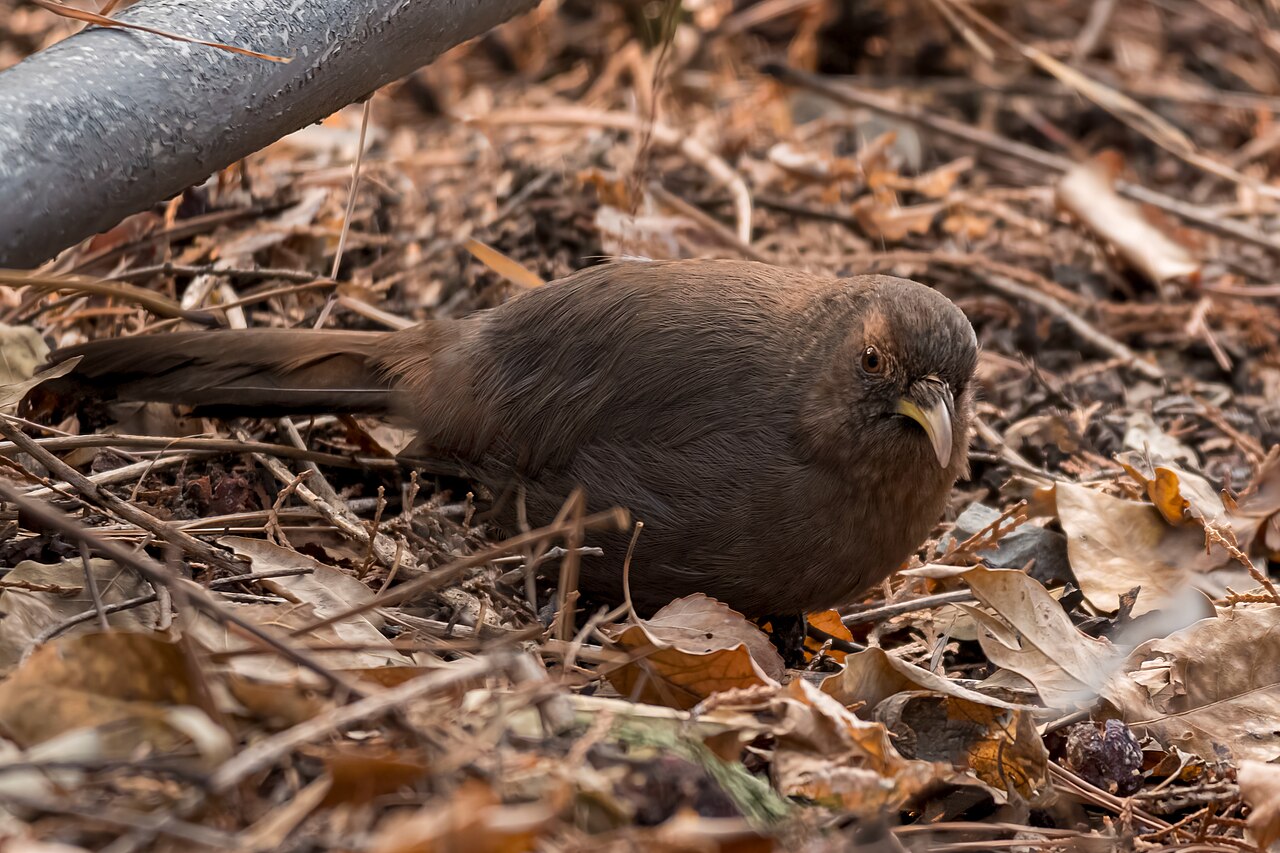
The plain honeyeater is a species of bird in the family Meliphagidae. It is found in Indonesia and Papua New Guinea. Its natural habitat is subtropical or tropical moist lowland forests.
Region
New Guinea
Typical Environment
Occurs across lowland and foothill rainforests of New Guinea, in both Papua New Guinea and Indonesian New Guinea (Papua and West Papua). It favors primary and well-developed secondary moist forests, including forest edges and riverine corridors. The species also visits flowering trees in disturbed habitats and village gardens near forest. It forages from the understory to mid-canopy, moving rapidly between flowering trees.
Altitude Range
Sea level to 1000 m
Climate Zone
Tropical
Ease of Keeping
Beginner friendly: 1/5
Despite its unadorned plumage, the plain honeyeater is an important pollinator of many lowland rainforest trees. It is often detected by its thin, piping calls and active foraging in the mid-story rather than by striking markings. Pairs or small parties frequently join mixed-species flocks, which helps them locate rich flowering patches.

Temperament
active and somewhat inconspicuous
Flight Pattern
short, direct flights with rapid wingbeats
Social Behavior
Usually seen singly, in pairs, or small family groups, and often joins mixed-species foraging flocks. Builds a small cup nest suspended in foliage; both parents are believed to help feed the young. Territorial around rich flowering resources but generally tolerant when blooms are abundant.
Migratory Pattern
Resident
Song Description
Calls are thin, high, and piping, interspersed with soft chattering notes. Song is modest and repetitive, more functional for contact than elaborate display.
Plumage
Plain, smooth-textured plumage with minimal patterning; slightly paler underparts and a subtly paler throat.
Diet
Takes nectar from a variety of flowering trees and shrubs, probing blossoms with its slightly decurved bill. Supplements nectar with small insects and spiders gleaned from foliage and caught on short sallies. Also consumes some soft fruits when available, especially during lower flower abundance.
Preferred Environment
Forages in forest understory to mid-canopy, at edges, clearings, and along streams where flowering plants are concentrated. Frequently visits secondary growth, gardens, and village trees when in bloom.