
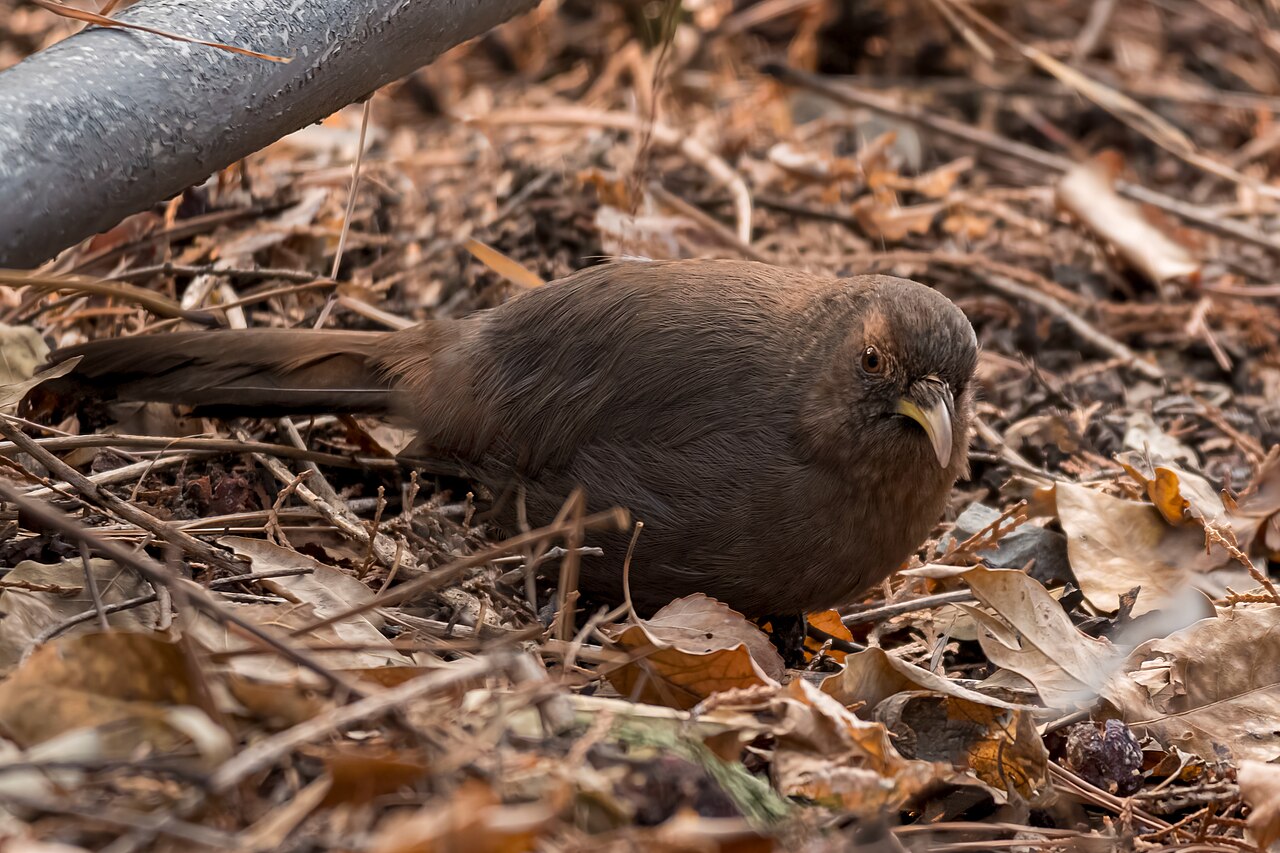
The plain laughingthrush or Père David's laughingthrush is a species of bird in the family Leiothrichidae. It is endemic to central and northeastern China. Its natural habitat is temperate forests.
Region
Central and Northeastern China
Typical Environment
Found in temperate deciduous and mixed forests, forest edges, ravines, and dense scrub across the northern Loess Plateau and nearby mountain foothills. It favors secondary growth, thickets, and bamboo understorey where it can move under cover. Birds also use hedgerows and shrublands near villages when dense cover is available. It is primarily a low to mid-montane species but will descend seasonally to lower wooded valleys.
Altitude Range
300–2300 m
Climate Zone
Temperate
Ease of Keeping
Beginner friendly: 2/5
Also known as Père David's laughingthrush, it belongs to the babbler family Leiothrichidae and is noted for its rich, chuckling vocalizations that can sound like laughter. It is a shy, ground-oriented skulker, more often heard than seen in dense thickets. Taxonomically it has been shuffled among laughingthrush genera in recent revisions.


Egg MHNT
Temperament
secretive and skulking, vocally conspicuous
Flight Pattern
short rapid wingbeats with low, bouncing flights through the understory
Social Behavior
Usually in pairs or small family groups, keeping close to dense cover. Nests are cup-shaped and placed low in shrubs or dense vegetation. Pairs are thought to be monogamous and may duet; family groups often remain together after fledging.
Migratory Pattern
Resident
Song Description
Loud, varied series of chuckles, cackles, and rich whistles that carry through forested valleys. Calls include scolding churs and chatter; pairs may engage in antiphonal duets that sound like laughter.
Plumage
Overall plain, warm brown plumage with a slightly paler, sometimes faintly streaked throat and breast; tail and undertail often tinged rufous. Feathers appear smooth and unpatterned, giving a uniformly brown impression at distance. Underparts are buffier, with minimal contrast.
Diet
Eats a mix of insects and other invertebrates (beetles, caterpillars, spiders) taken from leaf litter and low foliage. Also consumes seeds and a variety of fruits and berries, especially in autumn and winter. Will opportunistically take small invertebrates flushed by foraging and may probe mossy logs and soil.
Preferred Environment
Forages on or near the ground in dense undergrowth, along forest edges, and in shrubby clearings. Often works through leaf litter and tangles, moving methodically under cover and occasionally hopping into low bushes to take fruit.


