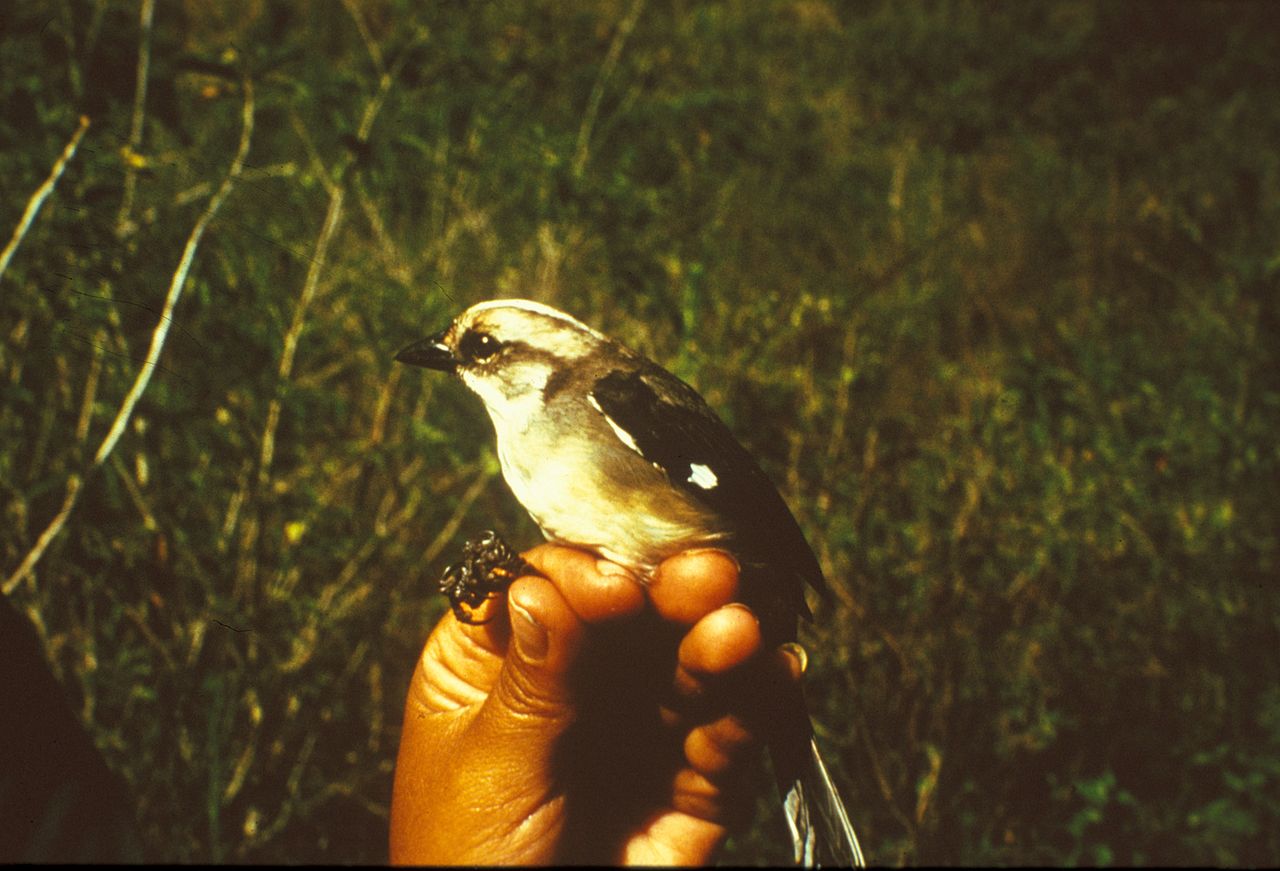
The pale-faced bare-eye, sometimes known as the pale-faced antbird, is a species of bird in subfamily Thamnophilinae of family Thamnophilidae, the "typical antbirds". It is endemic to Brazil.
Region
Central Amazon Basin, Brazil
Typical Environment
Occurs in lowland terra firme rainforest within central Brazilian Amazonia, particularly between major rivers where large tracts of intact forest persist. It favors dense, shaded understory and midstory strata, typically in mature forest with a closed canopy. The species is most frequently encountered at active army ant swarms where it forages near the ground. It generally avoids fragmented habitats and open edges. Records are concentrated in interfluvial regions, reflecting both true distribution and the difficulty of detecting the species away from ant swarms.
Altitude Range
0–600 m
Climate Zone
Tropical
Ease of Keeping
Beginner friendly: 1/5
The pale-faced bare-eye is an obligate follower of army ant swarms, snatching insects and other small prey flushed by the ants. Its most striking feature is the pale, bare skin around the eye, which contrasts with its darker body. It keeps to the dim rainforest understory and is often first detected by its soft, whistled calls. Like many antbirds, it is shy and easily overlooked away from active ant swarms.
Temperament
secretive and forest-dependent
Flight Pattern
short rapid wingbeats with low, direct dashes between cover
Social Behavior
Typically occurs in pairs or small family groups, often maintaining contact while moving through the understory. Strongly tied to army ant swarms where multiple ant-following species may aggregate, but it keeps a preferred position close to the ground. Nests are placed low in dense vegetation; the pair shares incubation and chick-rearing duties. Territorial vocal duets may be given near the nest or during foraging.
Migratory Pattern
Resident
Song Description
Song consists of soft, plaintive whistles delivered in 2–4 notes, sometimes accelerating slightly at the end. Calls include sharp chips and subdued notes exchanged between pair members. Vocalizations carry poorly in dense forest, aiding its secretive habits.
Plumage
Dusky to dark brown body with warmer rufous tones on the wings; feathers appear soft and relatively plain without strong barring. The face shows an extensive patch of bare, pale skin around the eye that contrasts with the darker head and body.
Diet
Primarily captures arthropods—especially insects and spiders—flushed by columns of army ants. Takes prey from the leaf litter and low vegetation with short sallies or pounces. Occasionally consumes small vertebrates or other invertebrates when available, but insects dominate. It relies on the predictable disturbance created by ant swarms rather than actively digging in the leaf litter.
Preferred Environment
Feeds in the shaded understory of mature terra firme forest, typically within 0–2 meters of the ground around active army ant swarms. It remains near dense cover, moving along logs, buttresses, and vine tangles. Avoids open areas and heavily disturbed forest while foraging.