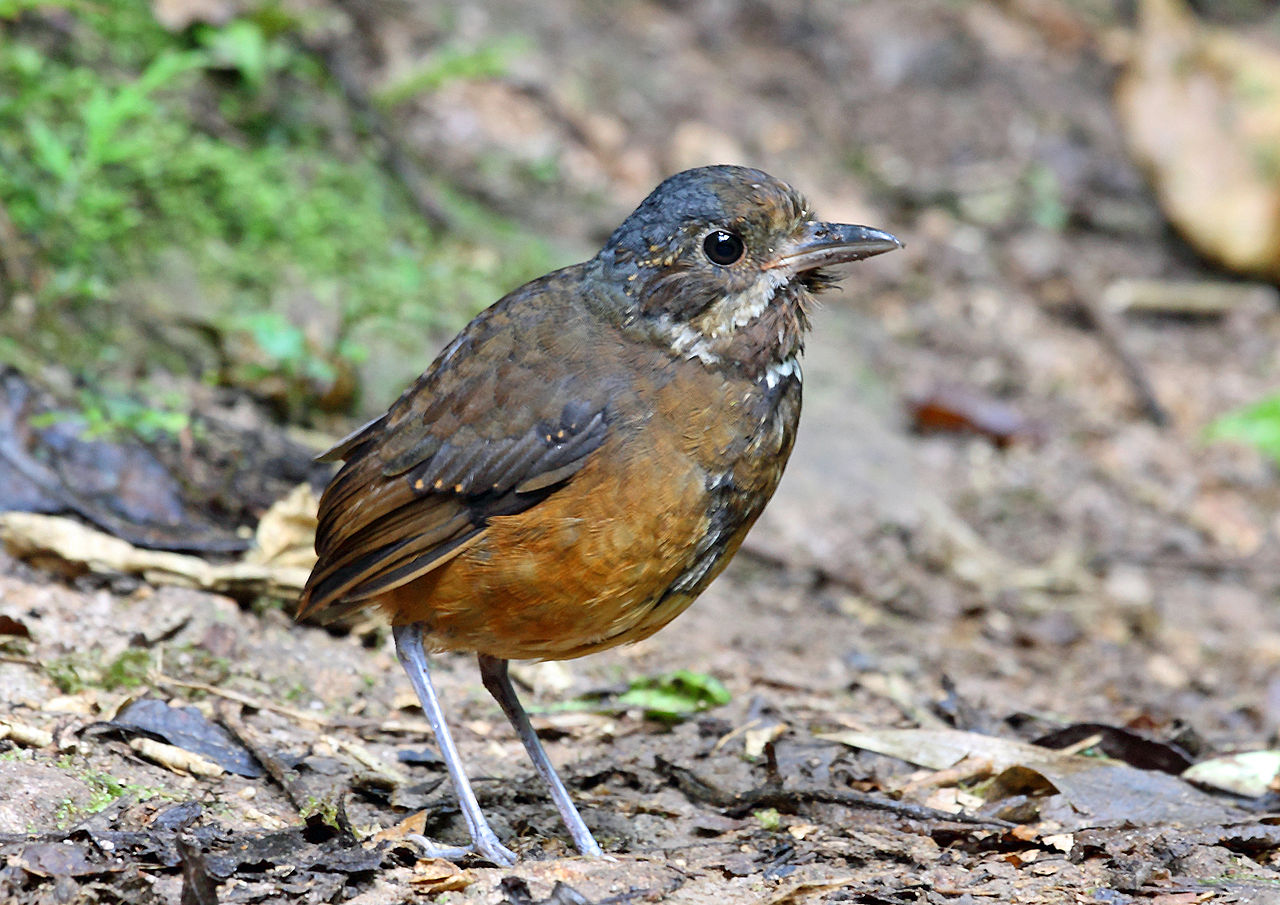
The mouse-colored thistletail is a species of bird in the Furnariinae subfamily of the ovenbird family Furnariidae. It is found in Ecuador and Peru.
Region
Andes Mountains
Typical Environment
Occurs in the high Andes of southern Ecuador south into northern Peru, favoring humid montane scrub, elfin forest edges, and páramo with dense bunchgrasses and Chusquea bamboo. It stays near the ground or low shrubs, weaving through dense foliage where it is more often heard than seen. It tolerates shrubby ecotones and grassy slopes, including areas with scattered Polylepis. Localized but can be fairly common where suitable cover is continuous.
Altitude Range
2900–4200 m
Climate Zone
Highland
Ease of Keeping
Beginner friendly: 1/5
This small furnariid skulks through dense páramo grasses and dwarf bamboo, often keeping its long, ragged tail cocked for balance. Its taxonomy has bounced between the genera Asthenes and Schizoeaca, reflecting its specialized high-Andean lifestyle. Pairs keep close contact with thin, ticking calls and an accelerating trill that carries in windy montane habitats.


Temperament
skulking and active
Flight Pattern
short rapid wingbeats, low and direct between cover
Social Behavior
Usually encountered singly or in pairs, sometimes with dependent juveniles. Territorial pairs keep contact with soft calls while foraging through dense grasses. Nests are typically domed or ball-like structures hidden low in dense vegetation, lined with fine fibers.
Migratory Pattern
Resident
Song Description
Song is a thin, high, accelerating trill or series that rises and then levels off, cutting through wind. Calls include dry ticks and thin seep notes used to maintain contact in cover.
Plumage
Uniform mouse-gray to grayish-brown with subtle mottling, contrasting warmer rufescent wings and long, ragged, graduated tail. Underparts are dull gray-brown with a slightly paler throat and faint streaking at close range.
Diet
Primarily small arthropods such as insects and spiders gleaned from grass tussocks, bamboo stems, and low shrubs. It probes leaf bases and dead foliage and occasionally snatches prey from the ground surface. Foraging is methodical, with frequent tail flicks and brief hops within dense cover.
Preferred Environment
Feeds in dense páramo bunchgrasses, Chusquea bamboo patches, and shrub tangles along elfin forest edges. Often stays within a meter or two of the ground where prey is abundant and wind exposure is reduced.