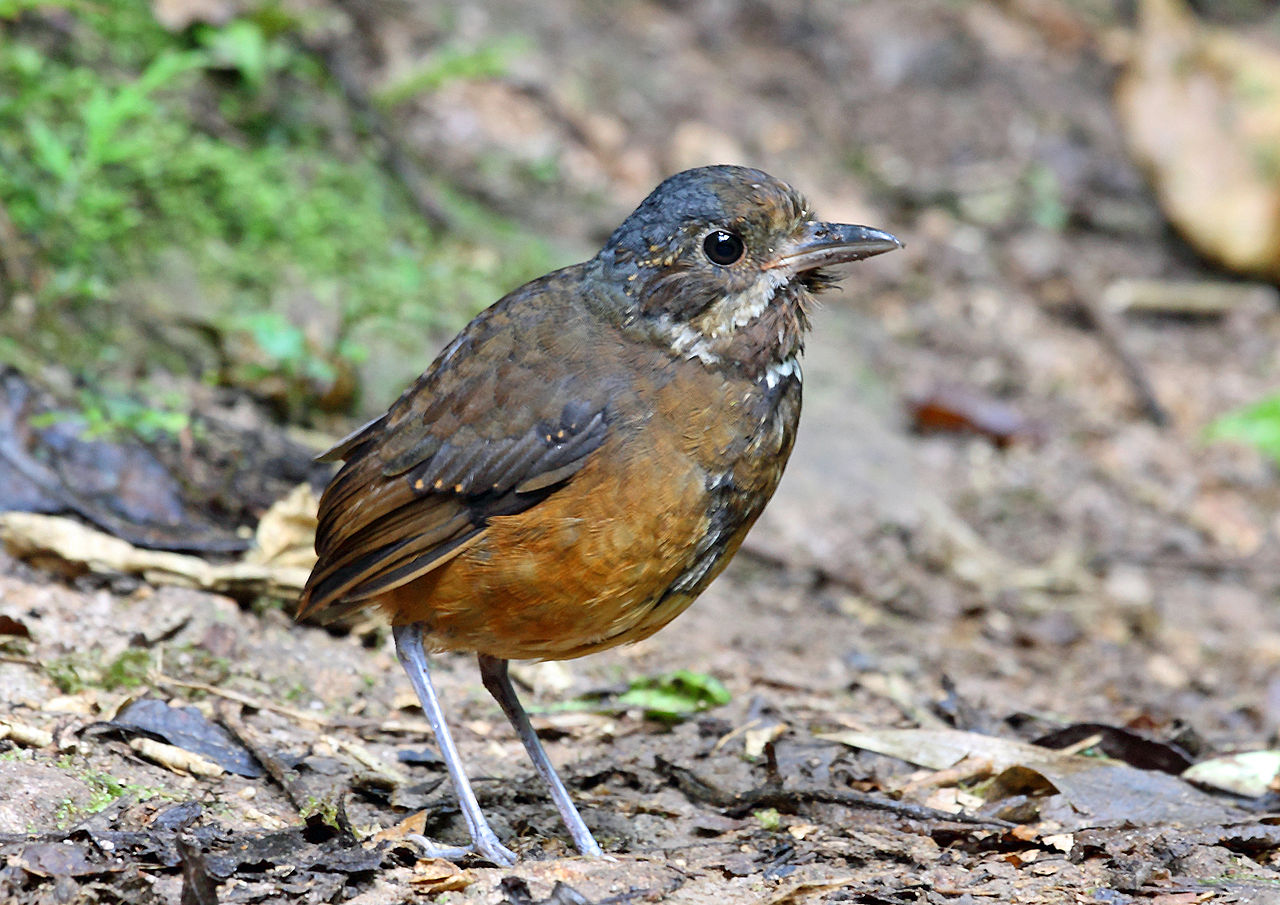
The mouse-coloured tapaculo or Serra do Mar tapaculo is a species of bird in the family Rhinocryptidae. It is endemic to humid highland forests in southeastern Brazil, where it ranges from southwestern Espírito Santo to northeastern Rio Grande do Sul. Most of its range is in the Serra do Mar, but it also occurs further inland in Paraná and Santa Catarina. Until 2005, the Planalto tapaculo was included in the mouse-coloured tapaculo.
Region
Southeastern Brazil (Atlantic Forest)
Typical Environment
Occurs mainly along the Serra do Mar from southwestern Espírito Santo south through Rio de Janeiro, São Paulo, Paraná, and Santa Catarina to northeastern Rio Grande do Sul, with some inland populations in Paraná and Santa Catarina. It inhabits humid montane and foothill forests, favoring dense understory, bamboo patches, and mossy gullies. The species also uses older secondary forest and forest edges where thick cover persists. It keeps close to the ground, often near streams and shaded slopes where moisture is high.
Altitude Range
600–2000 m
Climate Zone
Subtropical
Ease of Keeping
Beginner friendly: 1/5
A secretive understory specialist of Brazil’s Atlantic Forest, it is more often heard than seen, delivering rapid, repetitive trills from dense cover. Long treated broadly, it was taxonomically clarified in the 2000s, with the Planalto tapaculo split off as a separate species. It creeps mouse-like through mossy ravines and bamboo thickets, flicking its short tail and foraging close to the ground.


Temperament
solitary and territorial
Flight Pattern
short rapid wingbeats
Social Behavior
Usually found alone or in pairs, maintaining small territories within dense cover. Nests are typically globular structures placed in banks, cavities, or among roots, built from moss and plant fibers. Pairs communicate with persistent songs and calls, especially during the breeding season.
Migratory Pattern
Resident
Song Description
Song is a fast, mechanical trill of evenly spaced notes that can accelerate or slightly rise, carrying surprisingly well through dense vegetation. Calls include sharp ticks and thin, high notes used for contact and alarm.
Plumage
Compact, largely plain slaty to mouse-grey with slightly browner or faintly barred flanks and undertail coverts; feathers appear soft and dense, aiding in stealthy movement through understory.
Diet
Feeds primarily on small arthropods such as insects and spiders, gleaned from leaf litter, moss, and tangles near the ground. It probes into crevices, root mats, and bamboo sheaths, often pausing to listen before making short dashes. Occasionally takes other small invertebrates and may incidentally consume tiny seeds while foraging.
Preferred Environment
Forages in dense understory and bamboo thickets of humid montane forest, especially along shaded stream ravines and moist slopes. Frequently remains within a meter of the ground, moving mouse-like through cover and along fallen logs.