
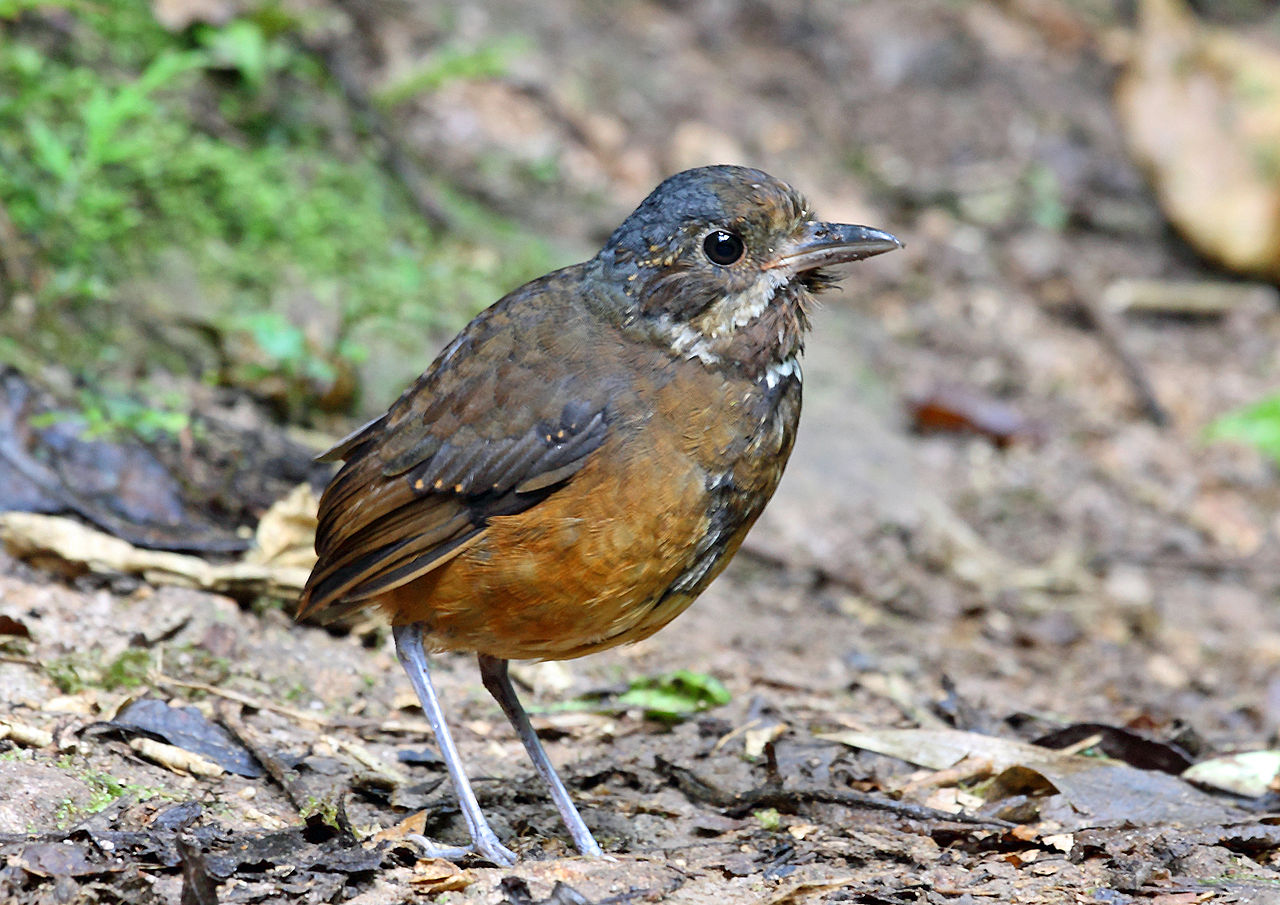
The moustached antpitta is a Vulnerable species of bird placed in the family Grallariidae. It is found in Colombia and Ecuador.
Region
Northern Andes
Typical Environment
Occurs on the east slope of the Andes in southern Colombia and northern Ecuador, primarily in humid montane cloud forests. It favors dense understory, especially in Chusquea bamboo and mossy thickets. The species keeps to shaded ravines, forest edges, and interior trails with deep leaf litter. It is generally local and patchily distributed where suitable habitat remains. Habitat degradation and clearance limit its continuity across the range.
Altitude Range
1400–2600 m
Climate Zone
Tropical
Ease of Keeping
Beginner friendly: 1/5
The moustached antpitta is a shy, ground-dwelling bird of humid Andean cloud forests, named for its bold white moustachial stripes. It spends most of its time in dense understory and bamboo thickets, where it forages quietly on the forest floor. Habitat loss and fragmentation have led to its Vulnerable status. It is more often heard than seen, delivering clear, mournful whistles at dawn and dusk.


Temperament
solitary and territorial
Flight Pattern
short rapid wingbeats, low and direct through understory
Social Behavior
Typically encountered alone or in pairs, maintaining territories within dense understory. Nests are usually mossy cups placed low, with a clutch of one or two eggs. Both parents are thought to share incubation and chick-rearing duties. It is highly secretive, often freezing or slipping into cover when disturbed.
Migratory Pattern
Resident
Song Description
Delivers clear, mournful whistles given singly or in short series, often with evenly spaced notes. The song carries well at dawn and dusk through cloud forest. Calls include soft, piping notes and low contact whistles.
Plumage
Upperparts olive-brown to brown with a slightly warmer rump; underparts rich buff to rufous with subtle dusky scaling on the breast. Face dusky with bold, contrasting white moustachial stripes and a pale throat. Feathers appear soft and dense, adapted to humid forest conditions.
Diet
Primarily feeds on arthropods such as beetles, ants, caterpillars, and spiders gleaned from leaf litter. It also takes earthworms and occasionally small amphibians or other invertebrates. Foraging is methodical, with short hops and pauses to scan and probe. It may attend army-ant swarms opportunistically along forest floor corridors.
Preferred Environment
Dense, shaded understory with deep leaf litter and mossy ground, especially within bamboo (Chusquea) stands. Often along forest trails, gullies, and stream edges where prey is concentrated. Avoids open areas and heavily disturbed forest.


