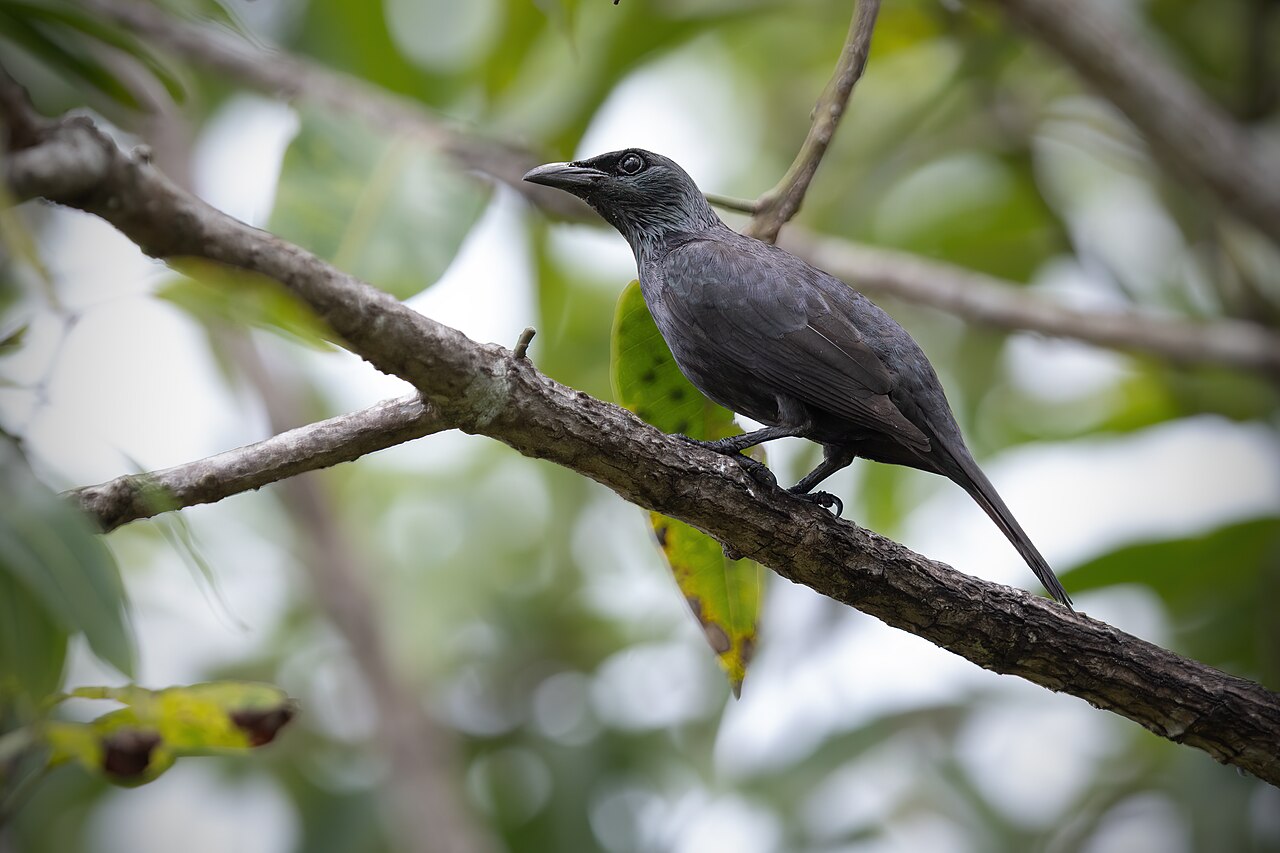
The Moluccan owlet-nightjar, also known as the long-whiskered owlet-nightjar, is a species of bird in the family Aegothelidae. It is endemic to the northern Moluccas.
Region
Northern Moluccas, Indonesia
Typical Environment
Occurs on islands such as Halmahera, Morotai, Bacan, and nearby islets, primarily in lowland and foothill forests. It favors primary rainforest but also uses well-structured secondary growth and forest edges. Roost sites are typically in tree holes, tangles of vines, or dense understory. It forages within the forest interior, along clearings, and occasionally near streams.
Altitude Range
Sea level to 1200 m
Climate Zone
Tropical
Ease of Keeping
Beginner friendly: 1/5
Also called the long-whiskered owlet-nightjar, this elusive nocturnal bird is known for its prominent facial bristles (rictal bristles) that help detect prey near the bill. It roosts quietly in tree cavities or dense foliage by day and is seldom seen, often detected only by its soft calls at dusk. Habitat loss in the northern Moluccas could affect local populations, making intact forest important for its persistence.

Temperament
solitary and secretive
Flight Pattern
short rapid wingbeats with brief glides
Social Behavior
Typically roosts alone or in pairs in cavities or dense cover. Breeding is presumed to involve nesting in natural tree hollows, laying a small clutch that both parents likely attend. Territorial calling occurs around dusk and at night.
Migratory Pattern
Resident
Song Description
Calls are soft, repetitive whistles and trills delivered at dusk and during the night. Phrases are spaced and can carry through forest understory, aiding contact between mates.
Plumage
Mottled and barred brown, rufous, and grey with fine streaking, giving excellent camouflage against bark. The face shows long whisker-like rictal bristles and a subtle pale throat. Upperparts are intricately patterned; underparts are barred and lightly spotted.
Diet
Feeds mainly on nocturnal insects such as moths, beetles, and orthopterans. It hunts by sallying from low to mid-level perches and occasionally gleaning from foliage or trunks. The wide gape and sensitive facial bristles help capture prey in low light.
Preferred Environment
Forages along forest edges, gaps, and shaded understory within primary and mature secondary forest. It may also use riparian corridors and lightly disturbed habitats with sufficient cover.