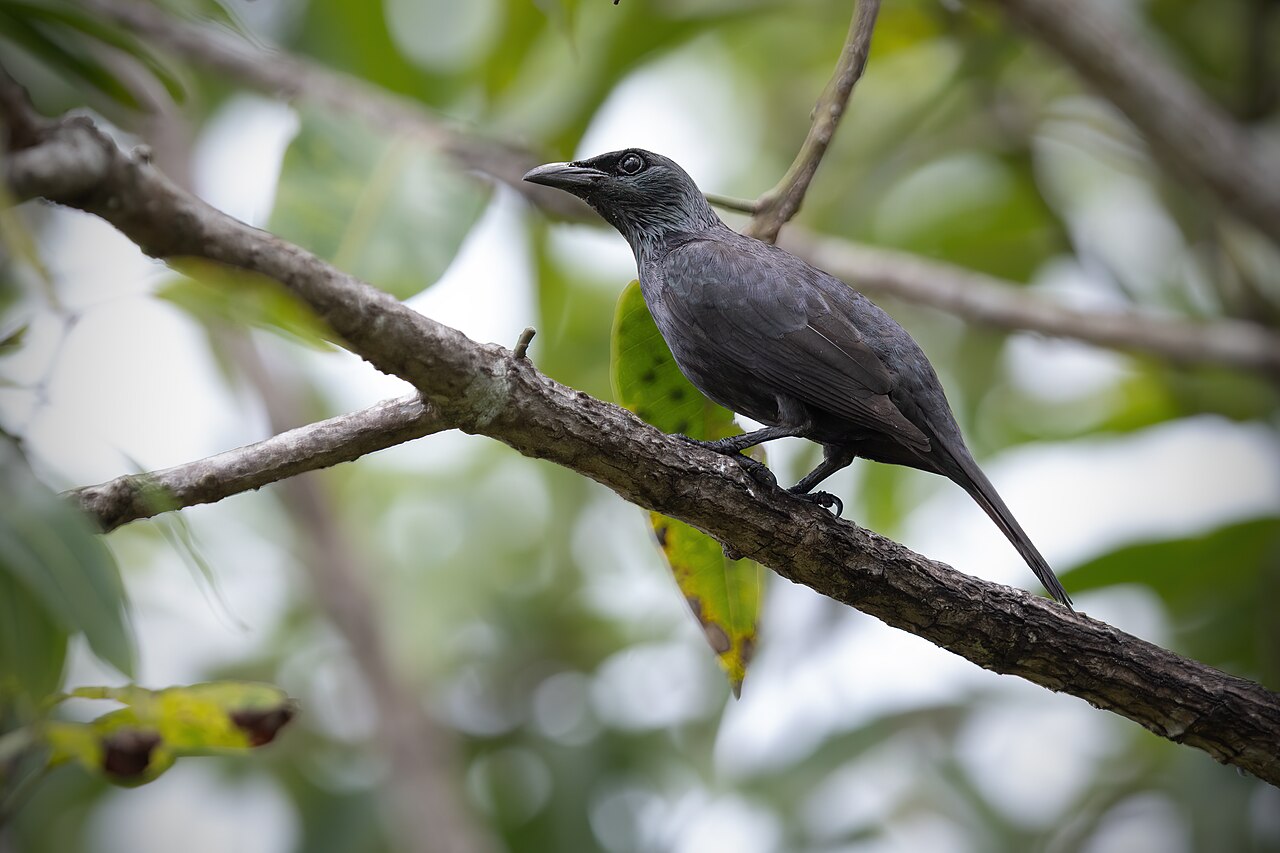
The Moluccan starling is a species of starling in the family Sturnidae. It is endemic to Indonesia.
Region
Maluku (Moluccas) and nearby islands, Indonesia
Typical Environment
This species inhabits lowland and hill forests across parts of the Maluku Islands, using both primary and well-developed secondary growth. It frequents forest edges, riverine strips, mangroves, coconut groves, and village gardens where fruiting trees are abundant. The bird readily ventures into plantations and semi-open mosaics, provided tall trees remain for roosting and nesting. It can be locally common around fruiting figs. On smaller islands, it may occur from coastlines into interior foothills.
Altitude Range
0–1200 m
Climate Zone
Tropical
Ease of Keeping
Beginner friendly: 1/5
The Moluccan starling is a glossy, forest-loving starling restricted to Indonesia’s Maluku (Moluccan) and nearby islands. It adapts well to disturbed habitats and often visits fruiting trees in villages and plantations. Like many starlings, it is social outside the breeding season and may form noisy mixed flocks. Its conservation status is generally considered of least concern, but localized habitat loss can affect some island populations.

Temperament
social and active
Flight Pattern
direct flight with rapid wingbeats
Social Behavior
Outside the breeding season, it often forms small flocks and may join mixed-species groups at fruiting trees. Pairs likely defend small territories around nest sites during breeding. Nests are typically placed in tree cavities or crevices, and both sexes participate in care of the young.
Migratory Pattern
Resident
Song Description
Vocalizations include a varied series of chatters, whistles, and metallic notes. Calls can be loud and carry over the canopy, especially at dawn and near communal roosts.
Plumage
Overall dark, glossy plumage with greenish to purplish iridescence, especially on the head and upperparts; underparts typically uniform and sleek.
Diet
It feeds on a wide variety of fruits and berries, including figs and other canopy fruits. Insects and other small invertebrates are also taken, gleaned from foliage and captured on short sallies. It may occasionally consume nectar or soft plant matter when available. Seasonal fruiting events can strongly influence local movements and flocking.
Preferred Environment
Foraging occurs mainly in the mid- to upper canopy and along forest edges. The species readily visits fruiting trees in gardens and plantations, and will also feed in mangroves and coastal groves.