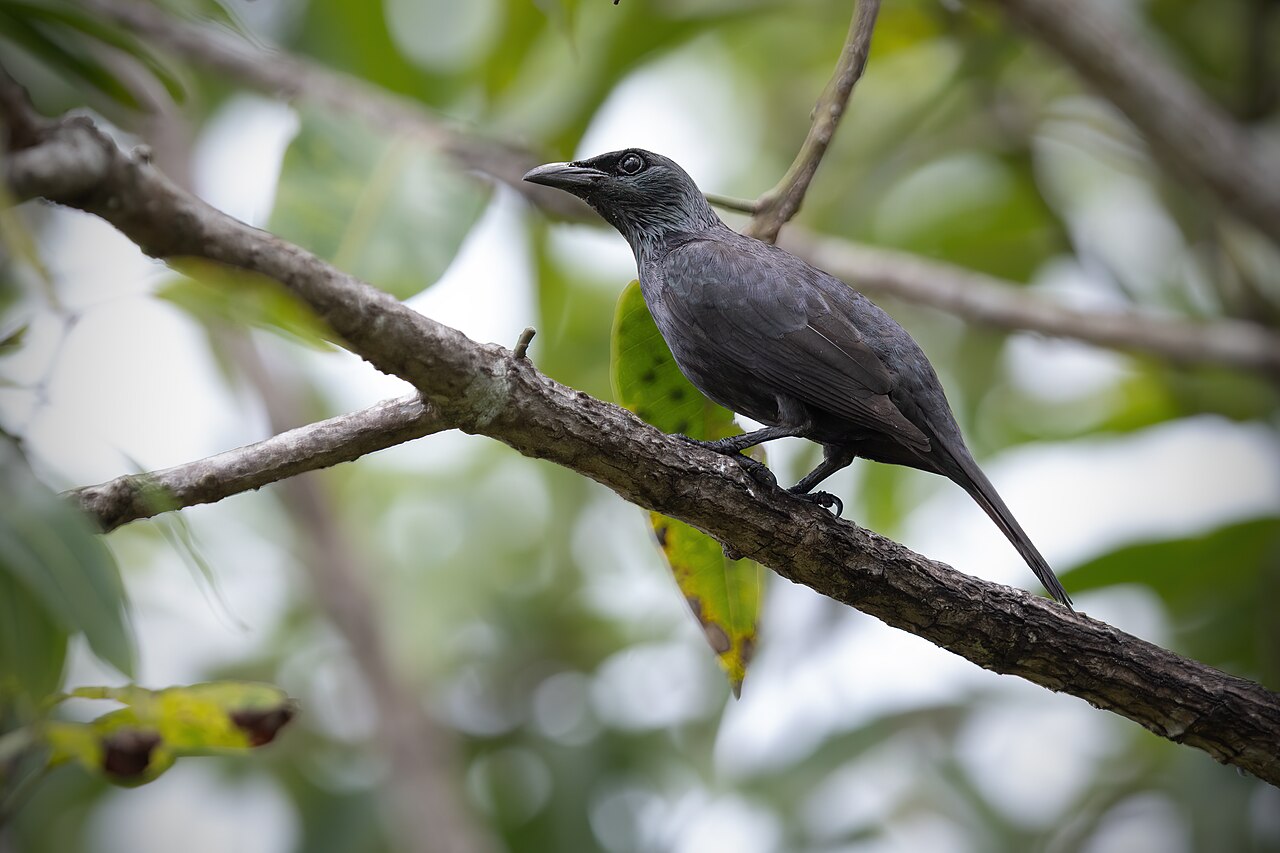
The Moluccan megapode, also known as Wallace's scrubfowl, Moluccan scrubfowl or painted megapode, is a small, approximately 31 cm long, olive-brown megapode. The genus Eulipoa is monotypic, but the Moluccan megapode is sometimes placed in Megapodius instead. Both sexes are similar with an olive-brown plumage, bluish-grey below, white undertail coverts, brown iris, bare pink facial skin, bluish-yellow bill and dark olive legs. There are light grey stripes on reddish-maroon feathers on its back. The young has brownish plumage, a black bill, legs and hazel iris.
Region
Maluku Islands (Moluccas), Indonesia
Typical Environment
Occurs on several islands in the central and northern Maluku, including Seram, Buru, Halmahera, and nearby smaller islands such as Ambon and Haruku. It forages in lowland and hill evergreen forest, secondary growth, and edges of coastal woodland. Nesting takes place on traditional communal beaches or geothermal sites with warm, loose substrate. Birds travel between inland forest feeding areas and coastal nesting grounds, often crossing narrow straits at night. The species can persist in partially disturbed habitats but requires undisturbed nesting sites to thrive.
Altitude Range
Sea level to 1200 m
Climate Zone
Tropical
Ease of Keeping
Beginner friendly: 1/5
This species is a mound-building megapode that relies on warm sand and geothermal or solar-heated soils to incubate its eggs rather than brooding them. Adults commute at night from forest feeding areas to communal nesting beaches to lay. Chicks hatch fully feathered, dig themselves out, and can fly within hours without parental care. Heavy traditional egg-harvesting at nesting beaches is a major conservation concern.

Temperament
shy and crepuscular
Flight Pattern
short rapid wingbeats with direct, low flights
Social Behavior
Away from nesting grounds it is typically solitary or in loose pairs while foraging on the forest floor. It gathers at traditional communal nesting beaches where many females lay eggs in separate burrows dug into warm sand. There is no parental care after egg-laying; chicks are superprecocial and independent immediately upon emergence. Territoriality is limited around digging sites, with brief disputes over burrow space.
Migratory Pattern
Resident
Song Description
Vocalizations include harsh cackles, clucking calls, and nasal whistles, especially around nesting beaches at night. Contact calls are low and guttural, while alarm notes are sharper and more rapid.
Plumage
Olive-brown upperparts with reddish-maroon feathers on the back showing light grey striping; bluish-grey underparts with white undertail coverts. Feathers are smooth and plain overall, with subtle mottling on the mantle.
Diet
Feeds on fallen fruits, seeds, and various invertebrates such as beetles, ants, termites, worms, and small snails. It scratches through leaf litter with strong legs to uncover prey. Opportunistic near coastal edges, it may also take small crabs or other shoreline invertebrates. Diet composition varies seasonally with fruiting and insect availability.
Preferred Environment
Primarily forages on the forest floor of lowland and hill rainforest, edges, and secondary growth. It also uses plantation edges and coastal scrub near nesting beaches where cover is available. Feeding often occurs in dense leaf litter and understorey thickets.