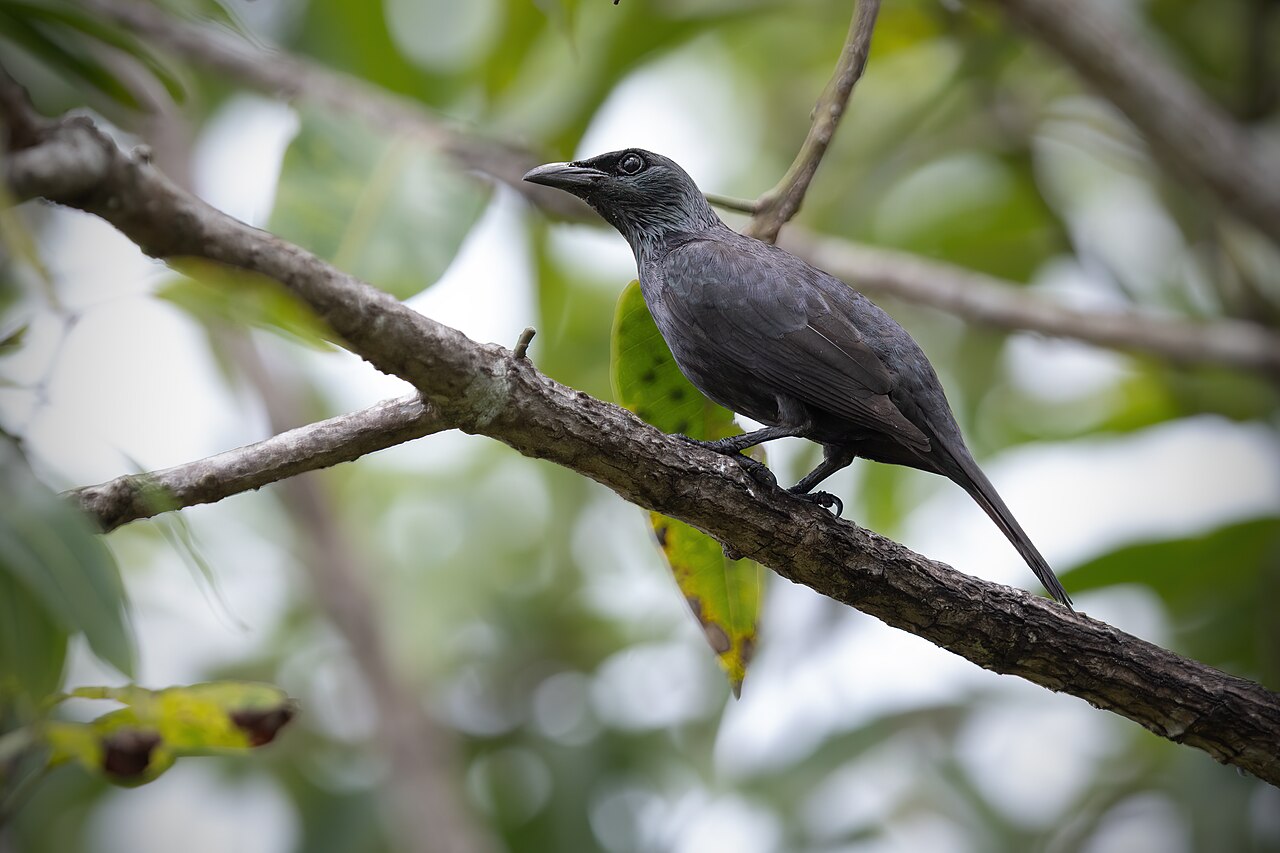
The Moluccan island thrush, also known as the Sula island thrush, is a species of passerine bird in the thrush family Turdidae. It is endemic to Indonesia. Prior to 2024 it was considered to be two separate subspecies of the island thrush.
Region
Maluku (Moluccas), Wallacea
Typical Environment
Occurs in the Sula Islands and nearby Moluccan islands, primarily in intact and lightly disturbed evergreen forest. It uses hill and lower montane forest, forest edges, and older secondary growth with a closed canopy and thick understory. Birds often keep to shaded gullies, vine tangles, and mossy slopes, moving between the floor and midstory. It will visit fruiting trees and may appear along quiet trails and ridgelines after rain.
Altitude Range
0–2000 m
Climate Zone
Tropical
Ease of Keeping
Beginner friendly: 1/5
The Moluccan island thrush is part of the recently split Island Thrush complex and occurs on several islands in the northern Moluccas (Sula Islands) of Indonesia. It favors forested uplands and often forages quietly on or near the forest floor, making it easy to overlook. Plumage and tone can vary subtly between islands, but its thrush-like stance, rich calls, and preference for dense understory are consistent. As with many Wallacean endemics, its conservation outlook will depend on the pace of habitat loss.
Temperament
shy and retiring
Flight Pattern
short rapid wingbeats
Social Behavior
Typically seen singly or in pairs within territories, especially during breeding. Nests are cup-shaped and placed in shrubs or low trees, built from vegetation and rootlets. Outside the breeding season, may associate loosely at fruiting trees but seldom forms large flocks.
Migratory Pattern
Resident
Song Description
Song is a series of mellow, fluty whistles and phrases delivered from a hidden perch, with clear pauses and gentle cadence. Calls include soft tchik notes and thin, high contact whistles, often given at dawn and after rainfall.
Plumage
Sooty-brown to dark olive-brown above with slightly paler, warmer brown underparts; throat often paler with fine dusky streaking. Subtle scaling or mottling may be present on the breast, with cleaner belly and vent. Feathers appear matte with limited gloss, aiding camouflage in deep shade.
Diet
An opportunistic omnivore that takes small insects, beetles, caterpillars, and other invertebrates gleaned from leaf litter and low foliage. It also consumes berries and small fruits, especially when invertebrates are less active. Occasional probing forworms and larvae occurs along damp edges and fallen logs.
Preferred Environment
Forages on the forest floor, along shady trails, and within dense understory, moving to the midstory to pick fruit. Frequently visits fruiting shrubs and small trees in forest gaps and edges.