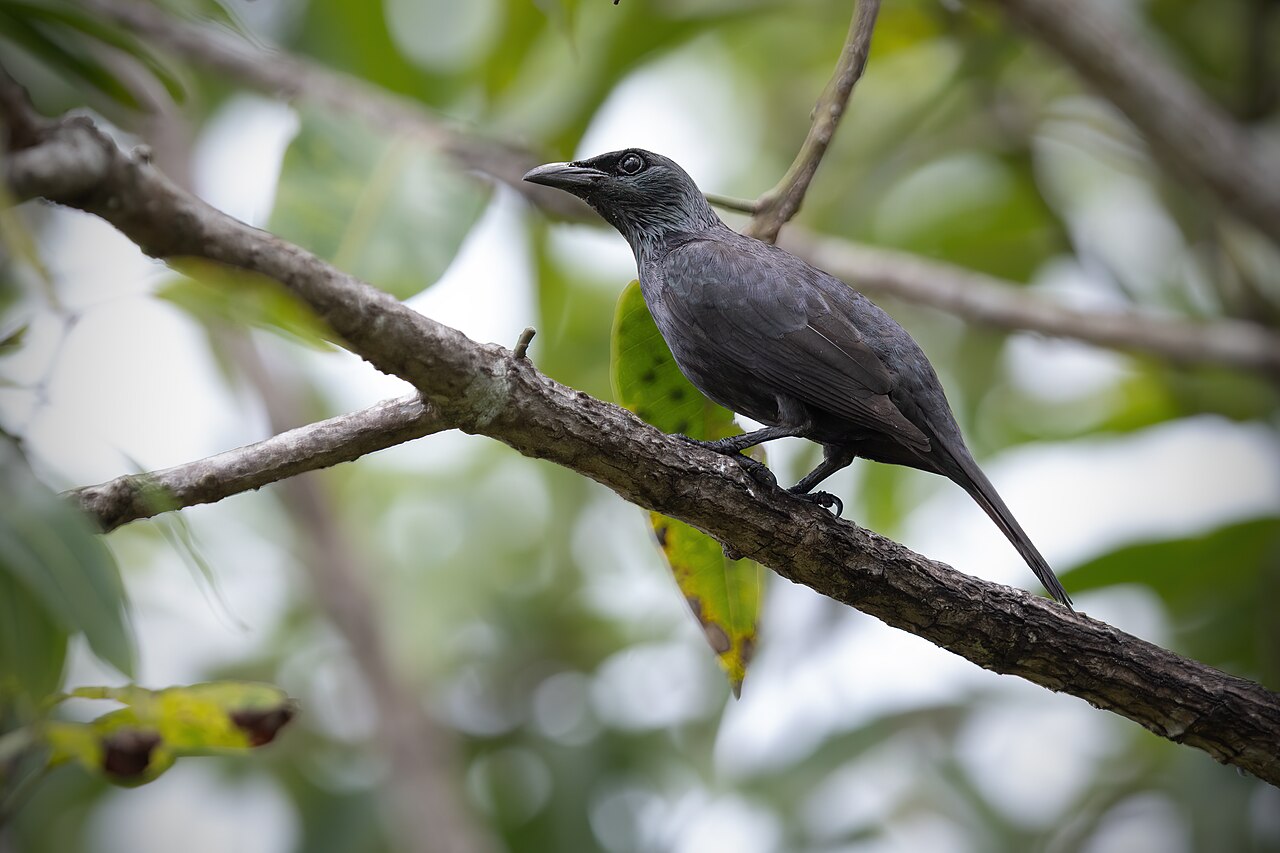
The Moluccan hanging parrot is a species of parrot in the family Psittaculidae. It is endemic to forest and nearby habitats on Halmahera, Bacan and Morotai in Indonesia. It has sometimes included the Sula hanging parrot as a subspecies, but the two are increasingly treated as separate species based on their distinct differences in plumage and size.
Region
Maluku Islands (North Maluku), Indonesia
Typical Environment
Found in primary and secondary lowland rainforest, as well as forest edge, riverine forest, and disturbed habitats near woodland. It also visits gardens, coconut groves, and agricultural mosaics where mature trees persist. The species typically forages in the mid- to upper canopy and may descend to fruiting shrubs at forest margins. It tolerates some habitat modification but relies on tree cover for feeding and nesting.
Altitude Range
Sea level to 1200 m
Climate Zone
Tropical
Ease of Keeping
Beginner friendly: 2/5
Hanging parrots sleep and often feed upside down, using their strong feet to cling to foliage. This species is confined to the northern Moluccas and has sometimes been confused with the Sula hanging parrot, which is now treated as a separate species. It nests in tree cavities, occasionally using old woodpecker holes or natural rot pockets. Its fast, direct flight and quiet contact calls can make it surprisingly hard to spot in the canopy.

Temperament
social and active
Flight Pattern
short rapid wingbeats
Social Behavior
Usually seen in pairs or small family groups, sometimes joining mixed flocks at fruiting trees. Nests in natural tree cavities, where the female incubates while the male forages nearby. Breeding is timed to local peaks in fruiting and flowering.
Migratory Pattern
Resident
Song Description
High, thin whistles and soft tinkling notes, given in flight and from the canopy. Calls are brief and can be easily overlooked against insect noise. Vocalizations often quicken during group foraging or when birds flush.
Plumage
Compact, predominantly bright green parrot with short, rounded tail and glossy plumage. Males show small patches of brighter red on the throat/chin and a contrasting red rump; females are greener with reduced or absent throat red. Underwings are darker green and the rump contrasts when in flight.
Diet
Feeds mainly on soft fruits such as figs and berries, along with nectar and flowers. Also takes buds and occasionally soft seeds. It forages methodically among flowering and fruiting trees, often hanging upside down to reach blooms. Seasonal availability of flowering trees influences local movements and flocking.
Preferred Environment
Mid- to upper canopy of rainforest and edges, especially at fruiting and flowering trees. Will visit cultivated areas and gardens where suitable trees are present. Often uses forest corridors to move between feeding sites.