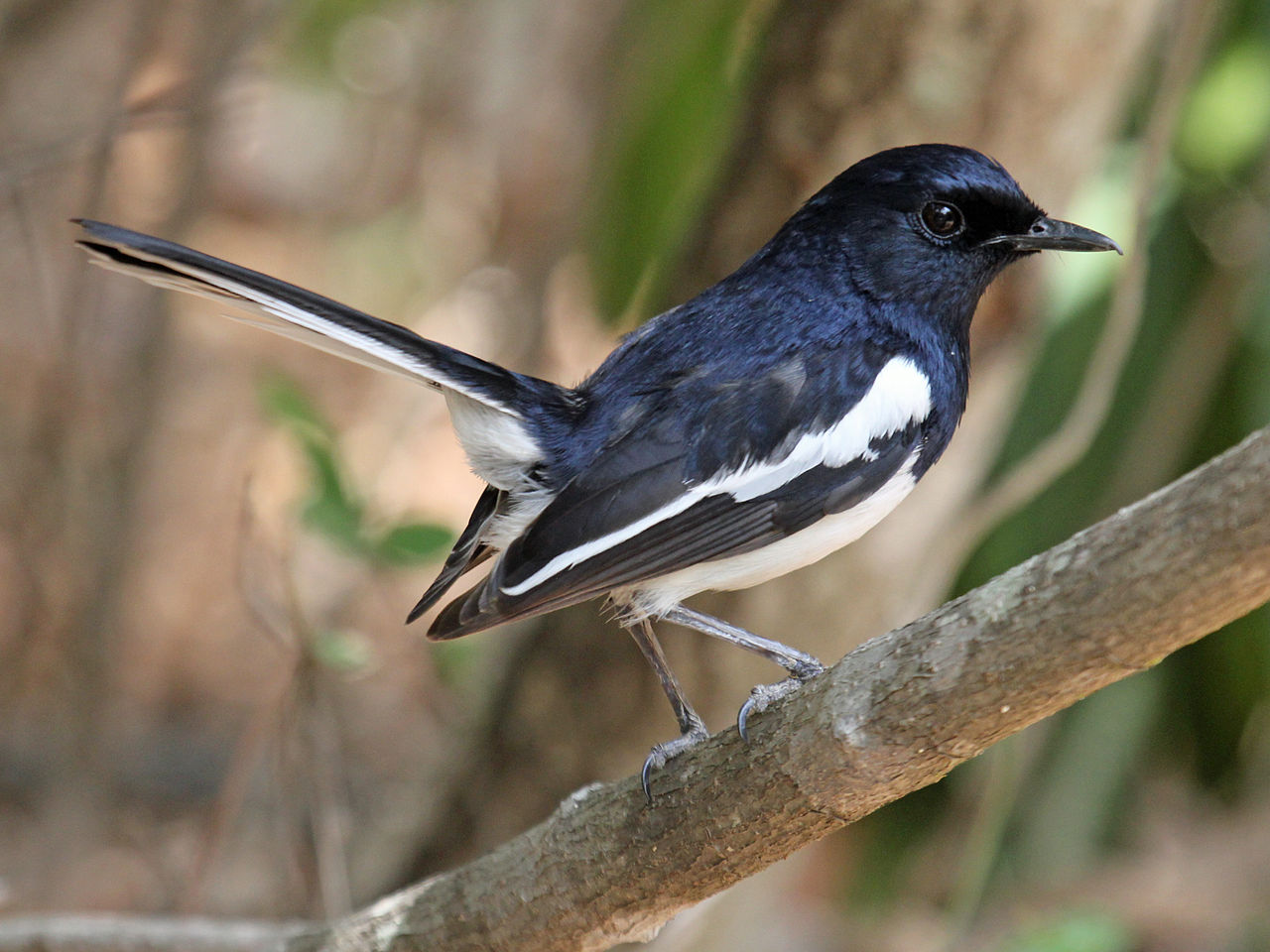
The Madagascar magpie-robin is a species of chat in the Old World flycatcher family, Muscicapidae.
Region
Madagascar
Typical Environment
Occurs widely across Madagascar in humid eastern rainforests, western dry forests, and mangroves, as well as secondary growth, plantations, and village gardens. Prefers the understory and midstory, foraging along forest edges, clearings, and shaded streams. It tolerates moderately disturbed habitats and can be fairly conspicuous around human settlements. Dense intact forest and mosaic landscapes both support populations, provided there is ground cover and low perches.
Altitude Range
Sea level to 1800 m
Climate Zone
Tropical
Ease of Keeping
Beginner friendly: 1/5
The Madagascar magpie-robin is a chat in the Old World flycatcher family (Muscicapidae) and is endemic to Madagascar. It often fans its tail and flicks its wings while foraging, flashing bold white patches that can startle insects. Several subspecies vary subtly in tone and the extent of white, with females generally duller than males. It adapts well to edges, secondary growth, and gardens, though severe habitat fragmentation can reduce local numbers.


Temperament
solitary and territorial
Flight Pattern
short rapid wingbeats with low, direct dashes
Social Behavior
Usually found singly or in pairs that defend territories year-round. Pairs nest in cavities, crevices, or sheltered ledges, lining nests with fine fibers; both parents feed the young. Courtship includes tail-fanning, wing-flicking, and perch displays.
Migratory Pattern
Resident
Song Description
Rich, melodious whistles and varied phrases delivered from prominent perches, especially at dawn. Includes mimicry of other species and sharp scold notes when alarmed.
Plumage
Contrasting black-and-white, with smooth, glossy dark upperparts in males and cleaner white patches on wings and tail; females are browner or sooty with paler underparts and reduced contrast. Tail and wings often flashed to reveal white panels. Feathers are sleek and close-fitting, giving a neat appearance.
Diet
Primarily takes insects and other small invertebrates such as beetles, ants, termites, spiders, and caterpillars. Occasionally consumes small snails and other soft-bodied prey, and may take berries or other fruit opportunistically. It uses short sallies, pouncing from low perches, and gleaning in leaf litter.
Preferred Environment
Forages on the forest floor, along paths, and in the understory of forest edges and secondary growth. Also frequents shaded gardens, coffee or clove plantations, and mangroves where low perches and open patches are available.