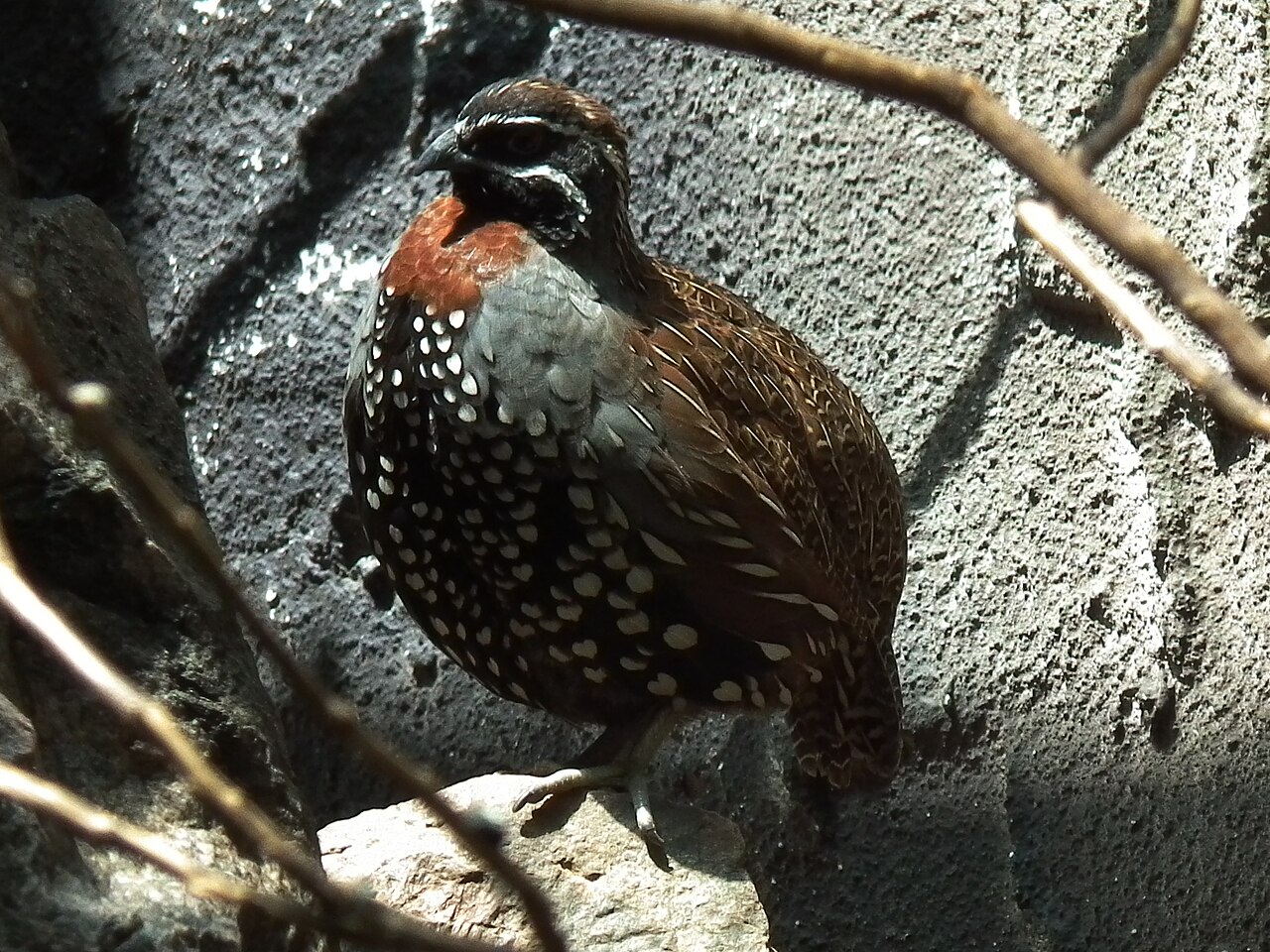
The Madagascar mannikin is a common species of estrildid finch native to Madagascar. It has an estimated global extent of occurrence of 100,000 to 1,000,000 km2. Other names for this species include Madagascar munia, bibfinch, African bibfinch, African parsonfinch, and dwarf mannikin.
Region
Western Indian Ocean
Typical Environment
Found widely across Madagascar in open and semi-open habitats, including grasslands, marsh edges, secondary scrub, and agricultural areas such as rice paddies. It prefers areas with rank grasses and reeds near water. The species adapts well to human-modified landscapes, provided seeding grasses are available. It forages both on the ground and by clinging to seed heads, and commonly gathers at water sources. Outside the breeding season it forms flocks that roam locally in search of seed-rich patches.
Altitude Range
Sea level to 1800 m
Climate Zone
Tropical
Ease of Keeping
Beginner friendly: 2/5
Also known as the Madagascar munia, bibfinch, African bibfinch, African parsonfinch, and dwarf mannikin, this small estrildid finch is endemic to Madagascar. It frequents open grasslands, reedbeds, and rice fields, often forming tight, chatty flocks. Pairs build spherical grass nests low in dense vegetation. Though locally common, it benefits from mosaic landscapes with both water and seedy grasses.

Temperament
social and active
Flight Pattern
short rapid wingbeats
Social Behavior
Usually seen in small to medium flocks, especially outside the breeding season. Pairs are monogamous and build spherical nests of fine grasses concealed in reeds, tall grass clumps, or crops. They often forage and roost communally, maintaining contact with soft calls.
Migratory Pattern
Resident
Song Description
Soft, twittering series of chips and trills, delivered from a low perch or within grass. Contact calls are thin, high-pitched tsip notes given frequently while flocking.
Plumage
Warm brown upperparts with paler buff flanks and whitish underparts contrasted by a distinct black throat-to-upper breast bib; head dusky to blackish. The wings and back are plain brown with minimal streaking, and the rump is brown. Bill stout and dark horn-grey, typical of seed-eating finches.
Diet
Primarily seeds of wild grasses and cultivated grains such as rice, supplemented with small insects and other invertebrates, especially during the breeding season. It husks grass seeds with its stout bill and also takes fallen grain from the ground. Nestlings are provisioned with softer seeds and small arthropods to meet protein needs.
Preferred Environment
Feeds in rank grass, reedbeds, fallow fields, and rice paddies, often near water. It alternates between gleaning on the ground and clinging to seeding grass heads.