
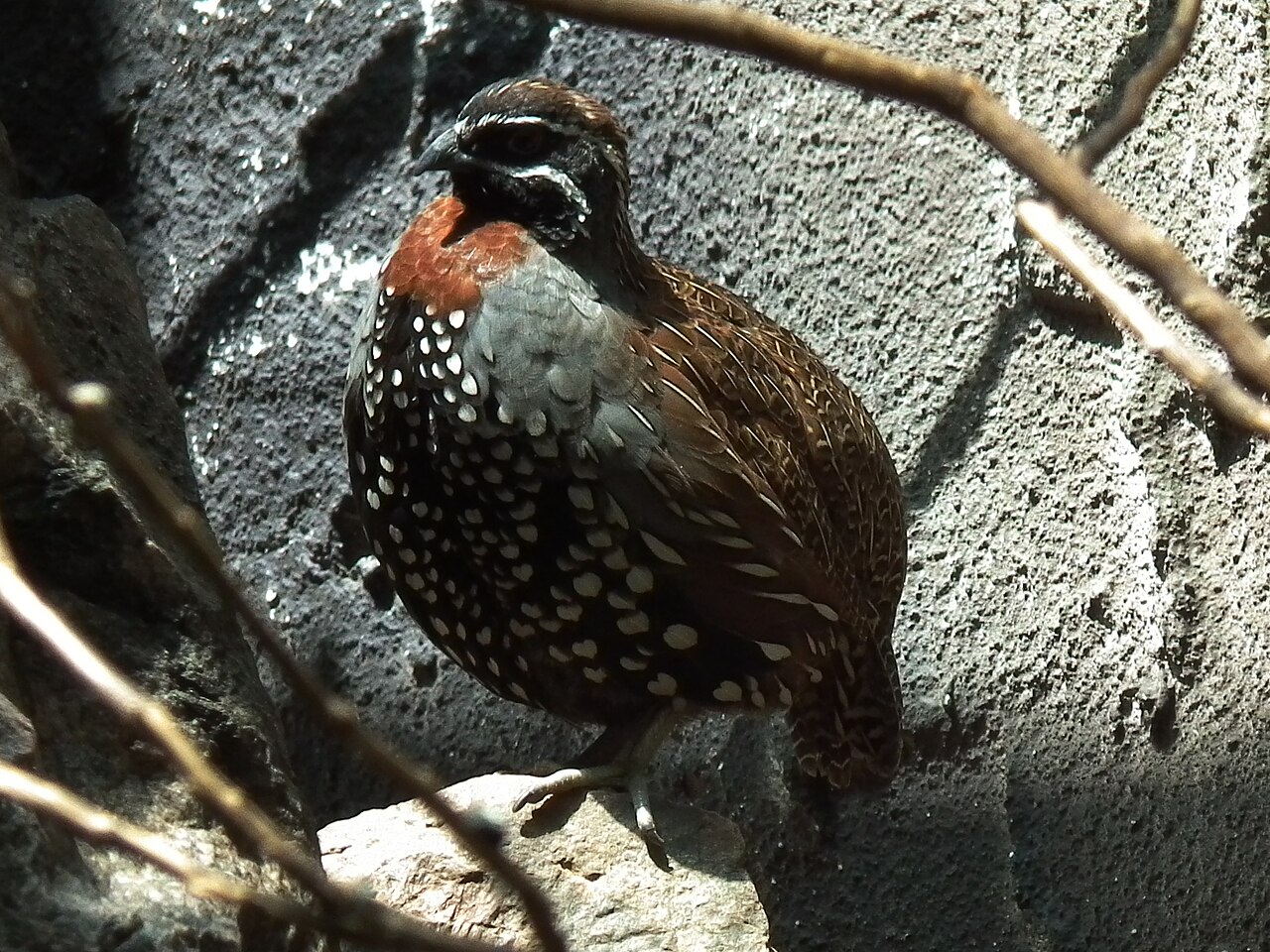
The Madagascar partridge is a species of bird in the family Phasianidae. It is widespread across Madagascar. It has been introduced to Réunion and Mauritius.
Region
Madagascar and western Indian Ocean islands
Typical Environment
Widespread across Madagascar in forest edges, secondary thickets, plantations, and agricultural mosaics. It frequents understory of humid and dry deciduous forests, overgrown clearings, and brushy grasslands. The species adapts well to human-altered habitats, including edges of rice fields and plantation crops. It has been introduced and established on Réunion and Mauritius, where it occupies similar shrubby and plantation habitats.
Altitude Range
Sea level to 2000 m
Climate Zone
Tropical
Ease of Keeping
Beginner friendly: 3/5
The Madagascar partridge is a ground-dwelling gamebird and the sole member of the genus Margaroperdix. Native to Madagascar, it has also been introduced to Réunion and Mauritius for hunting. It typically explodes from cover with a loud whirr when flushed, then quickly drops back into dense vegetation. Coveys often roost and feed together, providing seed dispersal and consuming crop pests.

Temperament
wary and secretive
Flight Pattern
short rapid wingbeats
Social Behavior
Usually found in pairs or small coveys that forage on the ground and keep close to dense cover. Nests are shallow scrapes concealed in vegetation, with a clutch of several eggs. The brood is precocial, and family groups often remain together for weeks.
Migratory Pattern
Resident
Song Description
Vocalizations include a far-carrying, whistled series and sharp, clucking contact notes within coveys. Alarm calls are abrupt and repeated, often given just before birds flush.
Plumage
Densely mottled and scalloped brown, buff, and black upperparts with heavily barred flanks and a more uniform, slightly warmer-toned breast and belly.
Diet
Feeds on a mix of seeds, shoots, and fallen fruits, supplemented by insects and other small invertebrates such as beetles and ants. It scratches in leaf litter and soil to uncover food. Diet composition shifts seasonally with availability, taking more animal matter during breeding.
Preferred Environment
Forages on the ground along forest edges, in brushy fields, fallows, and plantation understories. Often uses paths and lightly disturbed ground where seeds and invertebrates are abundant.


