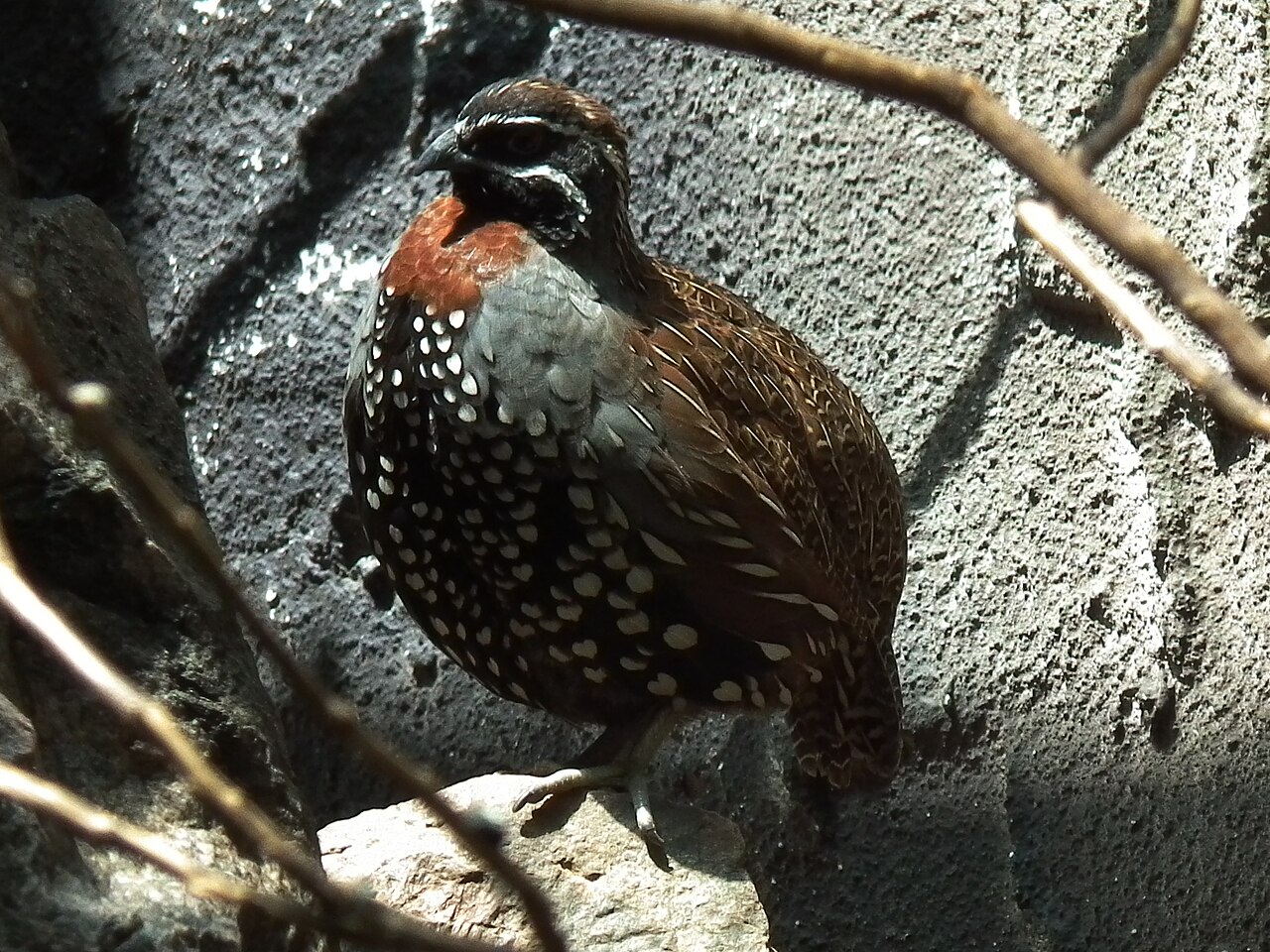
The Madagascar nightjar or Madagascan nightjar is a species of nightjar in the family Caprimulgidae. It is native to Madagascar, Nosy Boraha and Aldabra. Its natural habitats are subtropical or tropical moist lowland forest and subtropical or tropical moist montane forest.
Region
Madagascar and Aldabra (Western Indian Ocean)
Typical Environment
Occurs across Madagascar in subtropical and tropical moist lowland and montane forests, favoring forest interiors, edges, clearings, and secondary growth. It also inhabits nearby islands such as Nosy Boraha and the Aldabra atoll, where it uses coastal scrub, wooded thickets, and open woodland. By day it roosts motionless on the ground or on low branches, typically among leaf litter where its mottled plumage blends in. At night it forages along forest tracks, over rivers, and across gaps and edges.
Altitude Range
Sea level to 1800 m
Climate Zone
Tropical
Ease of Keeping
Beginner friendly: 1/5
A cryptically patterned nocturnal insect-eater, the Madagascar nightjar roosts on leaf litter by day and relies on superb camouflage to avoid detection. It has a very wide gape bordered by stiff rictal bristles that help it catch insects on the wing. Nests are minimal, with eggs laid directly on the ground or leaf litter. Males often display with soft wing claps and persistent churring songs at dusk.

Temperament
secretive and crepuscular
Flight Pattern
buoyant, moth-like flight with short rapid wingbeats and brief glides
Social Behavior
Mostly solitary or in pairs outside the breeding season. Nests are simple ground scrapes on leaf litter, with adults relying on camouflage to avoid predators. Males advertise territories at dusk and dawn with persistent song and display flights.
Migratory Pattern
Resident
Song Description
A sustained, even churring trill delivered from a perch or during display, often continuing for long periods. Interspersed with sharp chip notes and soft wing claps in males during territorial displays.
Plumage
Mottled and barred brown, grey, and buff with fine streaking, creating strong leaf-litter camouflage; males show small white patches on wings and tail corners.
Diet
Feeds primarily on flying insects such as moths, beetles, termites, and flying ants. Captures prey on the wing using aerial hawking, often along edges and over clearings. May also sally from the ground or low perches to intercept passing insects. Takes advantage of termite and ant emergences after rain.
Preferred Environment
Forages along forest margins, tracks, river corridors, and open gaps where flying insects concentrate. On Aldabra it also hunts over coastal scrub and open woodland. Often feeds low over the ground or water.