The Himalayan monal, also called Impeyan monal, is a landfowl native to Himalayan forests and shrublands at elevations of 2,100–4,500 m (6,900–14,800 ft). It is part of the family Phasianidae and is listed as Least Concern on the IUCN Red List. It is the national bird of Nepal, where it is known as the danphe or danfe, and state bird of Uttarakhand, India, where it is known as a monal. The scientific name commemorates Lady Mary Impey, the wife of the British chief justice of Bengal, Sir Elijah Impey.
Region
Himalayas
Typical Environment
Occurs from northeastern Afghanistan and northern Pakistan across northern India (Himachal Pradesh to Sikkim), Nepal, and Bhutan, to southern Tibet. It inhabits subalpine and montane forests of oak, fir, pine, and rhododendron, grading into alpine meadows and scrub near the treeline. Birds favor steep, grassy or shrubby slopes, forest edges, and clearings with rich undergrowth. In winter, they move downslope to slightly denser forest and mixed scrub. They often forage on disturbed ground where they can dig for roots and bulbs.
Altitude Range
2100–4500 m
Climate Zone
Highland
Ease of Keeping
Beginner friendly: 2/5
The Himalayan monal, also called the Impeyan monal or danphe, is the national bird of Nepal and the state bird of Uttarakhand, India. Males are famed for their iridescent, rainbow-like plumage and a metallic green crest. The species makes seasonal altitudinal movements, descending to lower forests in winter. Its scientific name commemorates Lady Mary Impey.


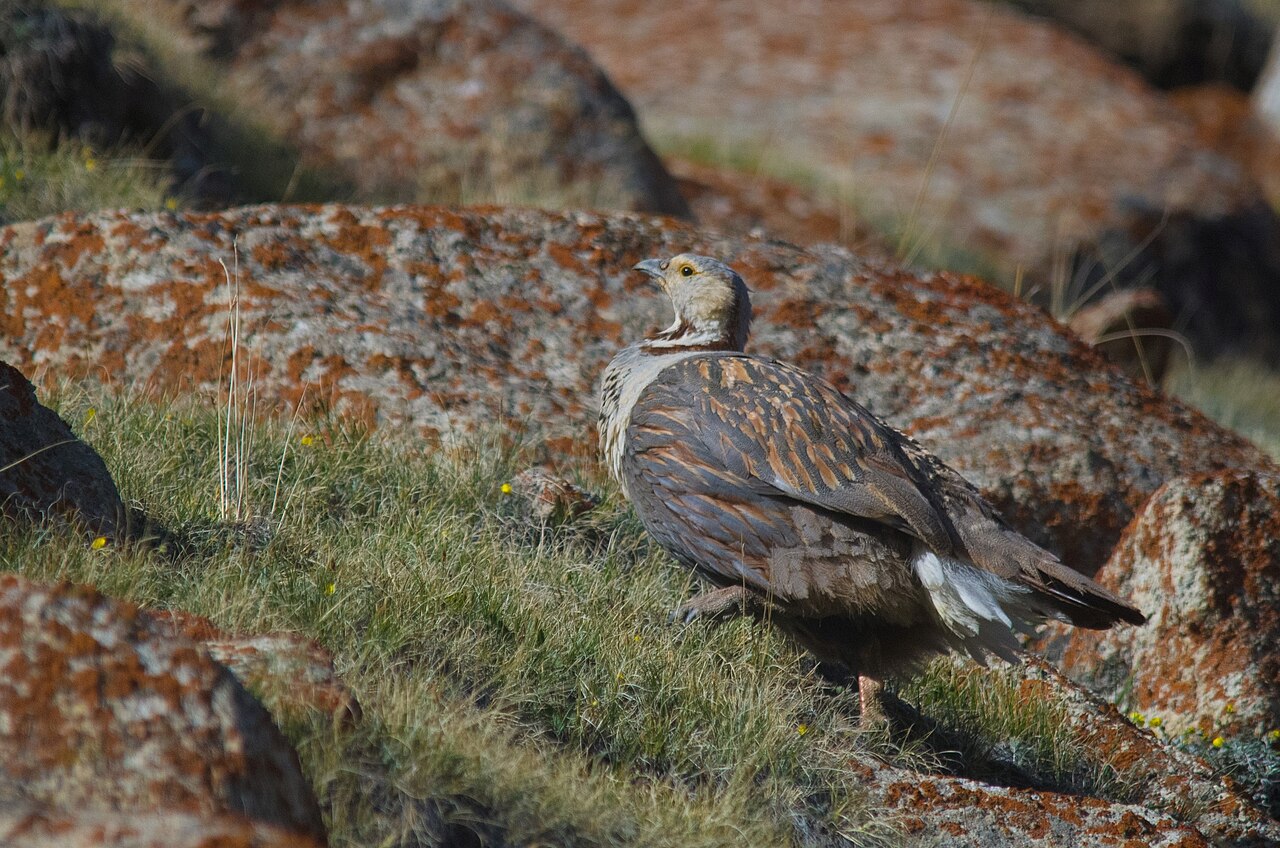
A female in Pangolakha Wildlife Sanctuary, India

Himalayan monal eggs collection in Museum Wiesbaden
Temperament
wary but can be confiding in protected areas
Flight Pattern
strong, with rapid wingbeats and short glides down steep slopes
Social Behavior
Typically forms pairs in the breeding season; small loose groups may gather in winter while foraging. Ground-nesting in concealed scrapes under shrubs or among roots. The female incubates and broods while the male often remains nearby but forages separately.
Migratory Pattern
Partial migrant
Song Description
Calls include loud, ringing whistles and clear fluty notes, often heard across valleys at dawn. Alarm calls are sharper, harsher whistles or squeals when flushed.
Plumage
Males are strongly iridescent with lustrous metallic greens, blues, and coppers; females are mottled brown with fine streaking and cryptic patterning.
Diet
An opportunistic forager that digs with its sturdy bill for tubers, bulbs, and roots. It also consumes shoots, seeds, berries, and a variety of invertebrates such as insects, grubs, and earthworms. Diet composition shifts seasonally, with more plant material at higher elevations in summer and more roots and bulbs when the ground is exposed in winter.
Preferred Environment
Forages on forest edges, open slopes, and alpine meadows near the treeline. Often uses disturbed ground, root plates, and snowmelt patches where food is accessible.