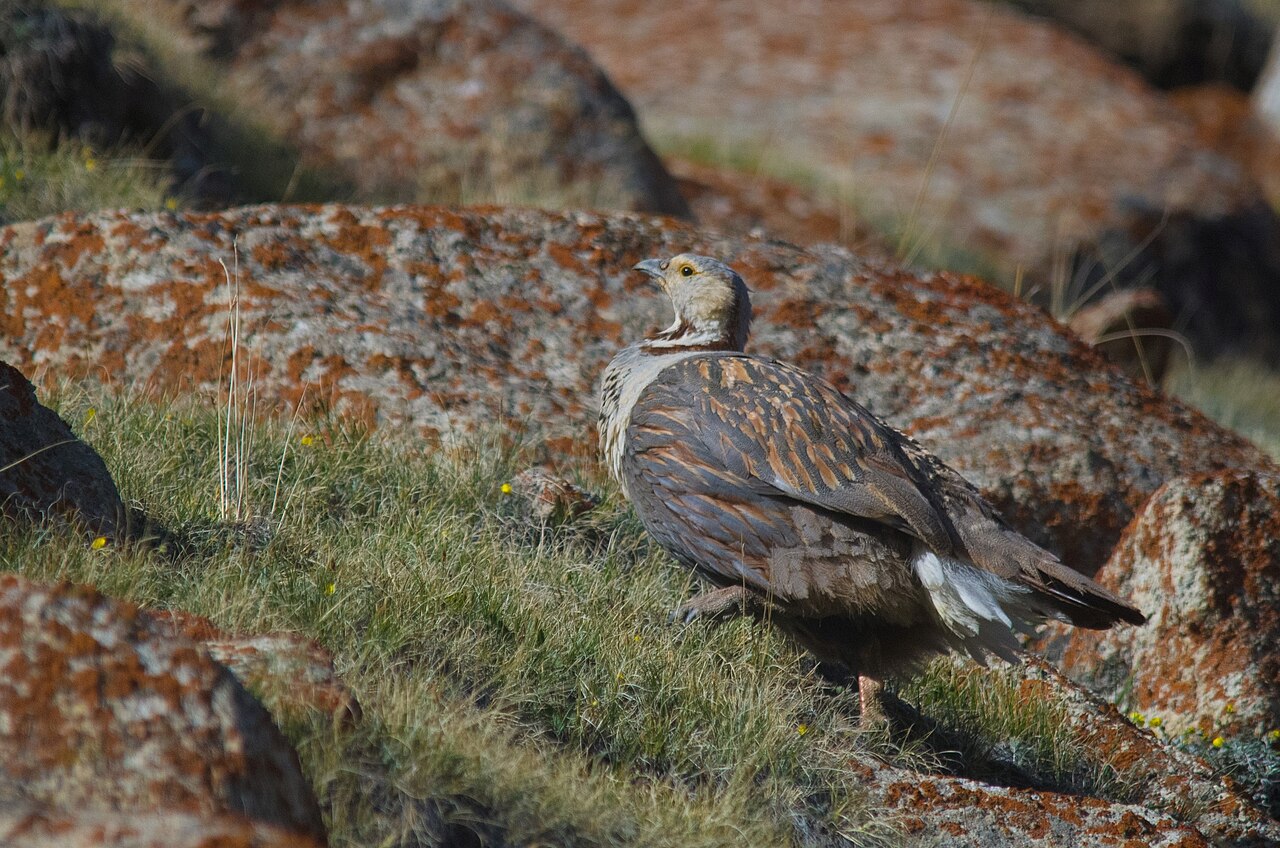
The Himalayan quail or mountain quail, is a medium-sized quail belonging to the pheasant family. It was last reported in 1876 and is feared extinct. This species was known from only 2 locations in the western Himalayas in Uttarakhand, north-west India. The last verifiable record was in 1876 near the hill station of Mussoorie.
Region
Western Himalayas
Typical Environment
Historically known from only two localities in Uttarakhand, India, around Mussoorie and nearby western Himalayan slopes. It was associated with tall, dense grass and scrub on steep hillsides, often near forest edges. The species likely used secondary growth and grassy clearings for cover and foraging. Because of its skulking nature, it would have remained concealed within dense vegetation, making detection difficult even where present.
Altitude Range
1650–2400 m
Climate Zone
Highland
Ease of Keeping
Beginner friendly: 1/5
The Himalayan quail was last confirmed in 1876 near Mussoorie and is feared extinct, though occasional searches continue in the western Himalayas. Its scientific name refers to the bold white 'eyebrow' (supercilium) on the head. It likely favored steep, grassy hillsides where its secretive habits made it difficult to detect.



A pair of Himalayan quails from Hume and Marshall's Game-birds of India, Burmah and Ceylon. Hume noted that the depiction was incorrect and that the plumage of the male (left) should have been almost black.

"Eyebrowed Rollulus" - A drawing from life by Edward Lear in J E Gray's Gleanings from the Menagerie and Aviary at Knowsley Hall (1846). These are the type specimens D259 and D259a in the collections at World Museum
Temperament
secretive and skulking
Flight Pattern
short rapid wingbeats with brief, low flights downhill when flushed
Social Behavior
Believed to occur in pairs or small coveys, keeping close to dense grass cover. Nesting would have been on the ground, with a simple scrape hidden under tussocks. Limited direct observations exist, but behavior likely mirrored other quails: quiet, ground-oriented, and highly cryptic.
Migratory Pattern
Resident
Song Description
Reports suggest a soft, whistled or piping call given infrequently from cover. Vocalizations were likely simple contact or alarm notes rather than elaborate songs. Documentation is scarce and based on historical accounts.
Plumage
Male reportedly slaty-grey with fine vermiculations and a contrasting white supercilium; female browner and more heavily mottled for camouflage. Both sexes have short, rounded wings typical of quails and a compact, ground-dwelling build.
Diet
An omnivorous forager, likely taking grass seeds, tender shoots, and small berries. It probably supplemented this with insects and other small invertebrates, especially during the breeding season. Foraging would have been mostly on the ground, picking items from the soil surface and low vegetation.
Preferred Environment
Feeds within dense grass and scrub on steep slopes, often near forest margins and clearings. It would have used cover to remain concealed while moving slowly and gleaning food.