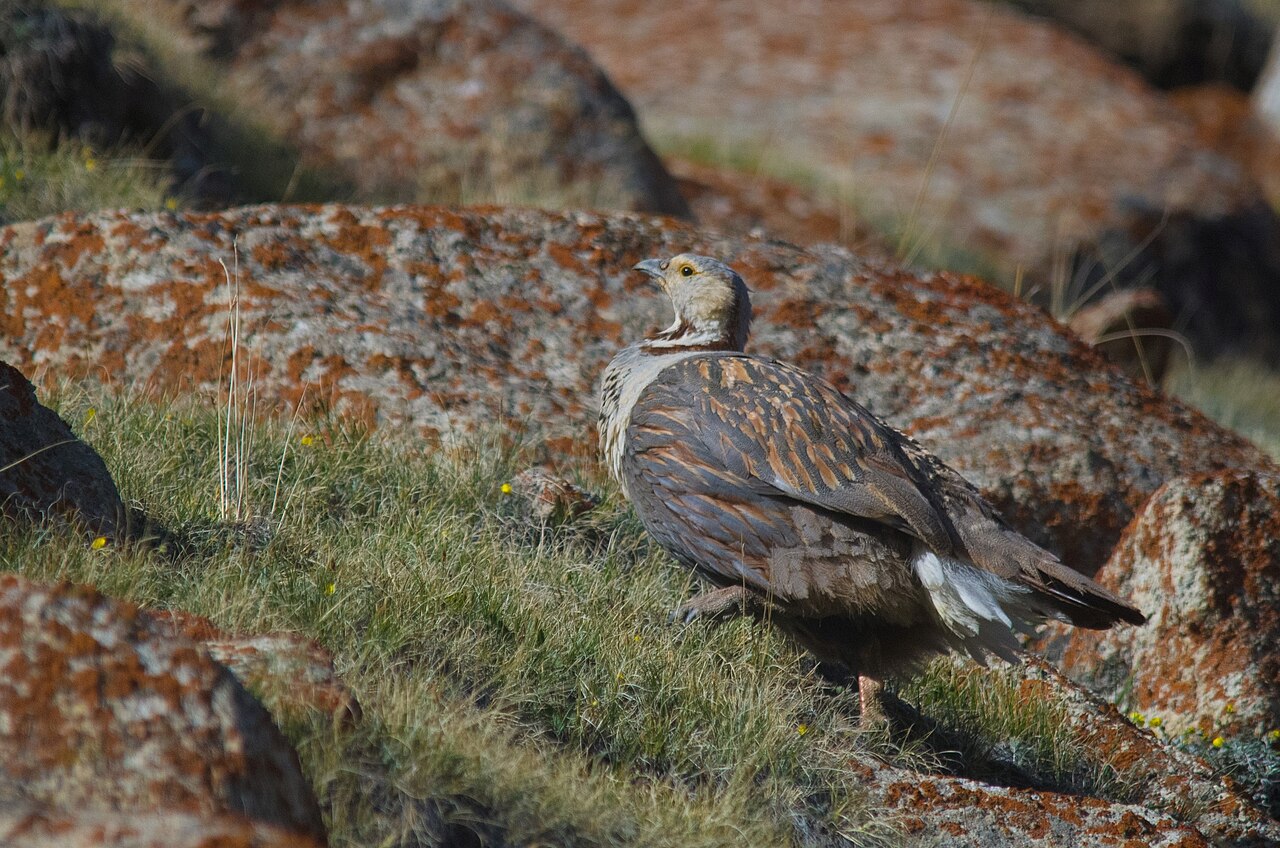
The Himalayan shortwing is a species of chat. This species is now classified in the family Muscicapidae.
Region
Himalayas
Typical Environment
Occurs along the Himalayan range from northern India and Nepal through Bhutan and into adjacent parts of northeast India and western Myanmar. It occupies dense undergrowth in moist montane broadleaf and mixed conifer forests, rhododendron and bamboo thickets, and shaded gullies. Birds keep close to the ground, using rocks, roots, and fallen logs for cover. In winter some individuals descend to lower elevations where suitable understory persists.
Altitude Range
1500–3600 m
Climate Zone
Highland
Ease of Keeping
Beginner friendly: 1/5
The Himalayan shortwing is a secretive ground-skulking chat now placed in the Old World flycatcher family Muscicapidae. It favors dense, mossy undergrowth in montane forests and is more often heard than seen. Males are typically deep bluish while females are brownish and more cryptic, showing marked sexual dimorphism. It makes short, furtive hops and dashes through leaf litter and low thickets, often remaining close to cover.

Temperament
secretive and skulking
Flight Pattern
short rapid wingbeats, low to the ground
Social Behavior
Generally solitary or in pairs, especially during the breeding season. Nests are placed low, often concealed in banks, roots, or dense ground cover. Both sexes may contribute to territorial defense but remain inconspicuous. Outside breeding, may occur loosely near other understory insectivores without forming true flocks.
Migratory Pattern
Partial migrant
Song Description
Song is a series of clear, thin whistles and sweet, slightly melancholy phrases delivered from hidden perches. Calls include sharp ticks and soft, metallic notes, often given from deep cover.
Plumage
Compact, short-winged and short-tailed with soft, dense plumage. Male typically dark slate-blue to deep indigo above and below; female warm brown with paler underparts and a faint buffy supercilium. Both sexes show minimal patterning, emphasizing a plain, shadowy look suited to dense cover.
Diet
Primarily feeds on insects and other small invertebrates such as beetles, ants, spiders, and larvae gleaned from leaf litter and low vegetation. Will probe moss and bark crevices and flip leaves to expose prey. Occasionally supplements diet with small berries, especially in cooler months when insects are less abundant.
Preferred Environment
Forages on the forest floor and within the first meter of dense understory in moist montane forests. Prefers shaded ravines, root tangles, and thickets where cover is continuous.