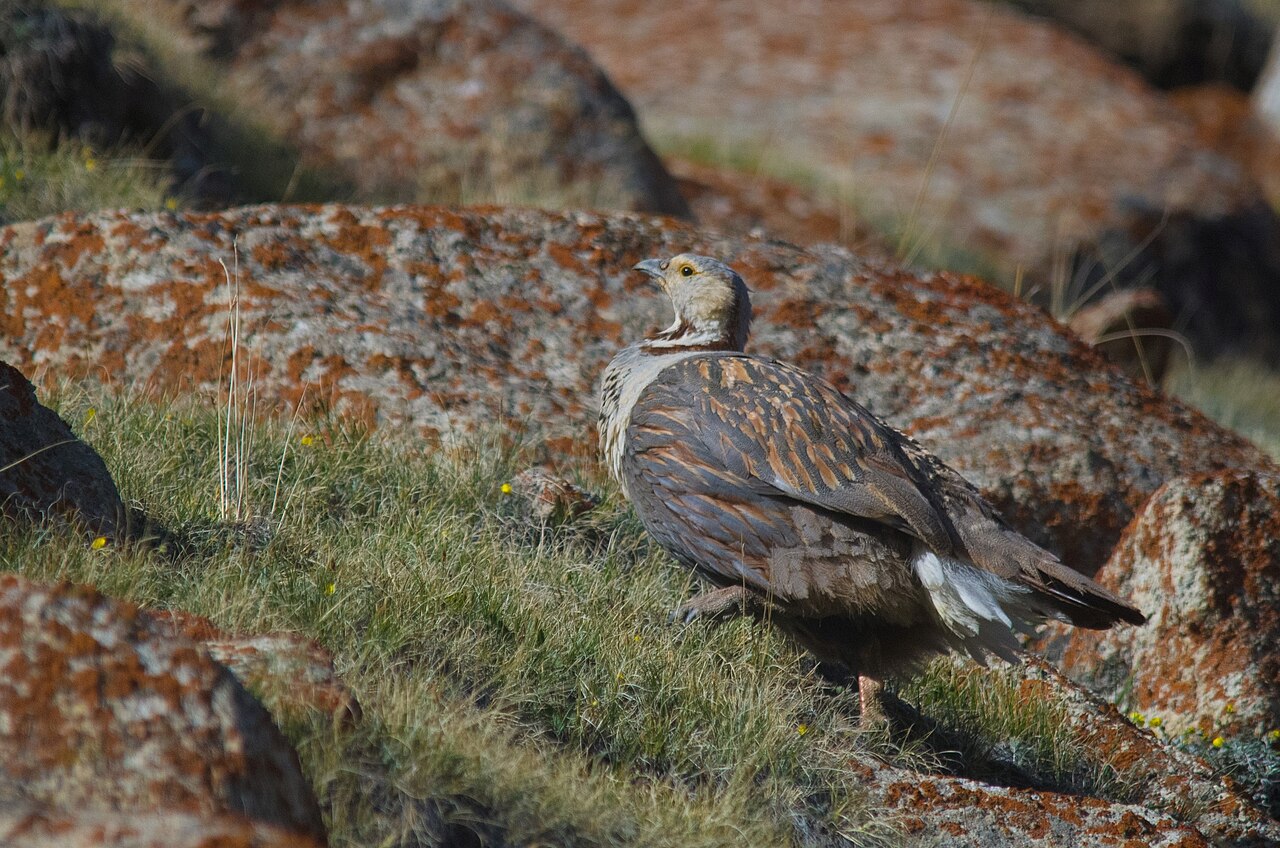
The Himalayan owl, also known as the Himalayan wood owl, is an owl of the forests of the Asia, from the Himalayas to Korea and Taiwan.
Region
Himalayas and East Asia
Typical Environment
Occupies montane and subalpine forests from the western Himalayas through Nepal, Bhutan, and northeastern India into parts of southern China, with records extending to Korea and Taiwan. Prefers mature broadleaf, mixed oak–rhododendron, and conifer forests, often along steep valleys and forest edges. Uses tree hollows, old woodpecker cavities, and occasionally buildings for nesting. Frequently occurs near villages and terraced fields adjacent to forest, where prey is abundant.
Altitude Range
1000–3500 m
Climate Zone
Highland
Ease of Keeping
Beginner friendly: 1/5
Often treated as a distinct species within the tawny-owl complex, the Himalayan owl favors mature montane forests with plenty of tree cavities for nesting. Its deep, resonant hoots carry far across valleys and are used by pairs to proclaim territories. It hunts mostly from perches, relying on excellent night vision and silent flight. In some areas it makes short altitudinal shifts after heavy snow.

Temperament
solitary and territorial
Flight Pattern
short rapid wingbeats with silent glides
Social Behavior
Typically forms long-term monogamous pairs occupying stable territories year-round. Nests in tree cavities or occasionally rock crevices and buildings, laying 2–4 eggs. Adults are strongly site-faithful and defend nesting areas vigorously.
Migratory Pattern
Resident
Song Description
Male gives a deep, far-carrying series of hoots that accelerates and falls at the end; females answer with higher-pitched notes. Also utters sharp ‘kewick’-like calls and soft hoots during close pair contact.
Plumage
Heavily streaked and mottled wood-owl with soft, dense plumage; facial disc well defined and rounded. Upperparts brown to rufous-brown with fine barring; underparts pale with bold dark streaks.
Diet
Feeds mainly on small mammals such as mice, rats, and shrews. Also takes small birds, large insects, and occasionally frogs and lizards. Hunts from a perch, dropping silently onto prey on the ground or in low vegetation. Pellets often contain a high proportion of rodent bones and hair.
Preferred Environment
Edges of montane forests, forest clearings, and cultivated valley margins where rodents are abundant. Common along wooded ravines and near human settlements adjacent to forest.