
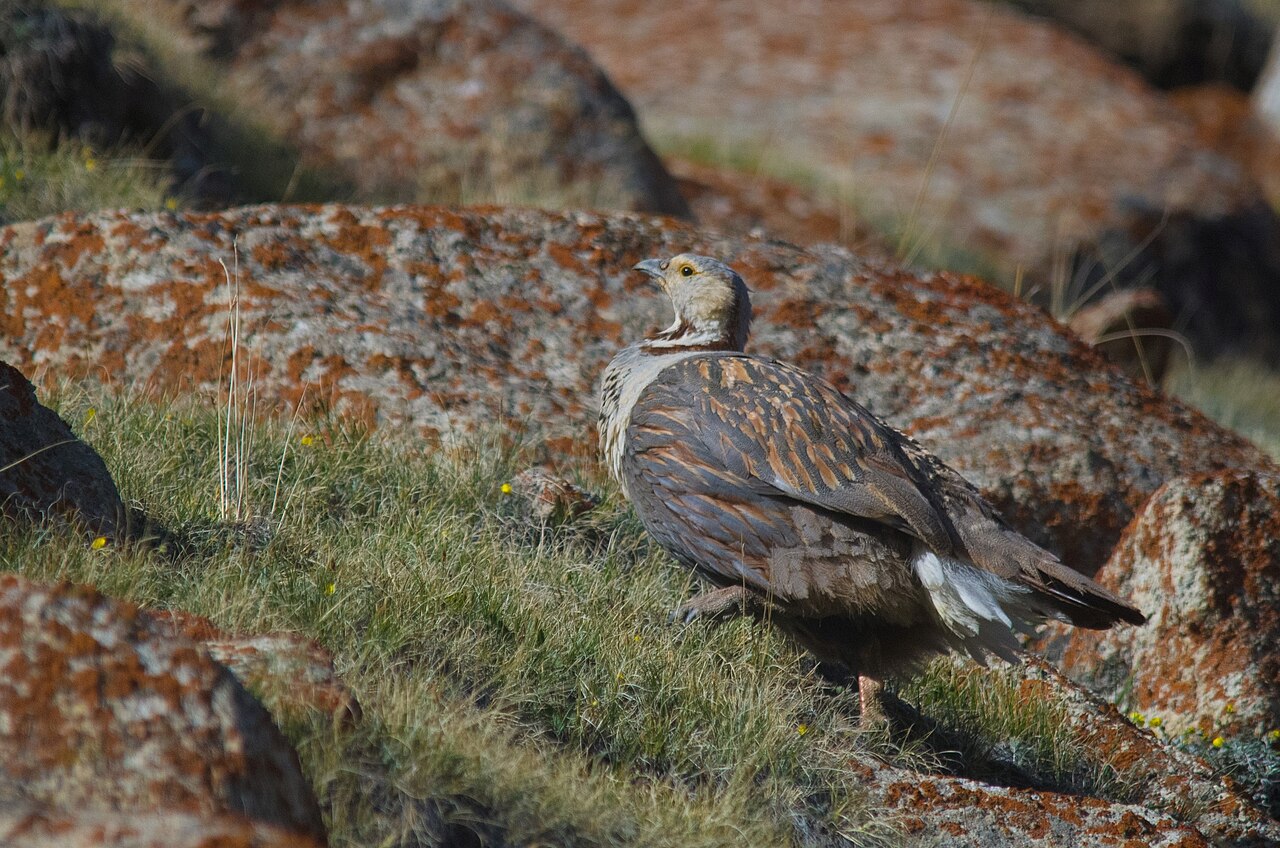
The Himalayan snowcock is a snowcock in the pheasant family Phasianidae found across the Himalayan ranges and parts of the adjoining Pamir range of Asia. It is found on alpine pastures and on steep rocky cliffs where they will dive down the hill slopes to escape. It overlaps with the slightly smaller Tibetan snowcock in parts of its wide range. The populations from different areas show variations in the colouration and about five subspecies have been designated. They were introduced in the mountains of Nevada in the United States in the 1960s and a wild population has established in the Ruby Mountains.
Region
Himalayas and Pamir-Alay
Typical Environment
The Himalayan snowcock occupies alpine and subalpine zones above treeline, favoring steep, rocky slopes, scree, and cliff-studded pastures. It keeps close to broken terrain that offers quick cover and updrafts for gliding escape flights. In winter it may descend to slightly lower, south-facing slopes where forage is accessible. Outside its native Asian range, it persists in isolated mountain habitats in the western United States (Ruby Mountains, Nevada).
Altitude Range
3000–5500 m
Climate Zone
Highland
Ease of Keeping
Beginner friendly: 1/5
This large mountain gamebird inhabits the high, rocky slopes of the Himalayas and adjacent ranges, often flushing with a loud, rapid wingbeat and then gliding downslope to escape. It overlaps with the slightly smaller Tibetan Snowcock in parts of its range. A self-sustaining introduced population was established in Nevada’s Ruby Mountains in the 1960s. Subspecies vary subtly in tone and pattern across its wide distribution.


Illustration by J. G. Keulemans (1891)


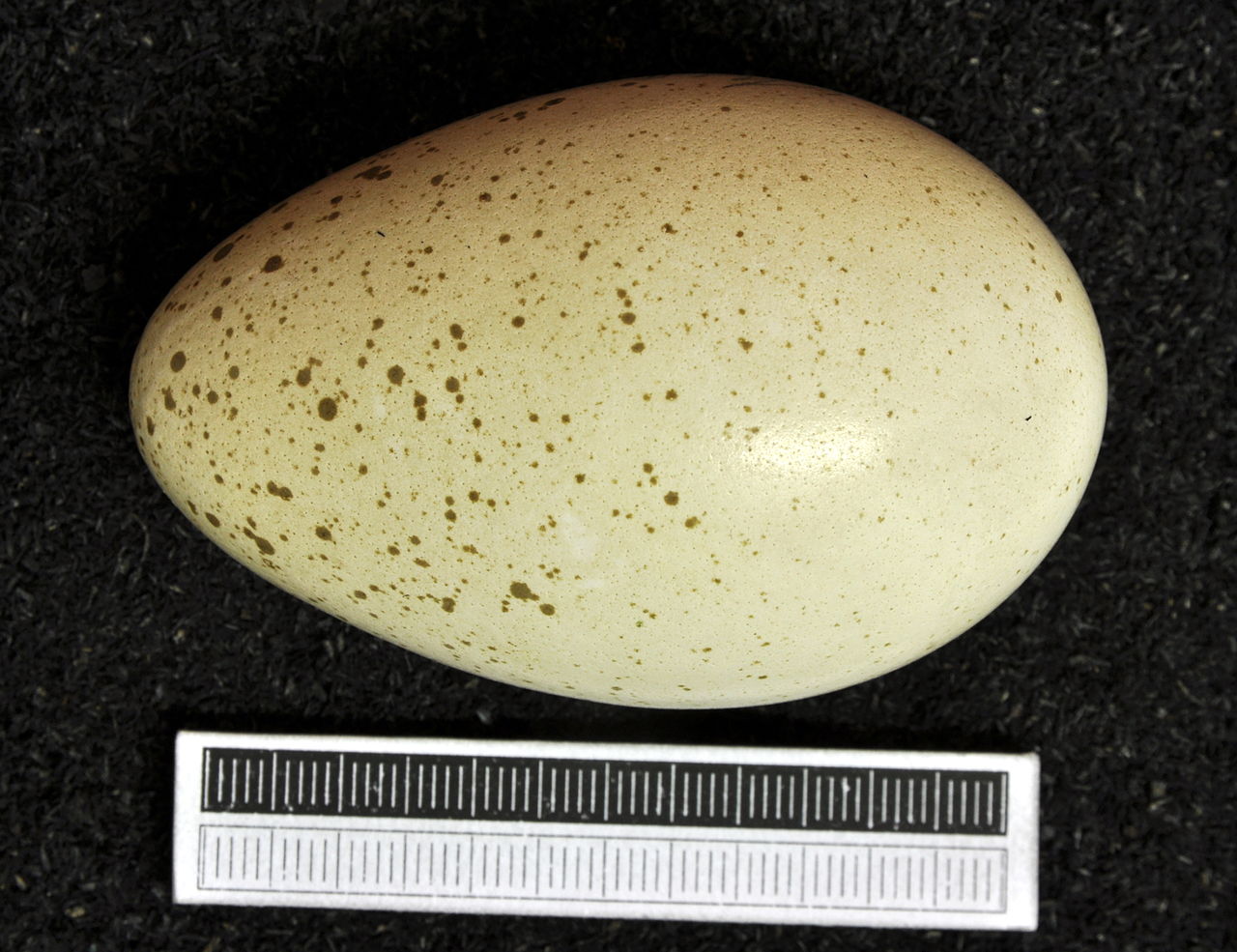
Egg, Collection Museum Wiesbaden
Temperament
wary and alert
Flight Pattern
explosive uphill takeoff followed by long glides downslope
Social Behavior
Typically in pairs or small coveys outside the breeding season; larger loose groups may form on open pastures. Ground-nesting among rocks or low vegetation, with the female incubating and both parents attending chicks. Breeding pairs maintain territories on suitable slopes.
Migratory Pattern
Resident
Song Description
Vocalizations are loud, whistling calls and cackling series that carry across valleys, especially at dawn. Alarm notes are harsh and repeated as birds flush from cover.
Plumage
Robust, barred grey-brown upperparts with rufous and white on the wings and tail; underparts pale with bold chestnut-and-white streaked flanks. A clean white throat is crisply bordered by a dark collar. The overall effect is mottled and cryptic against rocky slopes.
Diet
Feeds mainly on alpine plant matter including grasses, sedges, shoots, leaves, buds, bulbs, and berries. Supplements diet with seeds and occasionally insects and other invertebrates, especially for growing chicks. Forages by walking and pecking, often scratching among scree and turf. In snow, it may dig to reach buried vegetation.
Preferred Environment
Open alpine meadows, fellfields, and rocky slopes near cliffs and broken terrain that provide quick refuge. Often forages on gently sloping pastures within easy reach of steep escape routes.


