The Himalayan rubythroat is a species of passerine bird in the family Muscicapidae. It is closely related to the Siberian rubythroat which however lacks the distinctive white tail-tips and white tail bases. It was also previously considered conspecific with the Chinese rubythroat, together called the white-tailed rubythroat. It is found along the Tien Shan and Himalayan ranges from Afghanistan to Myanmar. Three subspecies are recognized across its wide range.
Region
Himalayas and Tien Shan
Typical Environment
Breeds in subalpine and alpine scrub, especially rhododendron and juniper, from Afghanistan across the Himalayas to Myanmar, and in the Tien Shan. In winter it descends to foothill scrub, forest edges, and thickets near cultivated areas. Prefers dense, thorny or rhododendron shrubs interspersed with open patches and boulders. Often found near streams, landslip slopes, and meadow edges where low cover is abundant.
Altitude Range
1500–4800 m
Climate Zone
Highland
Ease of Keeping
Beginner friendly: 2/5
Males flash distinctive white tail bases and tips during display, a key feature separating them from the Siberian rubythroat. The species was formerly lumped with the Chinese rubythroat as the white-tailed rubythroat complex. Shy and skulking, it often stays low in dense shrubs but males sing boldly from exposed rocks in the breeding season.


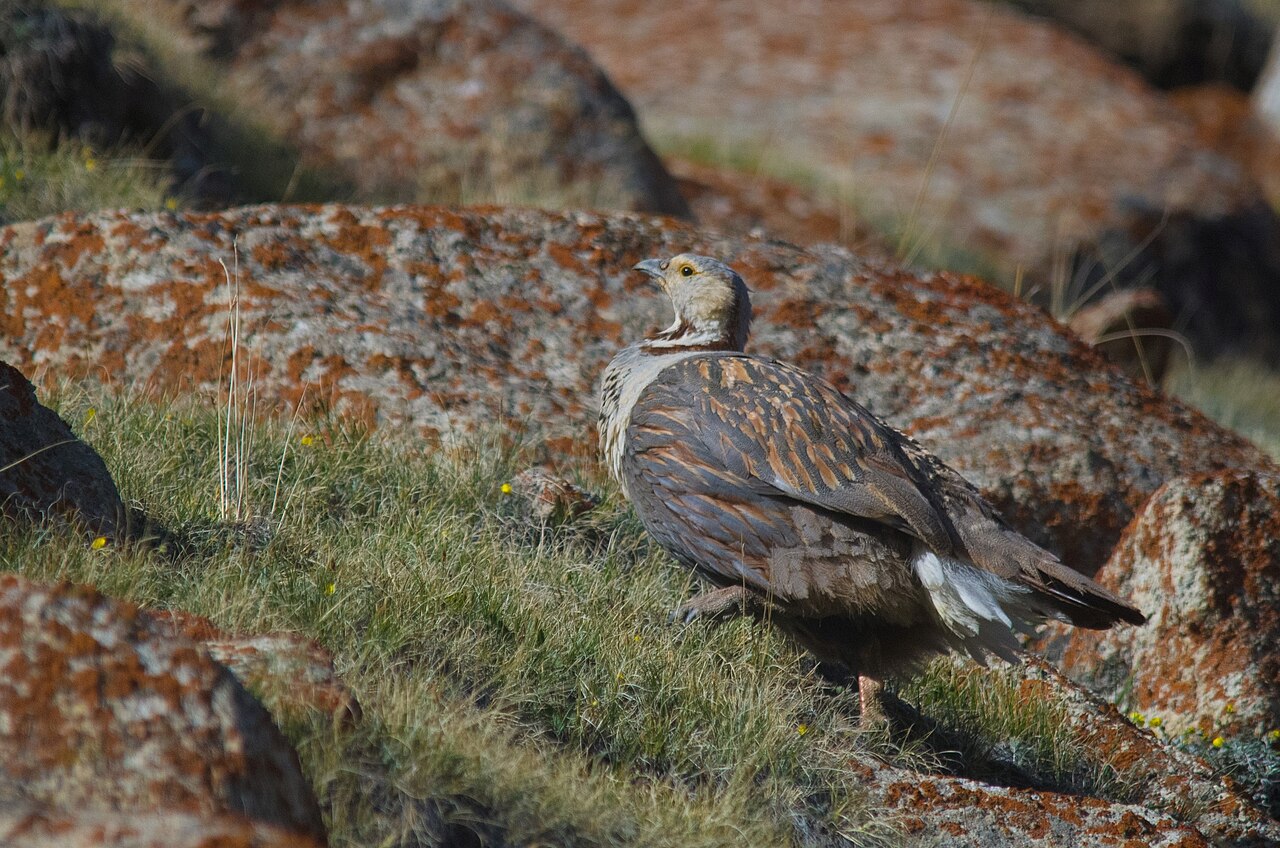
Male of the subspecies C. p. ballioni in Kazakhstan
Temperament
skulking and territorial
Flight Pattern
short rapid wingbeats, low and direct between shrubs
Social Behavior
Generally solitary or in pairs during breeding, with males defending dense shrub territories. Nests are well hidden low in thick scrub or on/near the ground among roots and tussocks; clutch usually 3–5 eggs. Outside breeding, it remains secretive and may join loose mixed-species flocks in dense undergrowth.
Migratory Pattern
Seasonal migrant
Song Description
A bright, varied warble with rapid, ringing phrases and sweet whistles delivered from exposed perches. Calls include sharp ‘tac’ or ‘tsik’ notes and scolding chatters when alarmed.
Plumage
Male with vivid ruby-red throat bordered by dark tones, a clean white supercilium and moustachial stripe, brown-olive upperparts, and blackish tail with prominent white bases and tips. Female is warm brown with buffy underparts, faint pale supercilium, and lacks the bright throat. Both sexes show white flashes in the tail when fanned.
Diet
Feeds mainly on insects and other small invertebrates such as beetles, ants, caterpillars, spiders, and larvae. Will also take small worms and occasionally berries when insects are scarce. Forages by hopping on the ground, gleaning from low foliage, and making short sallies to snatch prey.
Preferred Environment
Dense shrubs, rhododendron thickets, and scrubby meadow edges where ground cover is abundant. Often works along streambanks, rock piles, and landslip slopes with scattered bushes.