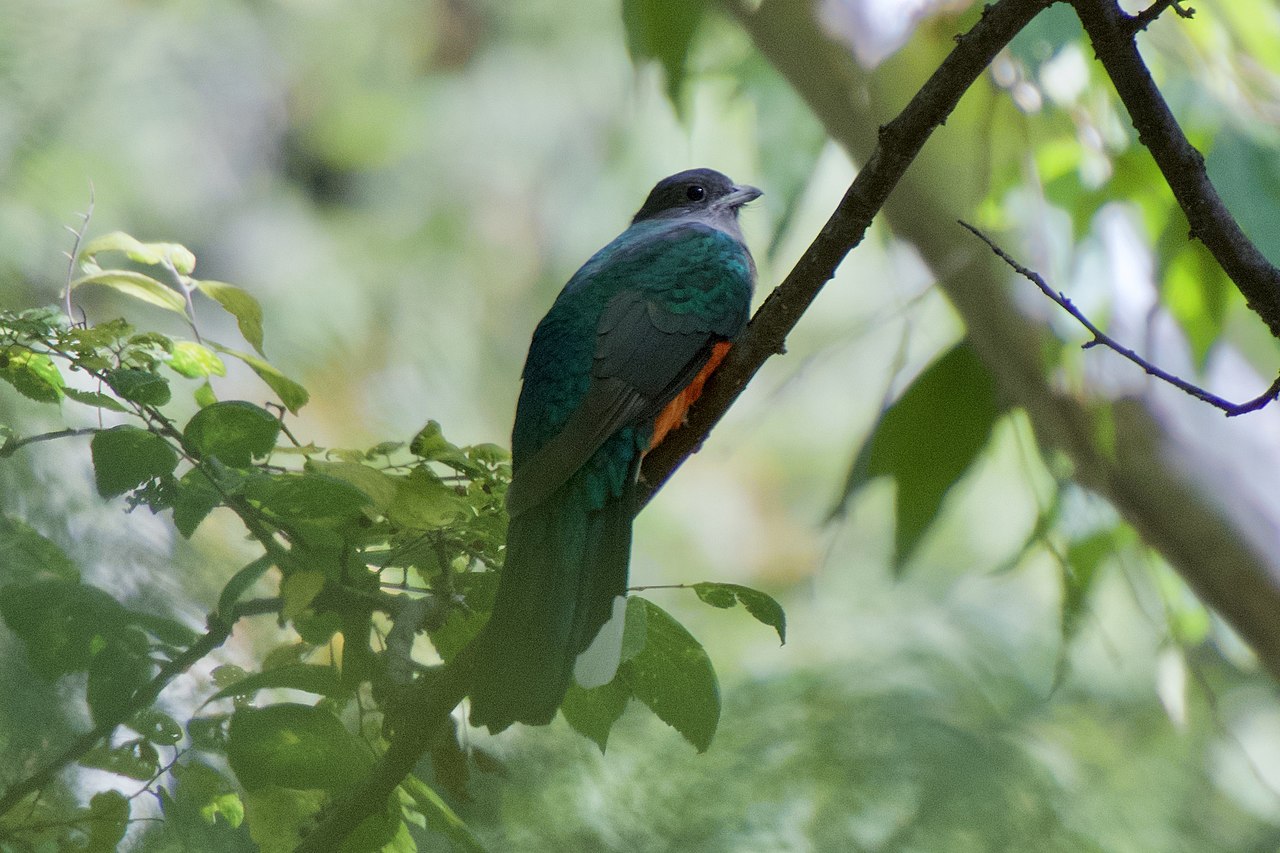
Dybowski's twinspot is a common species of estrildid finch found in Africa. It has an estimated global extent of occurrence of 450,000 km2.
Region
Central Africa
Typical Environment
Occurs in a mosaic of forest edge, secondary growth, riverine thickets, and tall grasslands adjoining lowland rainforest and woodland. It favors tangled undergrowth and overgrown clearings where seeding grasses are abundant. Often near watercourses, fallows, and cultivated areas with dense cover. Avoids the interior of closed-canopy forest but thrives in semi-open habitats created by disturbance.
Altitude Range
200–1700 m
Climate Zone
Tropical
Ease of Keeping
Beginner friendly: 2/5
Dybowski's twinspot is a small estrildid finch that keeps to dense grasses and forest edges in Central Africa. It is often overlooked because of its shy, skulking habits but can be located by its soft, high-pitched calls. Pairs or small family groups forage low to the ground, especially in seeding grasses. Like many estrildids, it supplements a mainly seed diet with small invertebrates during breeding.

Temperament
shy and secretive
Flight Pattern
short rapid wingbeats with low, undulating flights
Social Behavior
Usually found in pairs or small family groups, rarely forming large flocks. Nests are dome-shaped structures of grasses placed low in dense vegetation. Likely monogamous, with both sexes participating in nesting duties. Post-breeding groups may remain together while foraging in cover.
Migratory Pattern
Resident
Song Description
Song is a series of soft, high, tinkling notes and thin whistles delivered from concealed perches. Calls include sharp ticks and faint seee notes used to maintain contact in dense cover.
Plumage
Compact finch with rich chestnut underparts marked by bold white spotting on the flanks and belly, contrasting with darker upperparts. Face often dusky to blackish with a greyer crown; back and wings brownish. Tail dark with contrasting pale spots on the undertail coverts. Females are duller with less extensive spotting.
Diet
Primarily takes small grass and sedge seeds, plucked directly from seed heads or gleaned from the ground. During the breeding season it also consumes small insects such as termites, ants, and other soft-bodied invertebrates to provide protein. Occasionally takes small berries or other plant material.
Preferred Environment
Feeds low in rank grasses, weedy edges, fallow fields, and along forest margins. Often forages near streams and in overgrown clearings where cover is close at hand. Typically remains within or just above dense vegetation.