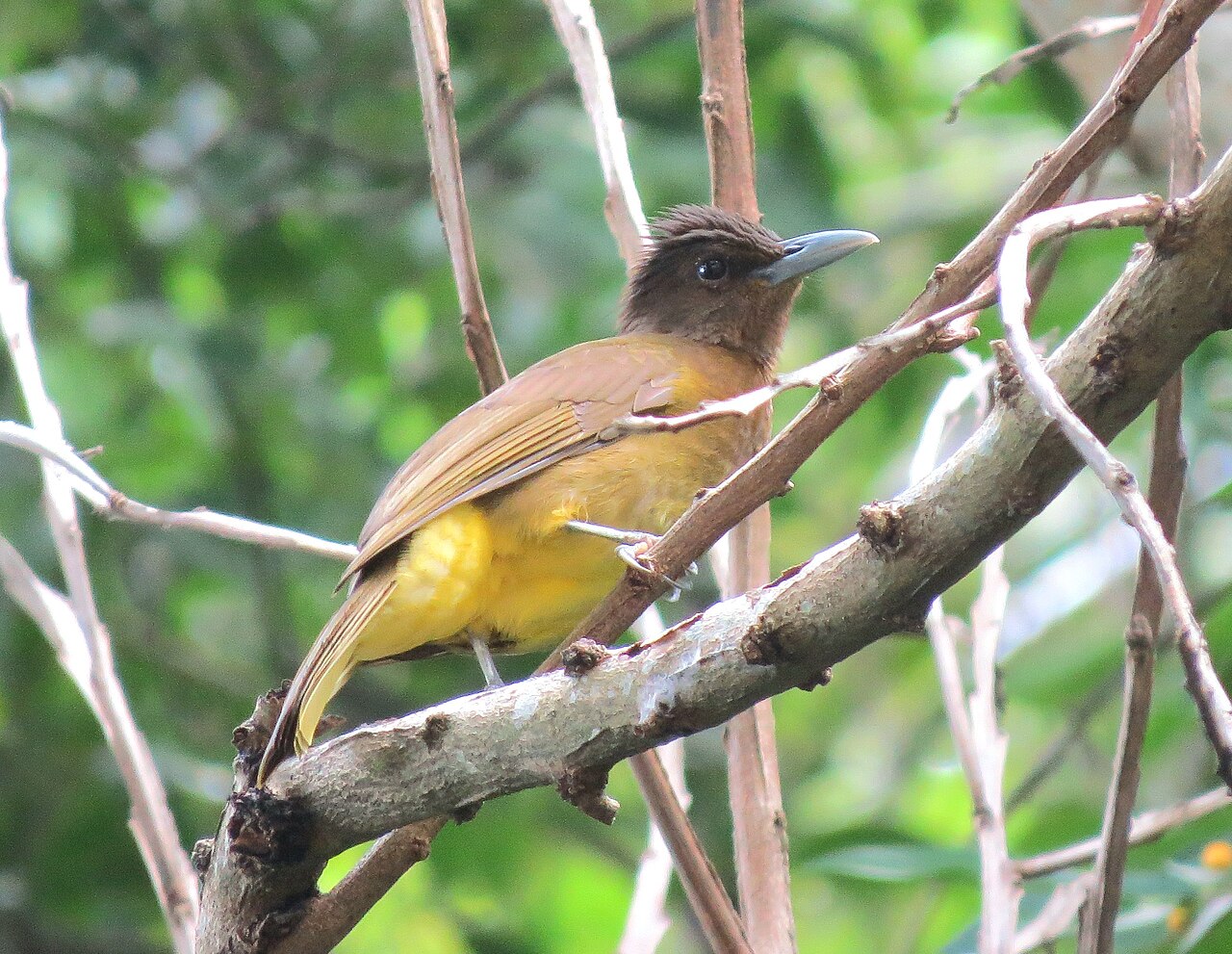
The Cameroon indigobird is a species of bird in the family Viduidae. It is considered by some authors to be a subspecies of the variable indigobird. They range from Sierra Leone to east Cameroon, north east Zaire and South Sudan.
Region
West and Central Africa
Typical Environment
Occurs from Sierra Leone and neighboring West African countries east through Nigeria and Cameroon into northeastern Democratic Republic of the Congo and South Sudan. It favors open woodland, wooded savanna, forest edges, riverine thickets, and cultivated areas. Presence closely follows that of its estrildid host finches, especially in grassy mosaics and scrub. Often perches conspicuously on shrubs or low trees near open feeding grounds. Frequently seen near villages and fallow fields where seeding grasses are abundant.
Altitude Range
0–1800 m
Climate Zone
Tropical
Ease of Keeping
Beginner friendly: 2/5
The Cameroon indigobird is a brood parasite of small estrildid finches, laying its eggs in the nests of its hosts. Males learn and mimic the songs of their host species, which helps attract females that were reared by the same host. It has often been treated as part of the variable indigobird complex, and identification relies heavily on song and subtle bill/foot color cues. It inhabits West to Central African savannas, edges, and farmlands where host finches are common.
Temperament
solitary and territorial
Flight Pattern
short rapid wingbeats
Social Behavior
Males defend small song perches and display to passing females, often near host territories. The species is an obligate brood parasite, laying eggs in the nests of estrildid finches; it does not build its own nest. Pairs are not long-term; females may visit multiple host nests during a season.
Migratory Pattern
Resident
Song Description
Male song is a rapid, high-pitched series incorporating precise mimicry of its host finch’s calls and songs. Includes buzzy trills, sharp chips, and mechanical-sounding notes delivered persistently from exposed perches.
Plumage
Breeding males are glossy indigo-black with a uniform, sleek appearance; non-breeding males duller. Females are brown and streaked above with paler, buffy underparts and a lightly marked face.
Diet
Primarily feeds on small grass and weed seeds picked from the ground or directly from seed heads. Will also take fallen seeds along paths and field margins. Occasional small arthropods may be consumed, especially by juveniles, but seeds dominate the diet.
Preferred Environment
Feeds in open grassy areas, fallow fields, farm edges, and along tracks where seeds are accessible. Often forages near cover such as shrubs or low trees, retreating quickly when disturbed.