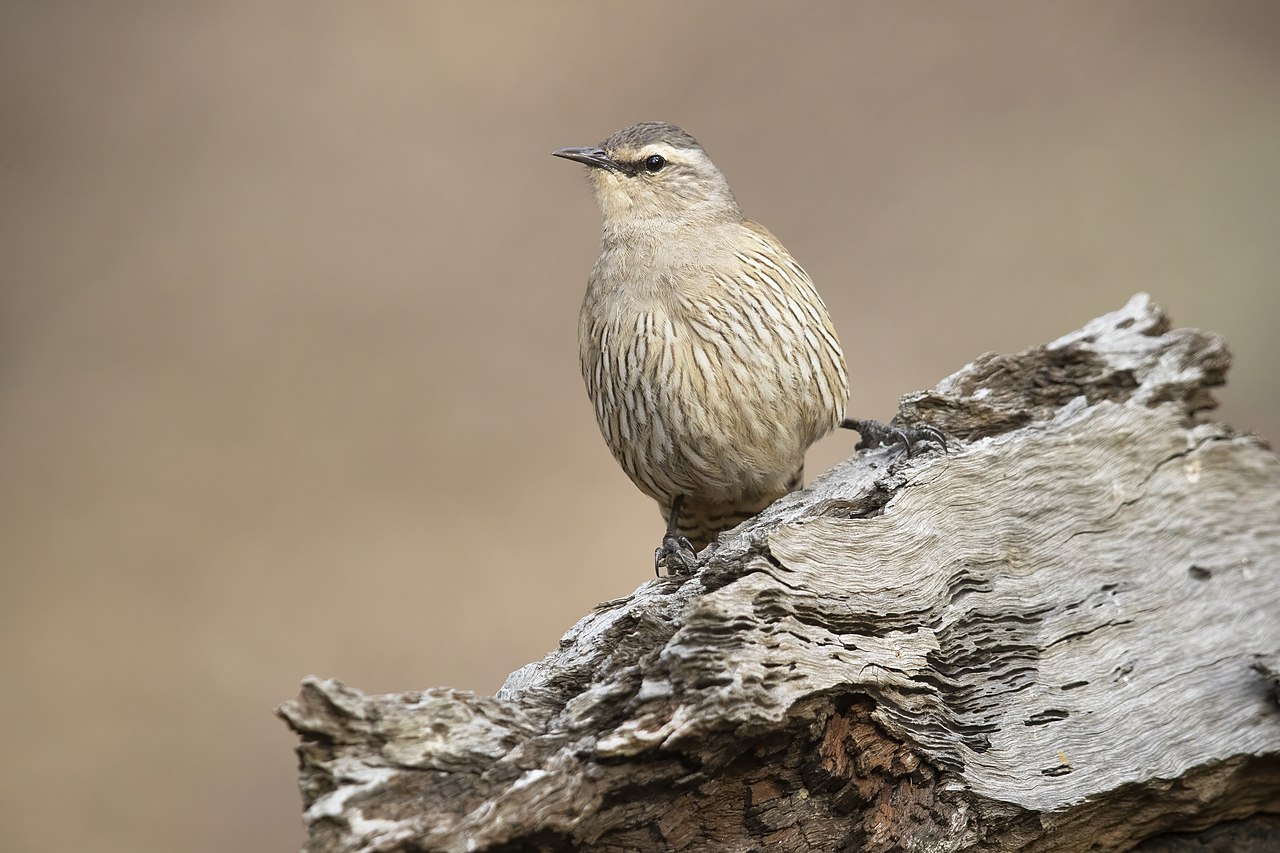
The brown tanager is a small South American bird in the tanager family Thraupidae. It is the only member of the genus Orchesticus.
Region
Atlantic Forest of southeastern Brazil
Typical Environment
Occurs in humid evergreen and montane Atlantic Forest, favoring mature forest and well-structured secondary growth. It typically forages in the midstory and canopy along forested slopes and ridgelines. The species is local and patchy but can be fairly regular where suitable habitat persists. It often associates with mixed-species flocks, especially in cooler, mossy forest. Forest fragmentation limits movements between suitable patches.
Altitude Range
600–2000 m
Climate Zone
Subtropical
Ease of Keeping
Beginner friendly: 2/5
The brown tanager is the sole member of the genus Orchesticus and is confined to Brazil’s Atlantic Forest. It often joins mixed-species flocks in montane forest, moving methodically through the midstory. Though drab in color, its behavior and subtle rufous tones help with identification. Ongoing habitat loss in the Atlantic Forest affects its distribution and local abundance.


Temperament
social and active
Flight Pattern
short rapid wingbeats
Social Behavior
Often moves in pairs or small groups and readily joins mixed-species flocks in the midstory. Nests are placed in dense vegetation, with both parents likely involved in care. Territoriality is modest, with more emphasis on following flock movements through suitable habitat.
Migratory Pattern
Resident
Song Description
Song is a series of thin, high-pitched whistles and short trills delivered from within foliage. Calls include soft tseep or tsit notes that can be easily overlooked in background forest noise.
Plumage
Mostly plain brown to olive-brown with a slightly warmer, rufous wash on the underparts and undertail coverts; wings lack prominent bars. Texture appears smooth and uniform, with subtle shading rather than bold patterning.
Diet
Takes small insects and other arthropods gleaned from leaves and twigs. Also consumes a variety of small forest fruits and berries, especially when arthropods are less abundant. Foraging is deliberate, picking prey from foliage and occasionally sallying short distances.
Preferred Environment
Feeds in midstory to canopy layers of humid forest, especially along edges of trails, gaps, and ridge forests. Frequently follows mixed flocks where it exploits disturbed foliage and fruiting trees.