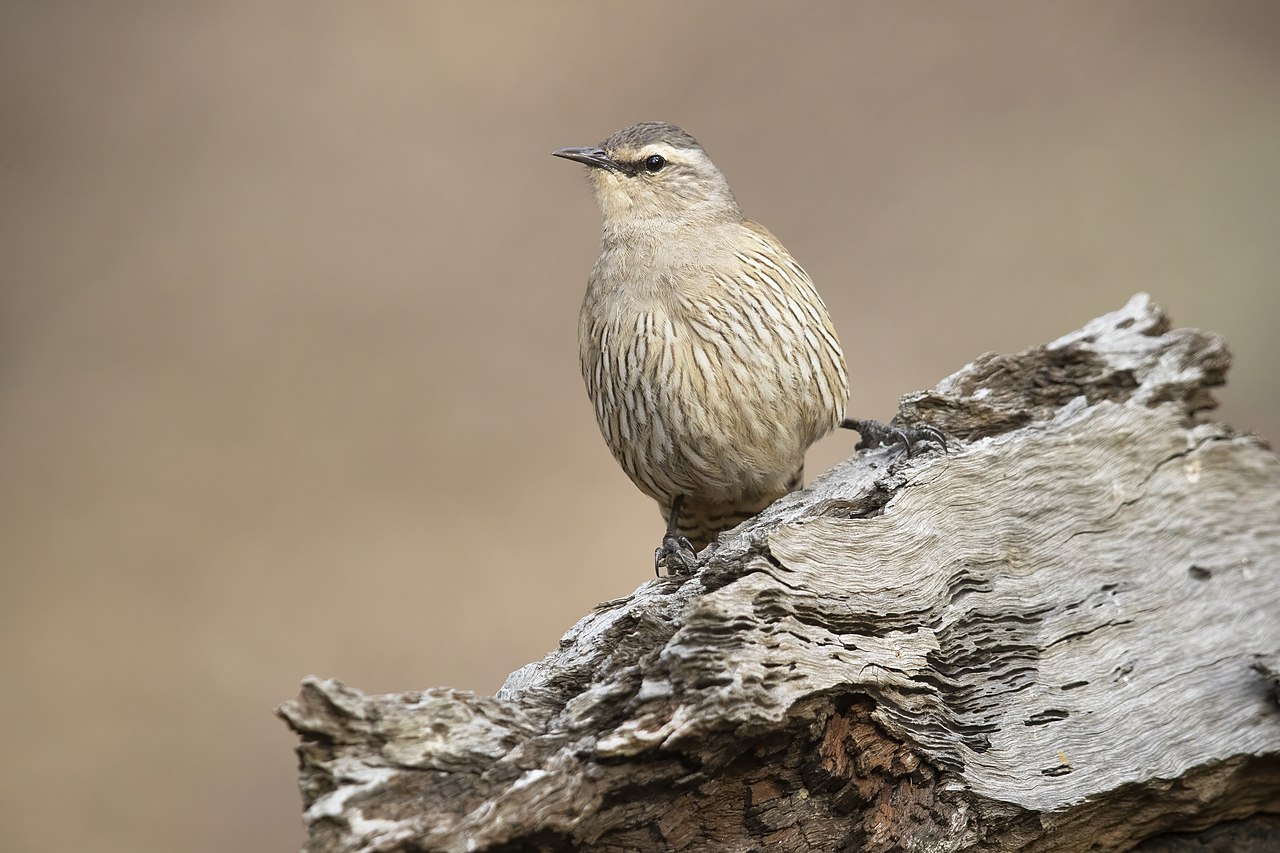
The brown thornbill is a passerine bird usually found in eastern and south-eastern Australia, including Tasmania. It can grow up to 10 cm (3.9 in) long, and feeds on insects. It is brown, grey and white. The species has five subspecies.
Region
Eastern and Southeastern Australia
Typical Environment
Occupies a wide range of wooded habitats, especially eucalypt forests, wet and dry sclerophyll, rainforest edges, and coastal heath. It favors dense understory and thickets, including tea-tree and banksia scrub. The species also uses regrowth, shelterbelts, and shrubby suburban gardens where cover is abundant. It typically forages in the lower to mid-story and occasionally near the ground. Nests are placed low in dense shrubs or vines, well hidden from view.
Altitude Range
Sea level to 1200 m
Climate Zone
Temperate
Ease of Keeping
Beginner friendly: 2/5
The brown thornbill is a tiny, energetic passerine endemic to eastern and southeastern Australia, including Tasmania. It forages low in dense shrubs and is a common member of mixed-species flocks. Pairs maintain territories year-round and build neat domed nests with a side entrance close to the ground. They readily adapt to shrubby gardens and are often detected by their rapid, tinkling calls.


A brown thornbill
Temperament
social and active
Flight Pattern
short rapid wingbeats with low, darting flights
Social Behavior
Usually seen in pairs or small family groups and frequently joins mixed-species foraging flocks. Pairs hold territories year-round and both sexes build a domed nest with a side entrance low in dense shrubs. Clutches are small, and nests are occasionally parasitized by cuckoos such as the shining bronze-cuckoo.
Migratory Pattern
Resident
Song Description
Song is a rapid series of bright, tinkling trills and warbles, interspersed with scolding chatters. Calls are high-pitched see-see and ticking notes that carry well in dense vegetation.
Plumage
Warm brown upperparts with a slightly rufous forehead, grey-brown face, and finely streaked off-white to buff throat and breast. Underparts are pale grey-buff with a warmer wash on the flanks. Tail is brown with a darker subterminal band and narrow pale tips. Feathers appear soft and neatly patterned rather than boldly marked.
Diet
Primarily small insects and other arthropods, including beetles, caterpillars, spiders, and larvae. It gleans from leaves, twigs, and bark, and occasionally hawks briefly for flying prey. At times it supplements with tiny seeds, lerps, or honeydew when available.
Preferred Environment
Feeds within dense shrubs and lower canopy layers of forests, woodlands, and heaths. Often forages methodically through thickets and along edges, and will utilize vegetated gardens and parks with adequate cover.