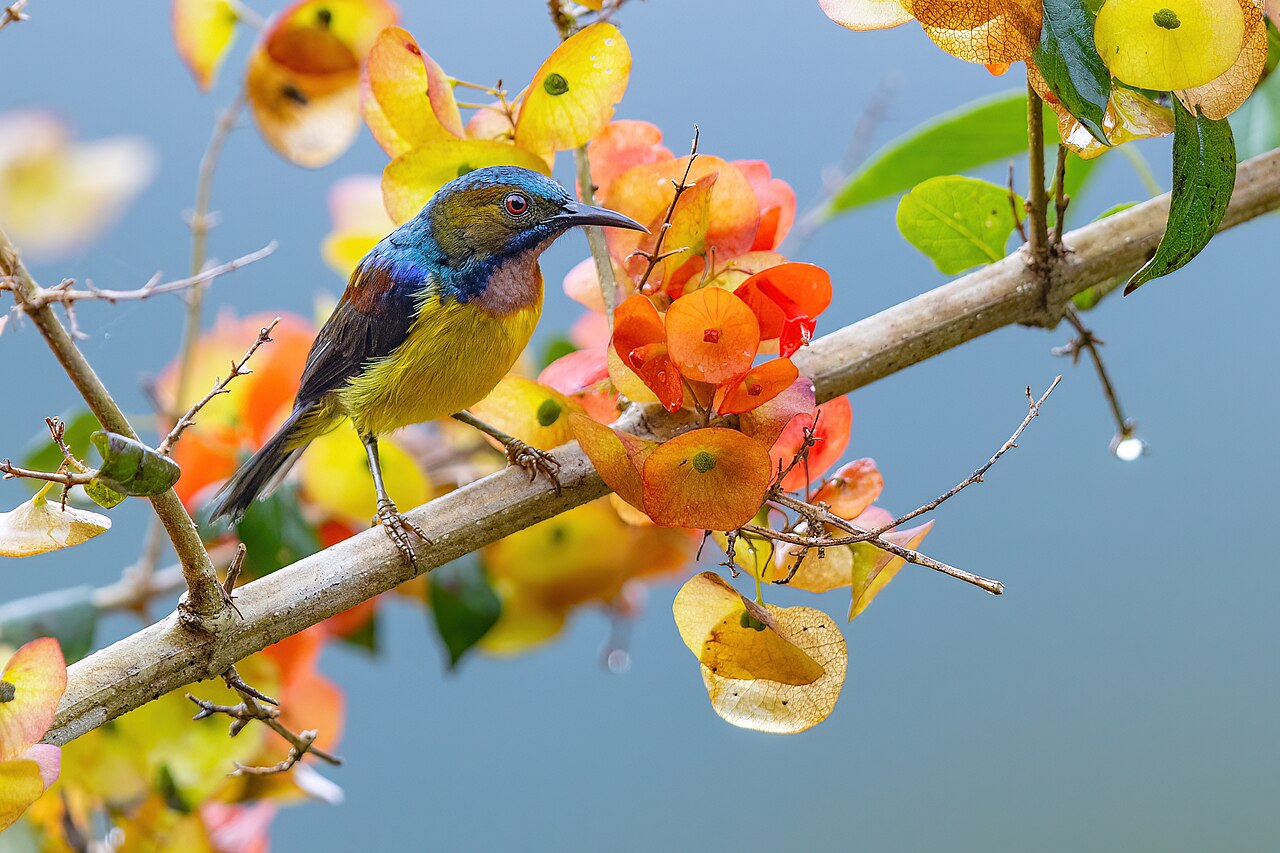
The brown-tailed apalis is a species of bird in the family Cisticolidae.
Region
Horn of Africa and East Africa
Typical Environment
Found in dry savannas, thornbush, and acacia-commiphora scrub, as well as dense edges of woodland and riparian thickets. It favors semi-arid lowlands and foothills with scattered shrubs and trees. In some areas it also occupies coastal thickets and plantations with suitable undergrowth. It keeps close to cover and often joins mixed-species flocks in denser patches.
Altitude Range
Sea level to 1800 m
Climate Zone
Subtropical
Ease of Keeping
Beginner friendly: 2/5
The brown-tailed apalis is a small, active warbler of the Cisticolidae, often seen flitting through acacia scrub and thickets. Pairs frequently perform antiphonal duets, with male and female calls tightly alternating. It forages methodically in dense foliage, flicking its characteristically brown tail. Though widespread in parts of East Africa, it is often more heard than seen.
Temperament
skulking but active
Flight Pattern
short rapid wingbeats
Social Behavior
Usually found in pairs or small family groups, often maintaining territories year-round. Pairs are monogamous and communicate with coordinated duets. Nests are compact, purse-like structures placed low to mid-level in dense shrubs.
Migratory Pattern
Resident
Song Description
A fast, high-pitched series of chips and trills, often delivered as an antiphonal duet between the pair. Calls are sharp and repetitive, carrying well from within dense cover.
Plumage
Olive-gray to gray-olive upperparts with clean yellow underparts and a contrasting brown tail. The throat is pale to whitish, blending into the bright yellow breast. Feathers are sleek and close-fitting, aiding quick movement through shrubs.
Diet
Primarily small arthropods, including beetles, caterpillars, spiders, and other soft-bodied insects gleaned from leaves and twigs. It occasionally hawks briefly for flushed prey and may hover-glean at foliage tips. Opportunistic feeding focuses on concealed invertebrates within shrubs.
Preferred Environment
Feeds within dense thickets, acacia scrub, and woodland edges where foliage provides both prey and cover. Often forages from the lower to mid-strata, moving methodically through shrub layers.