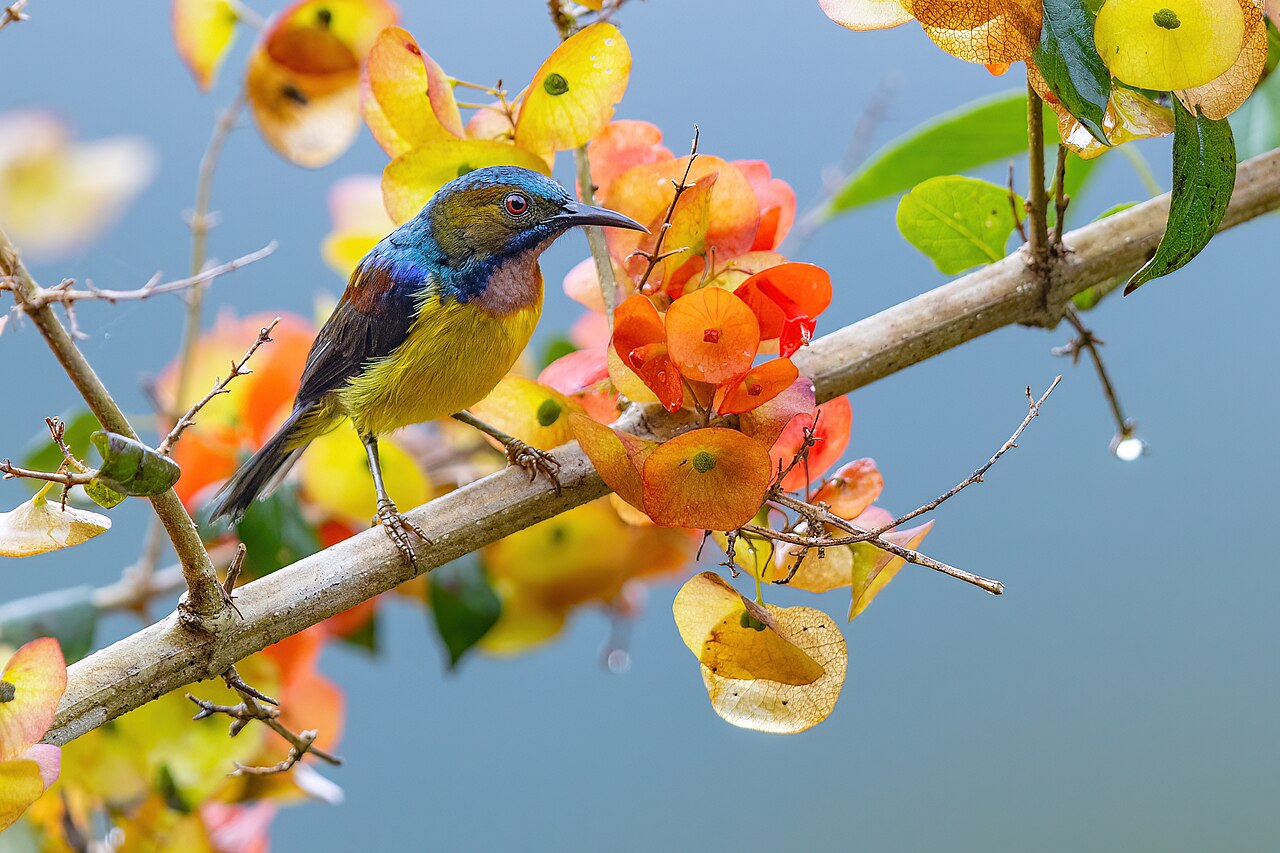
The brown-throated fulvetta or Ludlow's fulvetta is a species of bird in the family Paradoxornithidae. Like the other typical fulvettas, it was long included in the Timaliidae genus Alcippe or in the Sylviidae. It is found in Bhutan, China, India, Myanmar, and Nepal.
Region
Eastern Himalayas and Southwest China
Typical Environment
Occurs from Nepal and Bhutan through northeastern India and northern Myanmar into southwestern and south-central China. It inhabits moist montane broadleaf and mixed forests with dense undergrowth, including rhododendron, oak, and bamboo thickets. Birds typically forage from the shrub layer to mid-canopy and often work forest edges and secondary growth. In the non-breeding season it may move slightly downslope and join larger mixed-species flocks.
Altitude Range
1800–3400 m
Climate Zone
Highland
Ease of Keeping
Beginner friendly: 1/5
The brown-throated fulvetta, also known as Ludlow's fulvetta, is a small montane songbird of the Paradoxornithidae. It often joins mixed-species flocks of Himalayan warblers and yuhinas while foraging through dense understory. Subtle plumage differences and its quiet demeanor can make it tricky to spot despite being fairly common where it occurs.

Temperament
social and active
Flight Pattern
short rapid wingbeats
Social Behavior
Typically seen in pairs or small family groups during the breeding season, and commonly joins mixed-species flocks outside of it. Nests are cup-shaped and placed low in dense shrubs or bamboo. Both parents participate in caring for the young.
Migratory Pattern
Resident
Song Description
Song is a soft, high-pitched series of thin trills and tinkling notes delivered from cover. Calls include gentle chips and twitters used to keep contact within flocks.
Plumage
Soft, plain brown-olive upperparts with a warmer brown throat and breast, grading to paler buffy underparts. Fine, neat feathering gives a smooth appearance with minimal streaking. Subtle pale supercilium and a faint eye ring are often visible at close range.
Diet
Feeds mainly on small insects, spiders, and other arthropods gleaned from leaves and twigs. It also takes small berries, seeds, and tender buds when available, especially in the cooler months. Foraging is methodical, with frequent pauses to pick prey from foliage.
Preferred Environment
Most often feeds in dense understory and lower mid-story of humid montane forests, including rhododendron and bamboo thickets. Also visits forest edges and regenerating secondary growth where shrub cover is abundant.