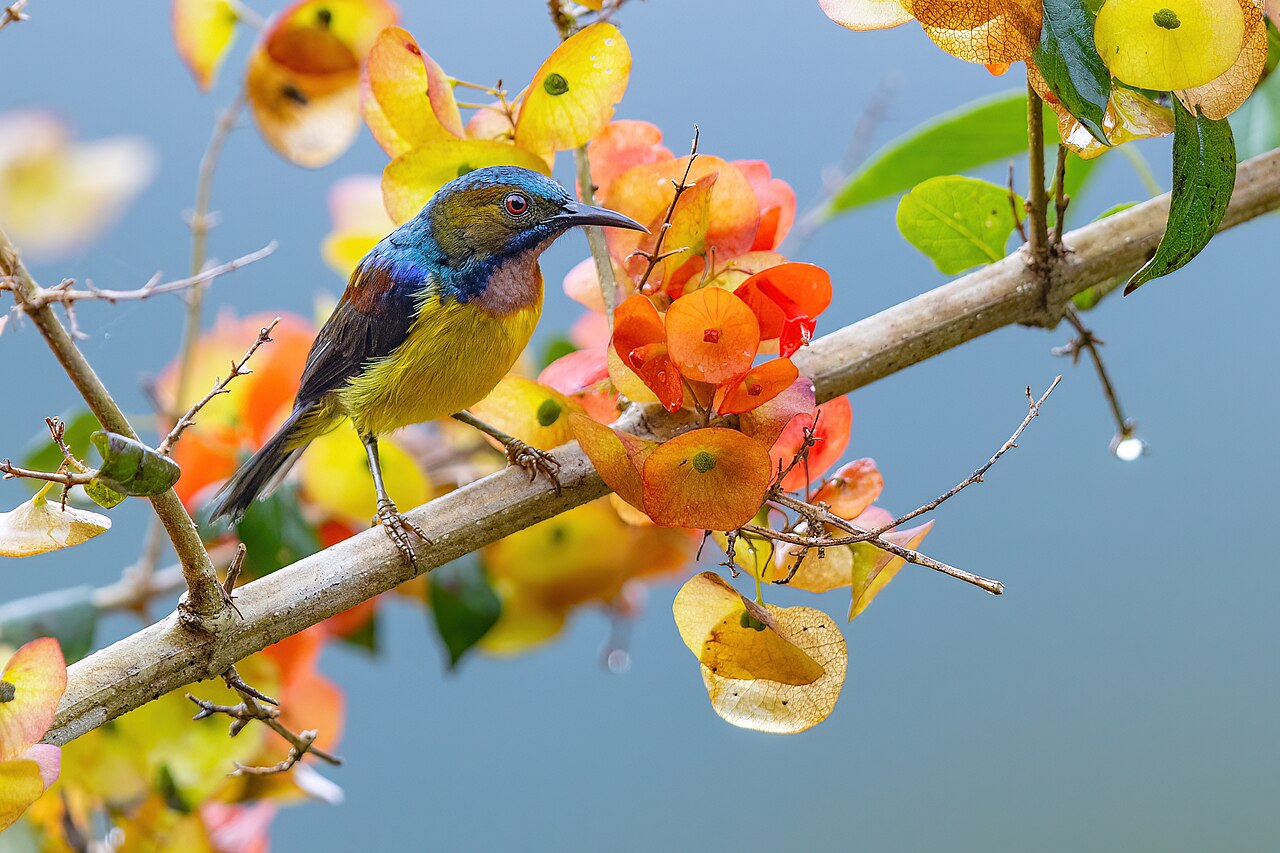
The brown-throated barbet is a species of bird in the family Megalaimidae. It is endemic to western Java.
Region
Western Java, Indonesia
Typical Environment
Occupies tropical evergreen and semi-evergreen forests, including mature secondary growth and hill forests. It frequents canopy and subcanopy layers, often visiting fruiting figs and other large fruiting trees. The species also uses forest edges and tall trees in adjacent agroforestry or plantations when fruit is available. Reliance on older trees for nesting cavities makes it sensitive to logging and forest degradation.
Altitude Range
300–1800 m
Climate Zone
Tropical
Ease of Keeping
Beginner friendly: 1/5
This barbet is restricted to western Java and is most often detected by its loud, repetitive calls rather than by sight. Like other barbets, it excavates its own nest cavity in dead or soft wood. It is an important seed disperser, especially for figs, helping maintain forest regeneration. Habitat loss from deforestation and fragmentation in Java remains its primary threat.

Temperament
solitary and territorial
Flight Pattern
short, direct flights with rapid wingbeats between trees
Social Behavior
Usually seen singly or in pairs, occasionally in small family groups around fruiting trees. Pairs defend territories and call frequently to advertise presence. Both sexes excavate nest cavities in deadwood and share incubation and chick-rearing duties.
Migratory Pattern
Resident
Song Description
A loud, repetitive series of hollow tok-tok or tuk-tuk notes that carries far through the forest. Calls may be delivered in steady cadence or as duets between mates, often from a concealed perch high in the canopy.
Plumage
Stocky, predominantly green barbet with a distinctly brown head and throat; underparts lightly streaked. Feathers are dense and plush, giving a smooth, compact look. Bill is heavy and pale horn.
Diet
Primarily consumes figs and other soft fruits, swallowing whole and later dispersing seeds. Supplements its diet with insects such as beetles, ants, and termites gleaned from bark and foliage. Occasionally takes nectar or buds when fruit is scarce.
Preferred Environment
Feeds mostly in the canopy and upper mid-story, concentrating at fruiting trees. Also forages along forest edges and in tall trees within mixed agroforestry landscapes.