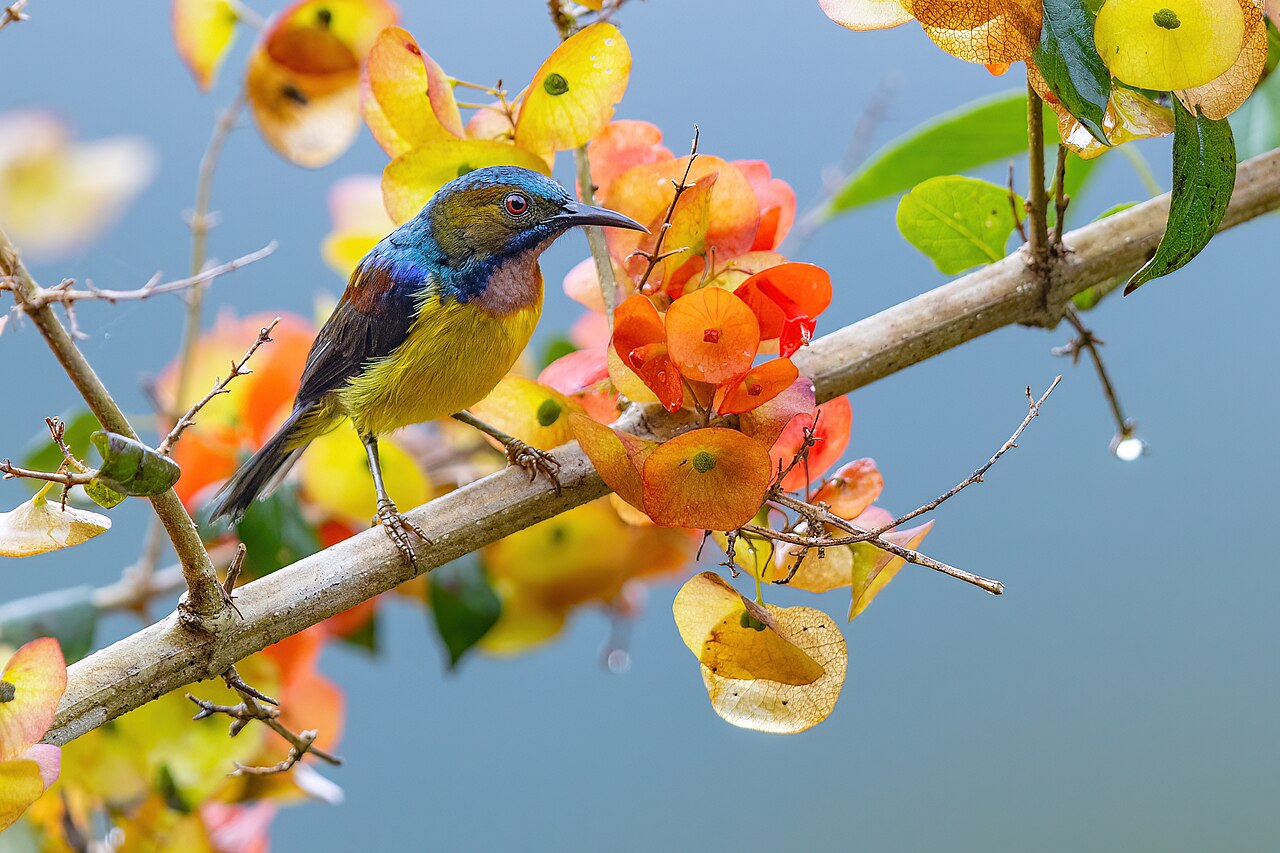
The brown-streaked flycatcher is a species of bird in the family Muscicapidae. It is found in southern Myanmar, southern Thailand, northern peninsular Malaysia, and northeast Borneo. Some authorities consider it to be a subspecies of the Asian brown flycatcher. In 2020, a vagrant was sighted 300 km (190 mi) south of the Australian town of Broome and its identity was confirmed from DNA analysis of the droppings of the bird. The species has a rufescent plumage in the breeding season and then becomes drab. The species name is after the collector Sir Walter James Franklin Williamson.
Region
Southeast Asia
Typical Environment
Occurs from southern Myanmar through southern Thailand and into northern Peninsular Malaysia, with records in northeast Borneo (e.g., Sabah). It favors lowland and hill forests, forest edges, and secondary growth, and also uses plantations and wooded parks. During the non-breeding season it may disperse more widely within the region. Vagrancy has been documented as far as northwestern Australia. Local presence can be patchy, tied to suitable edge and midstory foraging sites.
Altitude Range
Sea level to 1500 m
Climate Zone
Tropical
Ease of Keeping
Beginner friendly: 1/5
Sometimes treated as a subspecies of the Asian brown flycatcher, this bird shows a warmer, rufescent tone in the breeding season and a drabber look afterward. It was named in honor of the collector Sir Walter James Franklin Williamson. A notable vagrant was confirmed by DNA from droppings near Broome, Australia, in 2020. It often hunts with quick sallies from low to mid-level perches, making it easy to overlook despite being fairly widespread locally.
Temperament
shy and inconspicuous
Flight Pattern
short rapid wingbeats with quick sallies from a perch
Social Behavior
Usually solitary or in pairs, perching quietly in the midstory and making brief sorties to catch insects. Nests are likely small cups placed on branches or forks, similar to related Muscicapa species. Territorial behavior is modest, with short chases around preferred perches. Breeding is presumed monogamous with both parents contributing to care.
Migratory Pattern
Partial migrant
Song Description
Vocalizations are soft and high-pitched, including thin tsip and tsee notes. Song is subdued and simple, often a short series of thin whistles, and can be easily missed amid forest background noise.
Plumage
Subtle, finely streaked brownish upperparts with pale, lightly streaked throat and breast; rufescent wash develops on upperparts and tail in breeding season, fading to drab afterward. Underparts are pale buff to whitish with variable fine streaking on the breast. Feathers are smooth and sleek, aiding a neat, clean-lined appearance typical of Muscicapa flycatchers.
Diet
Primarily small flying insects such as flies, beetles, moths, and termites. Hunts by sallying from open perches, snapping prey in midair with a quick return to the same or nearby perch. Will also glean small arthropods from foliage and branches. Occasional small berries may be taken opportunistically.
Preferred Environment
Forages along forest edges, clearings, riparian corridors, and semi-open secondary growth. Also uses shaded plantations and wooded parks where scattered perches overlook open airspace.