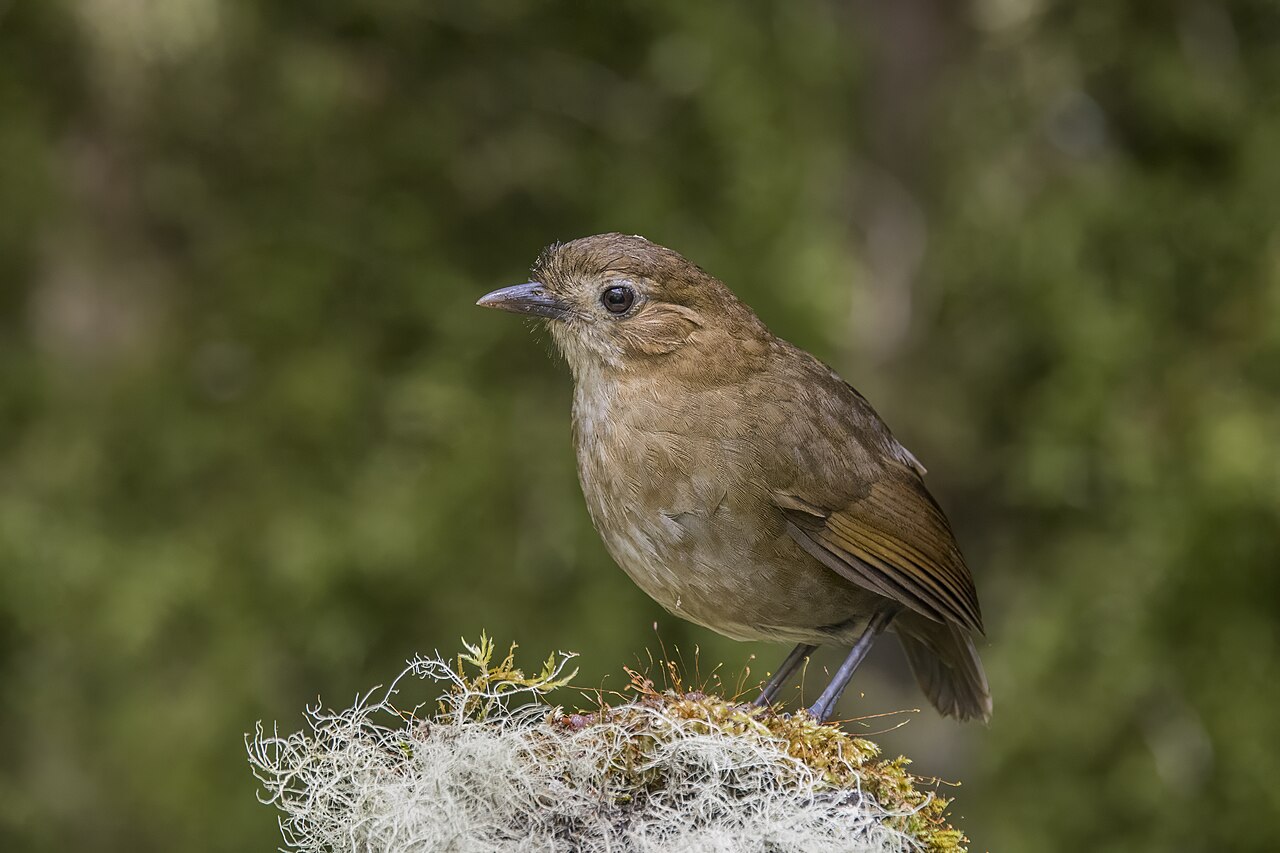
The brown-backed parrotlet also known as the black-backed parrotlet, the black-eared parrotlet, and Wied's parrotlet, is a small green parrot found in south-eastern Brazil from Bahia to southern São Paulo. It has a dark brown mantle and back, brown ear coverts, and red outer tail with back tips. They frequent humid forest from 500–1,000 m (1,600–3,300 ft), and are mostly found in small flocks of 3–20 birds.
Region
Atlantic Forest of eastern Brazil
Typical Environment
Occurs from southern Bahia south through Espírito Santo and Minas Gerais to Rio de Janeiro and northern São Paulo. It favors humid, mature and secondary forest, often along forested slopes and foothills. Birds are typically canopy-oriented but will visit edges and fruiting trees. Small flocks move widely in search of seasonal fruit resources, and local occurrence can be patchy. Human-driven deforestation has fragmented its habitats across much of the historical range.
Altitude Range
500–1000 m
Climate Zone
Tropical
Ease of Keeping
Beginner friendly: 1/5
This elusive parrotlet is confined to Brazil’s Atlantic Forest and is often detected by its sharp, high-pitched calls as small flocks zip over the canopy. It is also known as Wied's parrotlet, honoring naturalist Prince Maximilian of Wied-Neuwied. Habitat loss has fragmented its range, making encounters uncommon even within suitable forest.


Temperament
social and active
Flight Pattern
fast, direct flight with short rapid wingbeats; usually high over the canopy
Social Behavior
Typically found in small flocks of 3–20 birds, keeping tight formations while commuting between feeding areas. Likely nests in tree cavities, including those in older forest trees. Breeding pairs are discreet and may separate slightly from flocks during nesting. Communal foraging at fruiting trees is common when resources are abundant.
Migratory Pattern
Resident
Song Description
Vocalizations are sharp, high, sibilant whistles and rapid chattering notes, often given in flight. Calls carry well over the canopy and are a primary means of detection. Perched birds give softer, contact twitters within the flock.
Plumage
Small green parrotlet with a distinctly dark brown mantle and back and brown ear-coverts. Underparts are greener, wings mostly green with darker primaries, and the outer tail feathers show red with black tips. Plumage is compact and neat, with no prominent crest.
Diet
Primarily consumes small fruits and berries, including those of melastomes and figs, and also takes seeds and soft plant material such as buds and flowers. Foraging is mostly in the upper canopy, where it moves quickly between fruiting trees. It may supplement its diet with seeds from forest edges and secondary growth, especially when fruit is scarce.
Preferred Environment
Feeds in humid forest canopies, along edges, and in secondary forests with fruiting trees and bamboo patches. Often visits mixed-species fruiting trees that provide seasonal abundance.