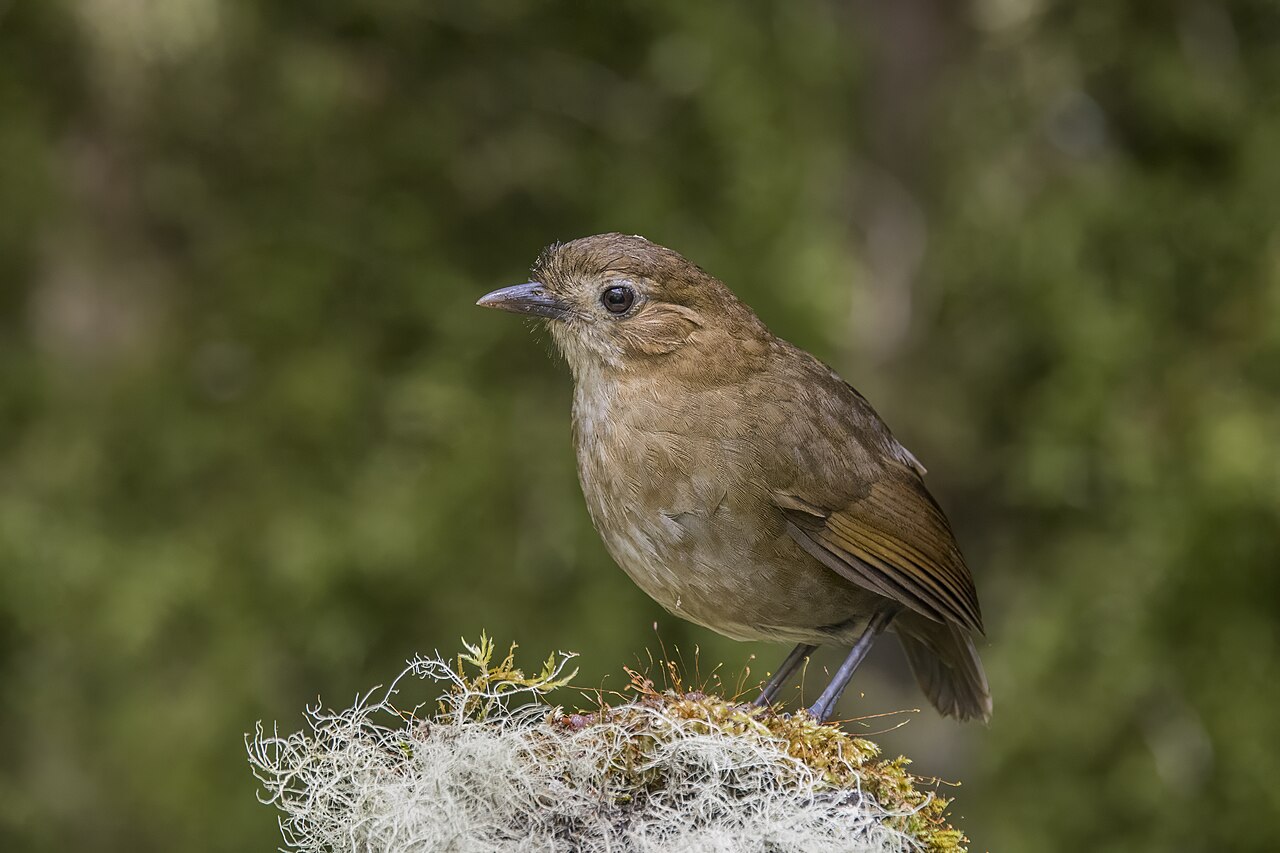
The brown-backed solitaire is considered a thrush and is placed in the family Turdidae. It is a medium-sized bird about 21 centimeters long. It is a mostly grayish bird with brown flight feathers, a white eye ring and white rectrices (tail) feathers.
Region
Mesoamerican Highlands
Typical Environment
Occurs in the highlands of Mexico south through northern Central America, favoring cloud forest, humid pine–oak, and evergreen montane forest. Often found along shaded ravines, mossy canyons, and forest edges with abundant fruiting shrubs. Uses dense vegetation for cover but will sing from semi-exposed perches. Common in protected montane reserves and mature secondary growth where moisture is high. Occasionally descends to lower elevations in the non-breeding season along slopes and riparian corridors.
Altitude Range
1200–3500 m
Climate Zone
Highland
Ease of Keeping
Beginner friendly: 1/5
The brown-backed solitaire is a forest thrush famed for one of the most ethereal, flute-like songs in the Americas, often seeming ventriloquial in dense forest. It frequents cool, moist highland forests and can be quite shy, perching quietly in the midstory. White outer tail feathers flash in flight and contrast with its warm brown back and gray underparts. It often follows fruiting trees and can make short sallies to catch insects.


Temperament
shy and retiring
Flight Pattern
short rapid wingbeats with brief, level glides
Social Behavior
Usually solitary or in pairs, maintaining territories during the breeding season. Nests are cup-shaped and placed on ledges, banks, or in sheltered niches, often near water. Both sexes participate in parental care, with discreet movements to and from the nest to avoid detection.
Migratory Pattern
Partial migrant
Song Description
A rich, fluty, and far-carrying series of clear, cascading phrases delivered with variable tempo. The song often sounds ventriloquial in dense forest, making the singer hard to locate.
Plumage
Mostly gray underparts with a warm brown back and wings; contrasting white outer tail feathers and a neat white eye ring. Feathers are smooth and sleek, with subtle dusky edging on the wing coverts.
Diet
Takes a mixed diet of small fruits and berries along with insects and other arthropods. Gleans insects from foliage and branches and occasionally hawks short distances to catch flying prey. Consumes seasonal fruits from laurels, melastomes, and other montane shrubs, playing a role in seed dispersal.
Preferred Environment
Feeds in the midstory and lower canopy of humid montane forest, especially around fruiting trees and along shady ravines. Also forages at forest edges and along quiet trails where berries are abundant.