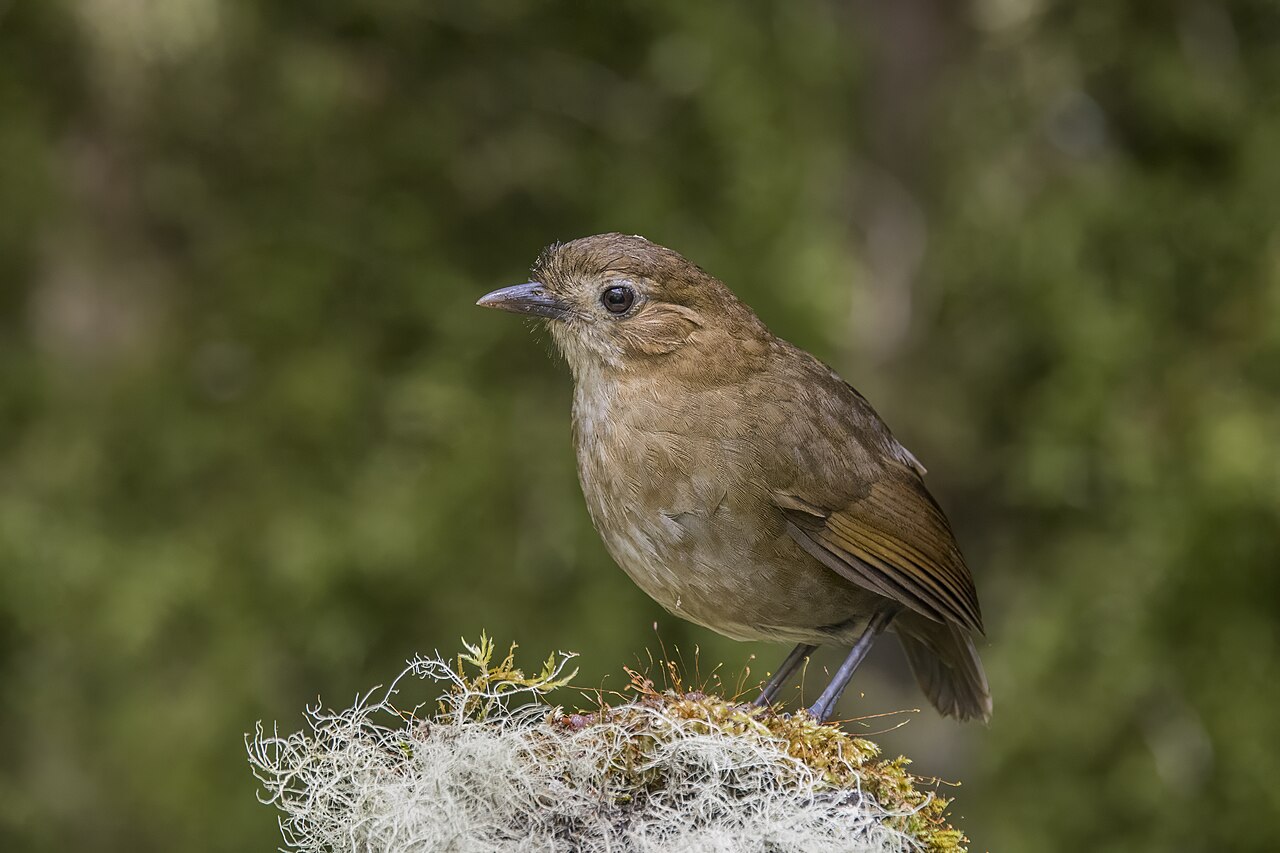
The brown-backed scrub robin is a species of bird in the family Muscicapidae. It is found in Angola, Burundi, Cameroon, Central African Republic, Democratic Republic of the Congo, Kenya, Nigeria, Rwanda, Tanzania, and Uganda. Its natural habitat is moist savanna.
Region
Central and East Africa
Typical Environment
Occurs in moist savanna, wooded grasslands, and edges of secondary woodland and forest, including riparian thickets. It favors dense undergrowth, tangled shrubs, and bracken or rank grasses where it can move under cover. Often found along drainage lines, termitaria thickets, and fallow farmland edges. Tolerates moderately disturbed habitats provided sufficient shrub cover remains.
Altitude Range
0–2000 m
Climate Zone
Tropical
Ease of Keeping
Beginner friendly: 1/5
This shy scrub-robin keeps to dense thickets where it forages close to the ground, often flicking and fanning its rufous tail to flush insects. Its rich, melodious song carries at dawn and dusk, and individuals may include snippets of other species’ calls. Pairs are strongly territorial during breeding and can be surprisingly vocal from concealed perches.

Temperament
solitary and territorial
Flight Pattern
short rapid wingbeats between cover
Social Behavior
Usually seen singly or in pairs, maintaining territories year-round in dense scrub. Nests are cup-shaped and placed low in shrubs or grass tussocks; clutch size is typically 2–3 eggs. Both parents participate in provisioning nestlings and defending the territory.
Migratory Pattern
Resident
Song Description
A rich, varied warble of fluted notes, whistles, and trills delivered from concealed perches. Most vocal at dawn and dusk; sometimes includes mimicry of other bushland birds.
Plumage
Warm brown back and wings with paler buff underparts and a clean whitish throat; tail rufous with contrasting pale outer edges and tips. Subtle pale eyebrow and faint wing panel; overall plain, with fine streaking minimal or absent.
Diet
Feeds mainly on insects such as beetles, ants, termites, grasshoppers, and caterpillars, as well as spiders and other small invertebrates. Occasionally takes small snails and seeds or berries when available. Forages by gleaning from leaf litter, low foliage, and the ground, often pausing to flick the tail.
Preferred Environment
Dense thickets, shrub tangles, woodland edges, and riparian undergrowth where leaf litter is abundant. Frequently hunts along paths, termitaria, and the margins of clearings where prey is easier to spot.