
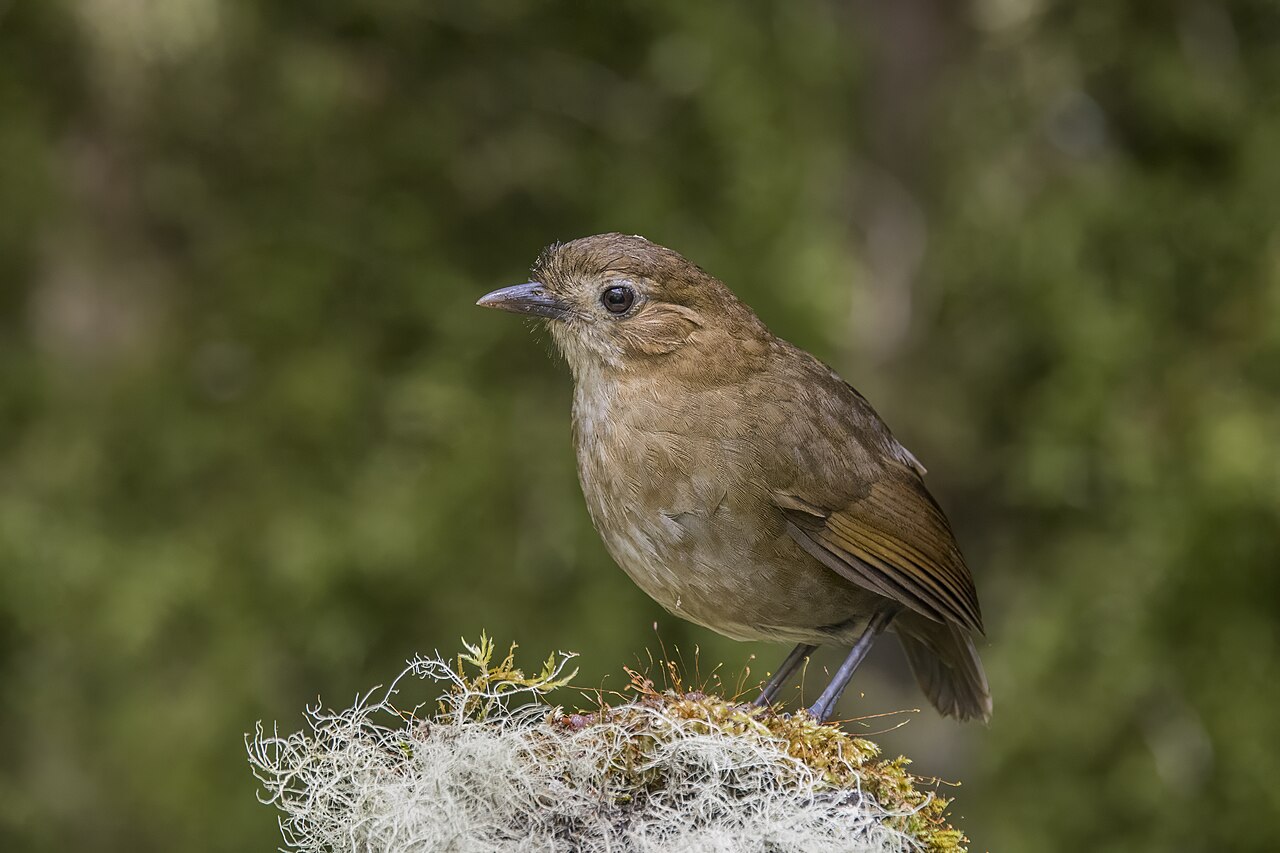
The brown-banded antpitta is a vulnerable species of bird in the family Grallariidae. It is endemic to Colombia.
Region
Andes Mountains (Central Andes of Colombia)
Typical Environment
Occurs in humid montane and cloud forests with dense understory, especially in bamboo (Chusquea) and mossy thickets. It favors shaded ravines, forest edges, and interior trails where leaf litter is deep. The species remains near the forest floor, using cover to move quietly and avoid detection. Protected reserves with intact canopy and understory structure are important strongholds. Secondary growth adjacent to mature forest can also be used if the understory remains dense.
Altitude Range
1800–3200 m
Climate Zone
Highland
Ease of Keeping
Beginner friendly: 1/5
The Brown-banded Antpitta is a shy, ground-dwelling bird of Colombia’s Central Andes cloud forests. It is best detected by its clear, mournful whistles, as it rarely shows itself in dense understory. The species is threatened by habitat loss from agriculture and logging but can persist in well-protected reserves. At some sites it is known to visit feeding stations for earthworms, offering rare viewing opportunities.


Temperament
solitary and skulking
Flight Pattern
short rapid wingbeats, low to the ground
Social Behavior
Usually solitary or in pairs, keeping to dense understory and forest floor. Nests are typically mossy cups placed low above the ground in dense vegetation. Both parents are thought to share incubation and chick-rearing duties. Territorial calling is common at dawn.
Migratory Pattern
Resident
Song Description
A clear, mournful series of whistle-like notes, often repeated at measured intervals. The song carries through cloud forest and is the best cue to its presence. Calls are softer, single notes given from cover.
Plumage
Warm brown upperparts with rufescent tones and whitish to buff underparts boldly barred with brown across the breast and belly, giving a 'brown-banded' look.
Diet
Primarily hunts ground-dwelling arthropods such as beetles, ants, and other insects, along with spiders and earthworms. It occasionally takes small vertebrates when available. Forages by pausing and then pouncing to pick prey from leaf litter. In some reserves it will accept offered earthworms, revealing otherwise secretive habits.
Preferred Environment
Feeds on the forest floor in dense understory, along trails, and in bamboo or mossy thickets. Often forages near shaded ravines and wet leaf litter where invertebrates are abundant.


