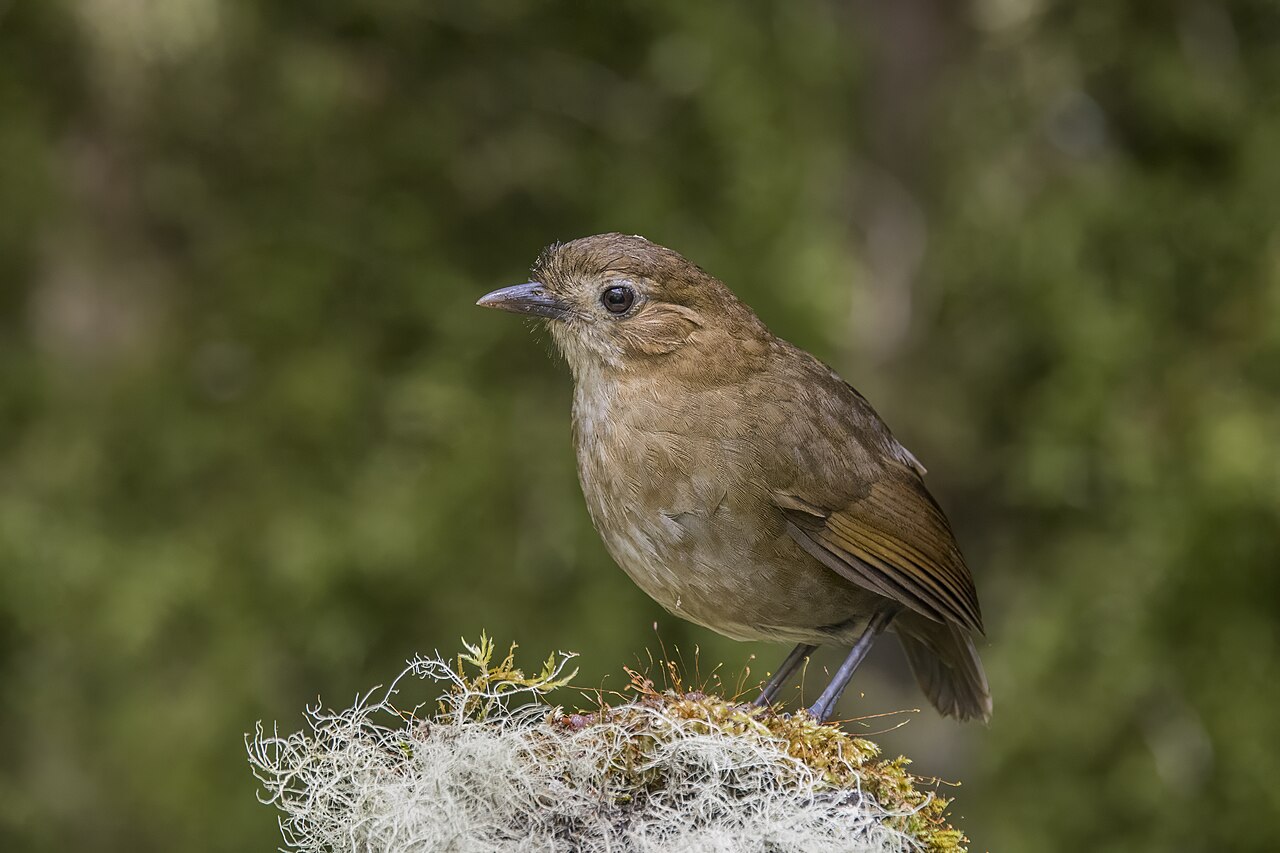
The brown-backed needletail, or brown needletail, is a large swift.
Region
South and Southeast Asia
Typical Environment
Occurs over evergreen and moist deciduous forests, foothills, and mountainous regions, often following ridge lines and escarpments. Regular over forest edges, river valleys, and gorges where updrafts concentrate flying insects. It also ranges above lowland forests and cultivated mosaics, especially after rain when aerial prey erupts. Roosting is typically in cavities of large trees or on cliff faces where the stiff tail feathers aid grip.
Altitude Range
0–2500 m
Climate Zone
Tropical
Ease of Keeping
Beginner friendly: 1/5
The brown-backed needletail is a large, powerfully built swift famed for its blisteringly fast, direct flight. Needletails have stiff, spiny tail tips that help them brace against vertical surfaces when roosting. They spend almost all their time on the wing, often foraging high over ridges and forest canopies. Flocks frequently gather ahead of storms to exploit swarms of aerial insects.

Temperament
social and active
Flight Pattern
very fast, powerful direct flight with scything wingbeats; often rides updrafts along ridges
Social Behavior
Usually seen in small to medium flocks that may mix with other swifts. Nests in tree cavities or on cliffs, with pairs returning to favored sites. Breeding groups can be loosely colonial where suitable roost and nest sites cluster.
Migratory Pattern
Resident
Song Description
Primarily gives sharp, chittering calls and buzzy squeaks while in fast flight. Vocalizations are brief and high-pitched, often exchanged within the flock during rapid passes.
Plumage
Heavy, barrel-chested swift with uniformly dark underparts and a warm brown mantle and back contrasting with blackish wings. The tail is short and square with stiff, needle-like tips. A small, paler throat and a whitish crescent on the undertail are often visible in flight.
Diet
An aerial insectivore that feeds on flying ants, termites, beetles, flies, bees, and wasps. It captures prey entirely on the wing, often high above the canopy. After storms or during hatches, it concentrates where insect swarms are densest.
Preferred Environment
Forages over forested hills, ridgelines, and open skies above valleys and river gorges. Also hunts above clearings, cultivated areas, and along windward slopes with strong updrafts.