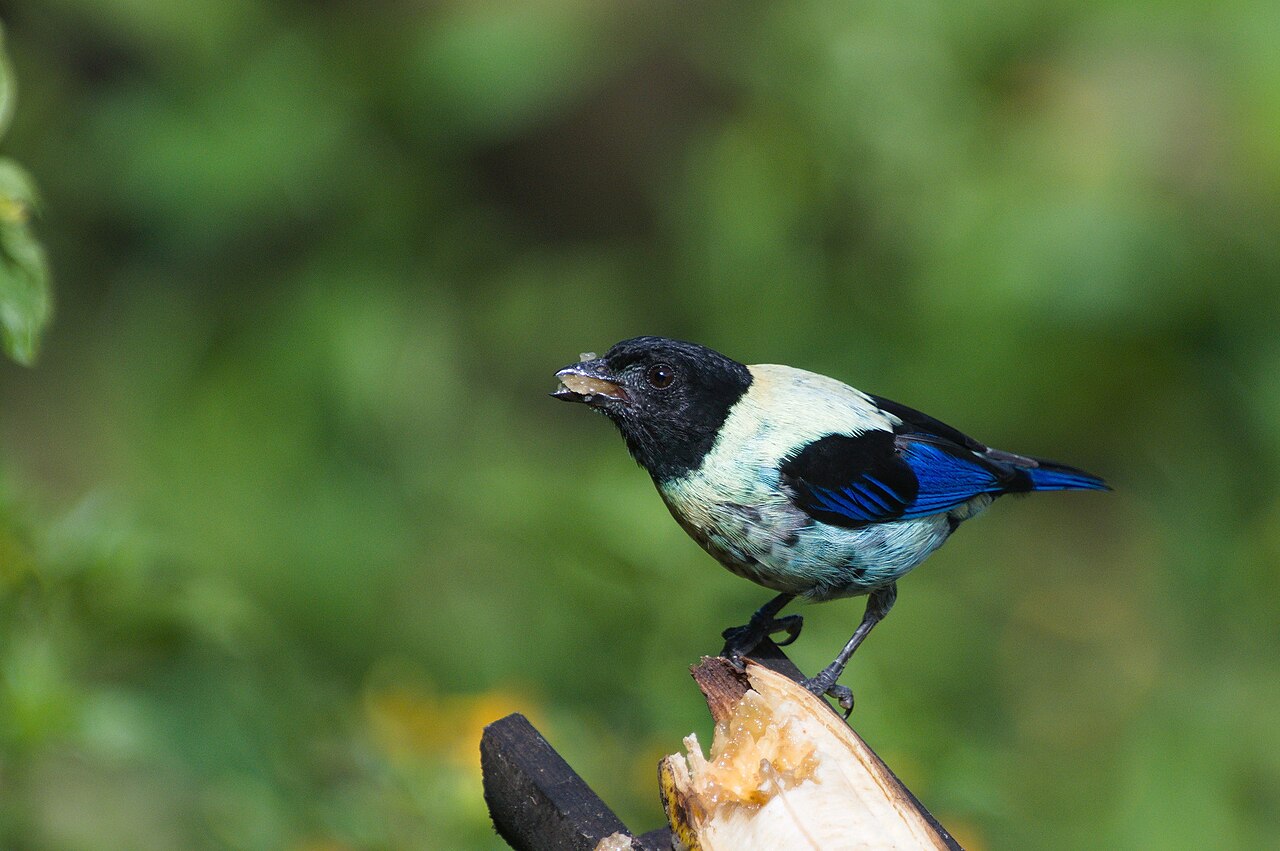
The black-headed saltator is a seed-eating bird in the tanager family Thraupidae. It breeds from central Mexico to eastern Panama.
Region
Mesoamerica
Typical Environment
Occurs from central and southeastern Mexico south through Belize, Guatemala, Honduras, El Salvador, and Nicaragua to Costa Rica and eastern Panama. Favors forest edges, second-growth thickets, riparian scrub, and semi-open woodlands. Common in agricultural mosaics and shade plantations, and sometimes visits gardens near forest. Typically keeps to mid-levels and understory but will forage from the ground up into lower canopy layers.
Altitude Range
Sea level to 1800 m
Climate Zone
Tropical
Ease of Keeping
Beginner friendly: 2/5
The black-headed saltator is a robust, seed-cracking tanager that also eats fruit and the occasional insect. It often frequents edges, thickets, and shade-grown coffee or cacao plantations, where its clear, whistled phrases carry far. Pairs are frequently seen together and may join mixed-species flocks in semi-open habitats.


showing white throat patch and black bib
Temperament
wary but conspicuous when vocal; usually calm in pairs
Flight Pattern
short rapid wingbeats
Social Behavior
Usually found in pairs or small family groups and sometimes joins mixed-species flocks in semi-open habitats. Nests low to mid-level in dense vegetation; the nest is a cup placed in shrubs or small trees. Likely monogamous, with both parents contributing to care of the young.
Migratory Pattern
Resident
Song Description
Song consists of clear, fluty, whistled phrases delivered from a semi-concealed perch. Calls include sharp chips and slightly nasal notes, often given in contact between pair members.
Plumage
Large saltator with a striking black head contrasted by olive-green upperparts and grayish underparts. The throat is pale to whitish, and the undertail coverts can be warm rufous. Feathers appear smooth with a clean, blocky contrast between head and body tones.
Diet
Primarily eats seeds and small fruits, cracking tougher seeds with its heavy bill. Supplements its diet with buds and small invertebrates, especially during breeding. Will take berries from shrubs and glean items from foliage and branches.
Preferred Environment
Forages along forest edges, in dense second growth, hedgerows, and shade plantations. Often feeds at mid-levels but also drops to the ground or ascends into lower canopy depending on food availability.